Current Opportunities
Webinars, summits, grant opportunities, challenges, and so much more — and we want you to be a part of it.

Join our upcoming events
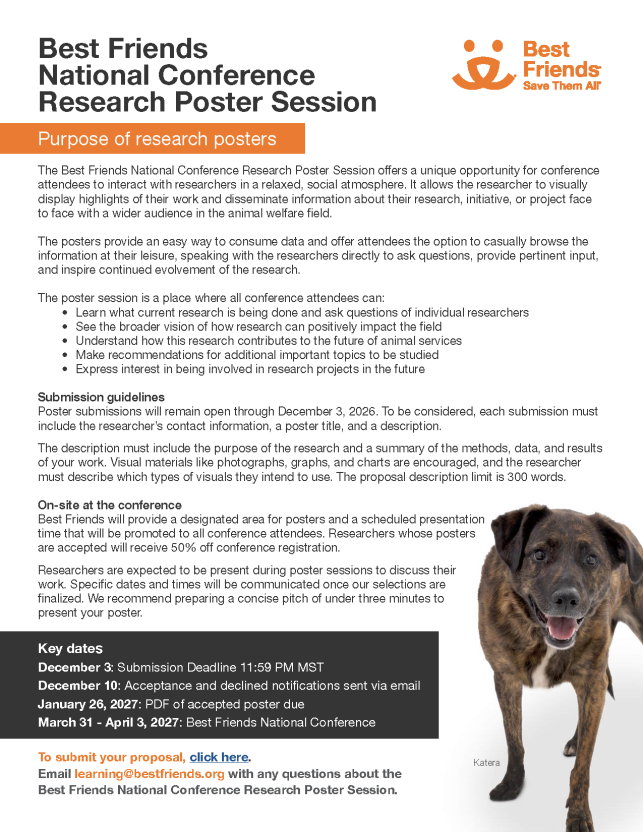
The Best Friends National Conference Poster Session is an opportunity for conference attendees to interact with researchers in a relaxed, social atmosphere.
The Best Friends National Conference Poster Session is an opportunity for conference attendees to interact with researchers in a relaxed, social atmosphere. It allows the researcher to visually display highlights of their work and disseminate information about their research, initiative, or project face-to-face with a wider audience in the animal welfare field.
The posters provide an easy way to consume data and offer attendees the option to casually browse the information at their leisure, speaking with the researchers directly to ask questions, provide pertinent input, and inspire continued evolvement of the research.
The poster session is a place where all conference attendees can:
- Learn what current research is being done and ask questions of individual researchers
- See the broader vision of how research can positively impact the field
- Understand how this research contributes to the future of animal services
- Make recommendations for additional important topics to be studied
- Express interest in being involved in future research projects
Submission deadline: December 3, 2026 at 11:59 PM MST.
Final participants will be notified and provided with more details during the week of December 7th. Each selected researcher will be required to submit a PDF version of their poster by January 26, 2027. Best Friends will print and ship posters to the conference at our expense. Researchers will be responsible for return shipping or have the option to dispose of it at the end of conference.
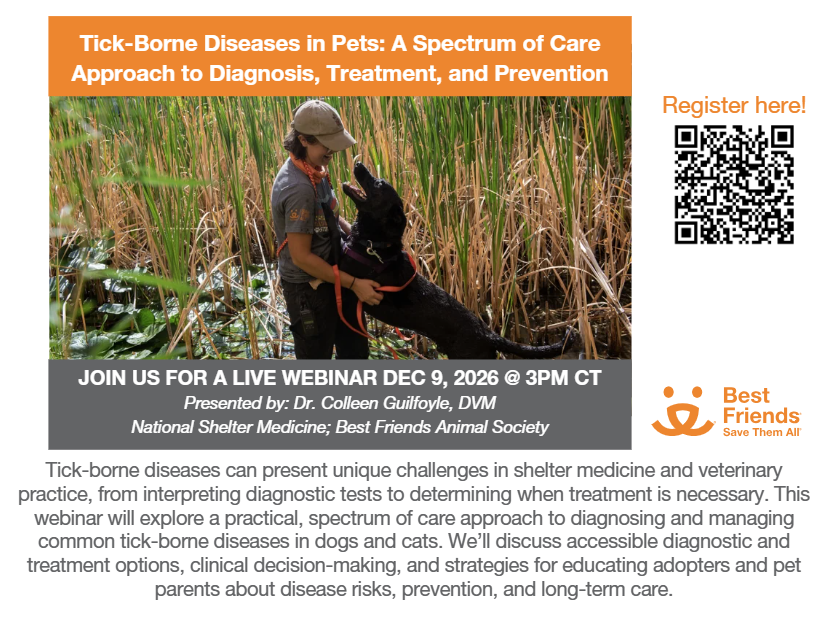
Tick-borne diseases can be tricky to manage in shelter medicine and veterinary practice, from interpreting diagnostic tests to deciding when treatment is necessary.
Tick-borne diseases can be tricky to manage in shelter medicine and veterinary practice, from interpreting diagnostic tests to deciding when treatment is necessary. Join us for a practical, spectrum of care approach to diagnosing and managing common tick-borne diseases in dogs and cats. You’ll learn about accessible diagnostic and treatment options and how to make clinical decisions with the resources you have. We’ll also share ways to talk with adopters and families about disease risks, prevention, and long-term care.

Fund Your Lifesaving: Apply for Grants

New Grants: Binky Incentive Award
Find Us at These Conferences
You’ll find members of the Best Friends team at conferences all across the country throughout the year: