A New Standard for Responsible AI in Animal Welfare


Increase return-to-home rates

Drive more adoptions

Build lifesaving momentum
Resource Library
Access proven lifesaving strategies in our free library of resources for shelters and rescue groups. Information-sharing is a key component of the Best Friends Network.





— NETWORK PARTNER STATISTICS —
Higher save rate on average for network partner shelters than non-partners.
Shelters, rescue groups, and support organizations make up the Best Friends Network.
In grants. This year, our partners can access more than $2.4 million in grant funding.
Get Involved
The Best Friends Network is committed to saving the lives of homeless cats and dogs through collaboration, information-sharing, and implementation of proven strategies. Get involved for free!


Opportunities to connect and save the lives of pets
Have fun and connect with fellow network partners and animal lovers at these upcoming events.
AI is already part of daily work at many shelters and rescues, from writing adoption bios and drafting board reports, to improving data analysis and refining operational procedures.
AI is already part of daily work at many shelters and rescues, from writing adoption bios and drafting board reports, to improving data analysis and refining operational procedures. But until recently, a shared set of standards to guide this rapidly evolving work did not exist.
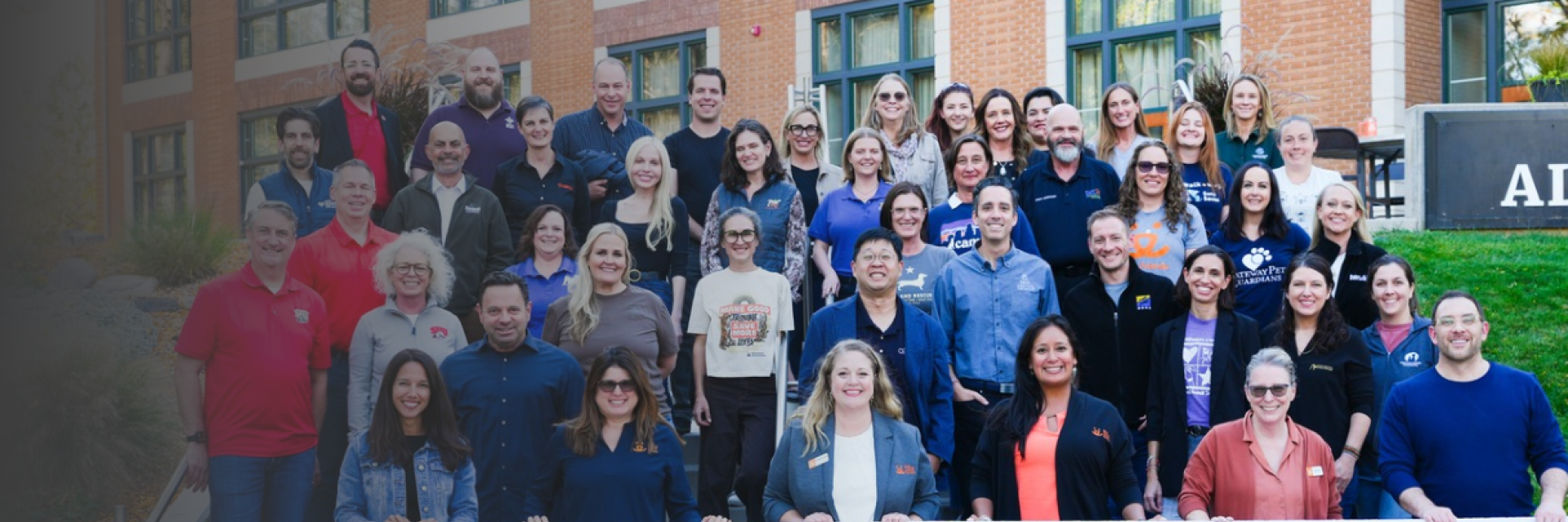
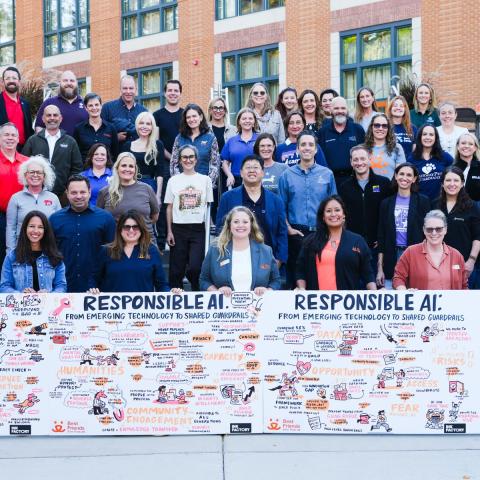
With the goal of coming together as a field to shape how AI is used rather than waiting for developers to define it, shelter, rescue, and national animal welfare leaders, tech experts, and college faculty recently met at Southern Utah University to finalize the Charter for Responsible AI in Animal Welfare.
The Charter sets out eight commitments that give organizations choosing to use AI a practical foundation for doing so responsibly, without specialized staff or costly infrastructure. It does not require any organization to use AI or prescribe a single approach.
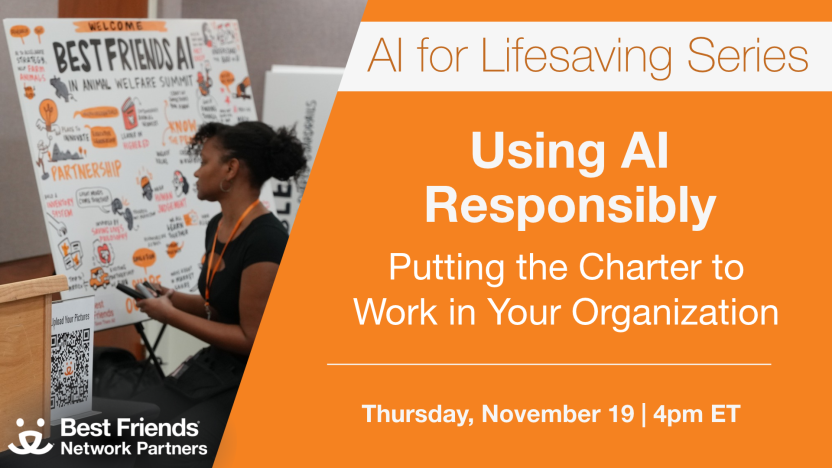
Register to join this discussion live on Thursday, November 19 at 4pm ET, and bring your questions.
Join moderator Whitney Bollinger, director of network strategy and innovation at Best Friends Animal Society, for a conversation with a few of the nearly 60 people who helped write the Charter: Dr. Sean T. Murphy, assistant professor of philosophy at Southern Utah University (SUU); Dr. Jennifer Kitchen, staff veterinarian and health informatics lead for CampLA; and tech and innovation advisor Shubber Ali.
The panelists will talk about how the Charter can work in very different settings, from a municipal shelter to a small, volunteer-run foster rescue. They will also discuss what each commitment asks of an organization, sharing the debates that shaped the Charter’s final language.
You’ll leave with an understanding of how to apply the Charter to your day-to-day work, whether you’re already using AI in your lifesaving or testing your first AI tool. We’ll save time for Q&A, and we want to hear what tools and resources we can create to support your utilization of the Charter. Save your seat and join live!
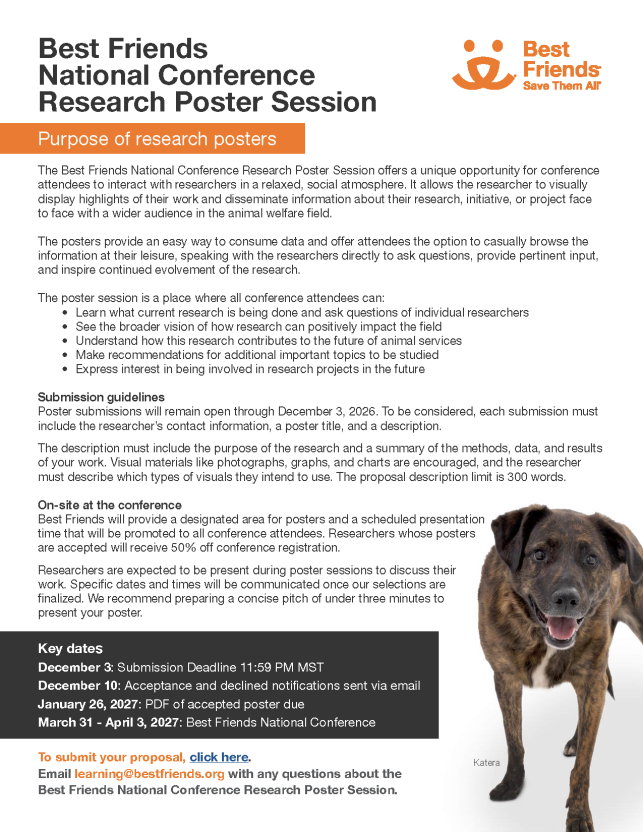
The Best Friends National Conference Poster Session is an opportunity for conference attendees to interact with researchers in a relaxed, social atmosphere.
The Best Friends National Conference Poster Session is an opportunity for conference attendees to interact with researchers in a relaxed, social atmosphere. It allows the researcher to visually display highlights of their work and disseminate information about their research, initiative, or project face-to-face with a wider audience in the animal welfare field.
The posters provide an easy way to consume data and offer attendees the option to casually browse the information at their leisure, speaking with the researchers directly to ask questions, provide pertinent input, and inspire continued evolvement of the research.
The poster session is a place where all conference attendees can:
- Learn what current research is being done and ask questions of individual researchers
- See the broader vision of how research can positively impact the field
- Understand how this research contributes to the future of animal services
- Make recommendations for additional important topics to be studied
- Express interest in being involved in future research projects
Submission deadline: December 3, 2026 at 11:59 PM MST.
Final participants will be notified and provided with more details during the week of December 7th. Each selected researcher will be required to submit a PDF version of their poster by January 26, 2027. Best Friends will print and ship posters to the conference at our expense. Researchers will be responsible for return shipping or have the option to dispose of it at the end of conference.
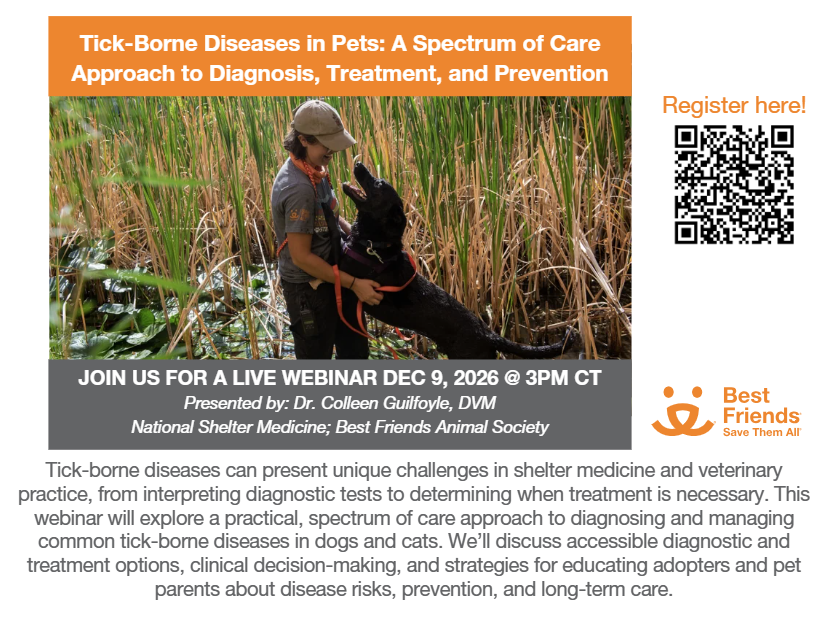
Tick-borne diseases can be tricky to manage in shelter medicine and veterinary practice, from interpreting diagnostic tests to deciding when treatment is necessary.
Tick-borne diseases can be tricky to manage in shelter medicine and veterinary practice, from interpreting diagnostic tests to deciding when treatment is necessary. Join us for a practical, spectrum of care approach to diagnosing and managing common tick-borne diseases in dogs and cats. You’ll learn about accessible diagnostic and treatment options and how to make clinical decisions with the resources you have. We’ll also share ways to talk with adopters and families about disease risks, prevention, and long-term care.

Get the support you need
The Best Friends Network team is your lifeline to support for your organization and collaboration with other network partners.
Let’s be friends!
Connect with us on social media to stay in the loop about the lifesaving progress we’re making together.


