Using AI Responsibly: Putting the Charter to Work in Your Organization
AI is everywhere, but do you know how best to use it for lifesaving? In the AI for Lifesaving series, we’re here to cut through the noise and help you investigate one thing: how you and your team can use artificial intelligence responsibly and effectively to save more pets.
AI is already part of daily work at many shelters and rescues, from writing adoption bios and drafting board reports, to improving data analysis and refining operational procedures. But until recently, a shared set of standards to guide this rapidly evolving work did not exist.
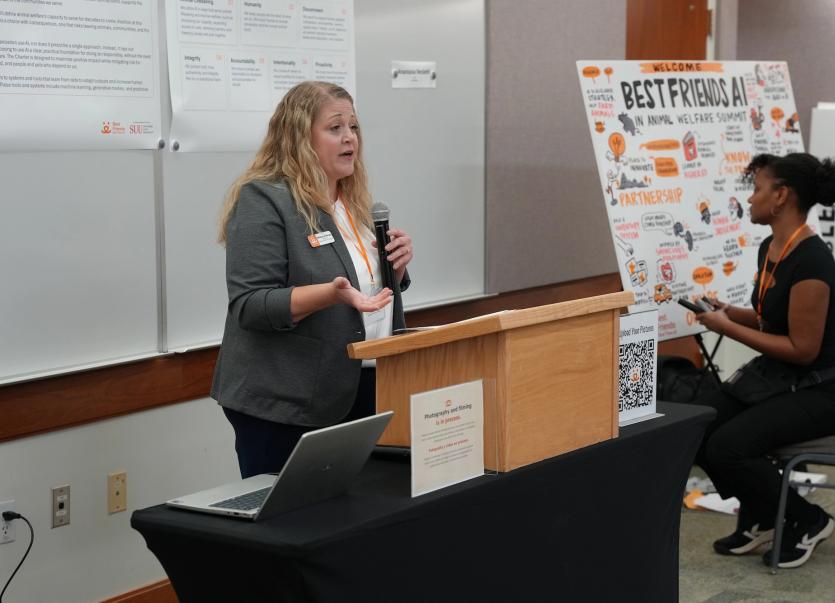
With the goal of coming together as a field to shape how AI is used rather than waiting for developers to define it, shelter, rescue, and national animal welfare leaders, tech experts, and college faculty recently met at Southern Utah University to finalize the Charter for Responsible AI in Animal Welfare.
The Charter sets out eight commitments that give organizations choosing to use AI a practical foundation for doing so responsibly, without specialized staff or costly infrastructure. It does not require any organization to use AI or prescribe a single approach.
Join moderator Whitney Bollinger, director of network strategy and innovation at Best Friends Animal Society, for a conversation with a few of the nearly 60 people who helped write the Charter: Dr. Sean T. Murphy, assistant professor of philosophy at Southern Utah University (SUU); Dr. Jennifer Kitchen, staff veterinarian and health informatics lead for CampLA; and tech and innovation advisor Shubber Ali.
The panelists talk about how the Charter can work in very different settings, from a municipal shelter to a small, volunteer-run foster rescue. They also discuss what each commitment asks of an organization, sharing the debates that shaped the Charter’s final language.
You’ll leave with an understanding of how to apply the Charter to your day-to-day work, whether you’re already using AI in your lifesaving or testing your first AI tool.