
Know Your Baseline: Operations & Budget Tool
Find out what your shelter must have, at a minimum, to operate safely and humanely, what it costs, and how to ask for it. This tool is designed for small-staff shelters and the people who support them.
- What you need to start: your annual cat and dog intake numbers. Everything else has defaults within the documents that you can change
- What you walk away with: a checklist of operating standards, a budget showing your true cost per cat and per dog, and a shopping list you can hand to donors
- How long it takes: approximately 10 minutes to input numbers
This tool is based on the expertise of Best Friends staff and shelter leadership all over the country. The tool format was built with the help of an AI platform, which let us build it faster and more comprehensively than would otherwise have been possible. It’s an example of where AI can enhance, not replace, institutional knowledge and expertise.
How to Use This Tool

1. Take inventory

2. Price it out

3. Fill the gaps
Step 1 — Take Inventory of What You Need
Best Friends encourages every shelter to go well beyond them if you can. Many small-staff shelters are still working toward them. Either way, start here.
Each requirement below has a matching line in the budget workbook, so you can price anything you're missing.
Most categories have two lists. Required items are the minimum of what you need to operate safely and humanely. Recommended go beyond the minimum, and what we would advise you to build toward once the required items are covered.

Cleaning & Disinfection
Supplies, PPE, disinfectants, tools & waste management
READ MORE
Required
- Use a disinfectant effective against shelter pathogens (parvovirus, panleukopenia, and calicivirus). Accelerated hydrogen peroxide is recommended; alternatives include calcium hypochlorite or bleach.
- Clean with a degreaser/detergent before disinfecting. Visible debris (urine, hair, food, and feces) must be removed for disinfectants to be effective.
- Maintain basic daily supplies: gloves, cleaning tools, and properly labeled disinfectants. Standardize products and procedures to reduce confusion and errors.
- Spot clean when the same animal remains in the kennel and heavy debris is absent (especially for cats).
- Fully disinfect each enclosure before a new animal moves into the space.
- Clean food and water bowls daily, disinfecting between animals.
- Scoop litter boxes when filled and fully change litter every seven days or with each new cat.
- Clean and disinfect cleaning tools (mops, squeegees, and scrub brushes) after each use. Color-code tools by area (dog, cat, isolation) when feasible.
- Remove trash, waste, and biohazards daily. Dispose in sealed containers following local ordinances to reduce odor, pests, and disease risk.
- Fully disinfect vehicles and equipment after use and before transporting a new animal if blood, urine, fecal matter, or vomit is present.
- Control pests that can spread disease. Store food in sealed containers, keep feeding areas swept clean, and use non-toxic pest control when needed.

Animal Care
Food, water, bedding, housing, PPE & daily monitoring
Read more
Required
- Feed all animals at least once daily for adults; 2x daily or more for juveniles or as medically required. Follow a consistent feeding schedule to reduce stress. Provide species-appropriate food in sufficient quantities and monitor appetite daily; address animals that do not eat or eat poorly.
- Provide access to clean, fresh water at all times unless medically restricted. Check and refill water bowls daily.
- Check each animal at least once daily for signs of illness, injury, or distress. Observe for injuries, illnesses, or unmanageable behavioral distress (self-harm, repetitive behaviors, shutdown states, escalated aggression) and respond quickly.
- Provide appropriate shelter, bedding, and temperature protection.
- Maintain environmental conditions that protect animals from the elements, including temperature control, protection from extreme cold and heat, and adequate ventilation for indoor facilities.
- Maintain basic safety and personal protective equipment (PPE): control pole, leash, cat net, cat gloves, muzzles, phone/walkie/radio, and microchip scanner.
- Provide out-of-kennel time for dogs through daily walks or play yard time whenever possible.
Recommended
- Document special diets, feeding instructions, and allergies.

Medical
Vaccines, medications, vet services, refrigeration & PPE
Read more
Required
- Administer core vaccines as soon as possible upon intake — Dogs: DHPP (or equivalent); Cats: FVRCP & Bb/Pi. Vaccines must be reputable product brands sourced from a veterinary distributor. Vaccinate each animal before housing in shared airspace.
- Administer rabies vaccines as required by state and local regulations.
- Promptly identify animals showing signs of illness or injury. Animals in distress need care even when staffing and space are tight. A clear process for identifying medical emergencies makes that possible.
- Provide spay/neuter through a local clinic, private practice partnership, or voucher if resources are locally available.
- Build working relationships with local clinics to support sick care or rescue transfer.
- Maintain basic safety and PPE equipment: control pole, leash, cat net, cat gloves, muzzles, phone/walkie/radio, microchip scanner, and personal protective equipment (PPE).
- Maintain a refrigerator with temperature monitoring near the intake area or truck bay. Proper vaccine temperature maintenance is critical for keeping vaccines effective.
- Provide proper training and protocols for disinfectant dilution. Dilution systems (hose attachments, measuring materials) support consistency, but training and verification are still essential.
- Maintain housing conditions that do not promote infectious disease. Avoid prolonged holding of cats in housing that isn’t suitable, dogs standing in water, or overcrowded kennels.
- Provide in-house euthanasia or access to euthanasia services for animals whose irremediable suffering cannot be relieved through treatment, and for animals whose behavior presents a safety risk that cannot be resolved through treatment or placement.
Recommended
- Provide flea and tick treatment and deworming.
- Document vaccine type, date, and who administered it.
- Provide heartworm prevention, which may be considered a requirement depending on your region.

Programs & operations
Adoptions, RTH, transfers, data, field services & communications
Read more
Required
- Maintain adoptions or adoption partnerships for all healthy and treatable animals. Prioritize timely placement and share known health or behavior information with adopters. Allow adoption returns and support people who want to find a new home themselves
- Scan every animal for a microchip at intake and prior to adoption or transfer. Contact families promptly, maintain a legally compliant stray hold, document intake details, verify ownership, and communicate reclaim fees and requirements. Make lost animals viewable to the public during the stray hold when safe.
- Ensure animals are legally available before transfer. Share accurate health and behavior information. Document all transfers including date and receiving organization.
- Maintain a basic record for every animal: intake date, medical records, source, and outcome. Record intake vaccinations, treatments, and any noted injuries or illness. Document adoptions, transfers, return to home, and euthanasia. Wi-Fi access is required.
- Respond to animals with medical emergencies or animals posing an immediate public safety risk. Secure the scene, contain the animal, and transport to a receiving facility. Must have legal authority (or binding agreement) to remove animals, plus basic equipment: vehicle, control pole, leash, phone, microchip scanner, and personal protective equipment (PPE).
- Post lost and available animals on website, social media, and Petfinder within 24 hours of intake. Make photos of adoptable animals publicly available. Post contact information, location, and service hours.
- Offer adoption and relinquishment hours of operation that are accessible to the public, including at least one weekend day.
- Every dog and cat leaves with a collar and tag. Docupet's “Home Safe” program is one program that provides free tags connected to a 24/7 lost pet recovery team.
Recommended
- Provide intake diversion resources to avoid unnecessary intake. Avoid intake of healthy community cats when possible. Offer hours accessible to the public, including at least one weekend day.
- Enter data accurately and in a timely manner. Use simple, consistent data systems appropriate to staffing capacity. Publish intake and outcome reports publicly at least monthly.
- Maintain a volunteer program to support core and additional responsibilities.
- Field service or shelter staff/volunteers should scan every animal for microchips in the field or in shelter and attempt to return animals home prior to bringing them to the shelter. Shelter should try to microchip all shelter pets without microchips and provide registration info to adopters.
- Microchip any cat or dog who is either adopted or claimed by their family unless the pet is already chipped and registered with accurate information unless a veterinarian has determined it isn't medically safe
Step 2 — Price It Out
How to use the budget workbook
Download the workbook and open the Inputs tab. Replace the blue numbers with your annual dog and cat intake numbers. You can also use the estimates already in place for a general estimate.
The workbook will update automatically to show a monthly operational budget based on your intake, reflecting your workload, including seasonal swings.
Take the results to your leadership, board, or other funders to show what you need as you plan your annual budget and fundraising.
See a Finished Example
Want to see what this looks like filled in? Here's the baseline budget for a shelter taking in 600 cats and 900 dogs a year. File will download automatically.

Notes on the defaults: If you leave intake blank, the workbook assumes 600 cats and 900 dogs a year. Staffing fields default to baseline roles, and you can edit them after downloading. Hourly wage figures come from the Association for Animal Welfare Advancement (AAWA) 2024 Compensation and Benefits Study.
Step 3 — Fill the Gaps
Image
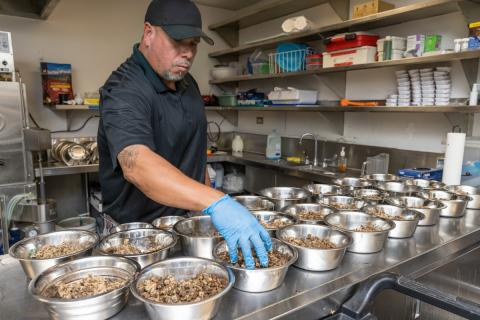
| Every line item in the budget workbook links to a real product. Use these lists to order supplies yourself, or provide them to donors and community partners so giving in-kind is easy. You can also post them to your shelter website or share them on social media to let supporters know how they can help you. Prices reflect listings at the time of research. |
Now that you know the baseline funding you need, learn how to advocate for it to your government officials.
Questions & Support
Stuck and need help with the tool? Email BFNetwork@bestfriends.org and we'll walk through it with you.