2025 National Shelter Data Report
Making progress while facing each day's challenges together
Use the links below to jump to key sections of the report:
The 2025 data shows a powerful milestone: The first sizable overall decrease in dogs and cats killed in shelters since the start of the pandemic.
With improvements in lifesaving for both dogs and cats, this is the sharpest drop in unnecessary U.S. shelter deaths since 2020.
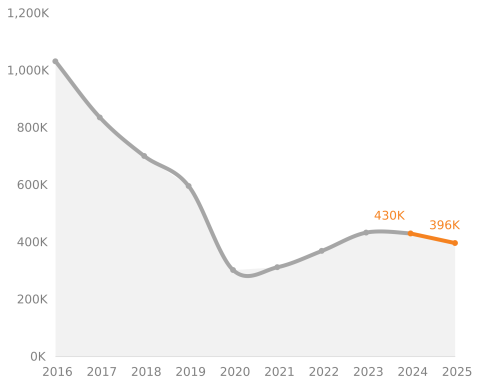
34,000 fewer dogs and cats were killed in 2025 than 2024.
With lifesaving | Image
|
2025 shelter data reveals a hopeful moment for animals — with the highest percentage of no-kill shelters to date, at 68%. That’s more than two out of three shelters reaching this milestone, demonstrating we are past the tipping point of our movement toward every shelter reaching no-kill.
They Realized “Even Greater Things Were Possible”

When Bossier City Animal Services in Louisiana achieved their first full month of no-kill in August 2024, they were all in. They made a public declaration that they were never going back, and in 2025, they celebrated a full year of no-kill.
How did they do it? By being willing to try new things.
Superintendent Susan Stanford attributes the majority of the lifesaving in 2025 to the success of one pilot program leading the way to more.
A heartworm treatment program increased the adoptions of heartworm-positive dogs by 54% — and Scout, a dog who had stayed in the shelter for nearly two months, finally got adopted.
This pilot was just the beginning, because this program “opened the doors for Bossier City Animal Control to believe other programs may be possible,” Susan says. “It gave the shelter staff the confidence and momentum to reach out and expand their ideas and see that even greater things were possible if we all just trusted the process, took a chance, and didn’t give up.”
Some other key highlights include:
- 2.5 million dogs and cats found loving homes through shelter adoption
- Nearly 4 million dogs and cats were saved in U.S. shelters last year alone
- 80% of shelters had a save rate of 80% or higher in 2025
- 90% of shelters improved or maintained their lifesaving from 2024 to 2025
- Four states — Delaware, New Hampshire, Rhode Island, and Vermont — are already no-kill. Eight more are on the brink. Connecticut, Idaho, Maine, Massachusetts, Montana, Nebraska, North Dakota, and Wyoming each need to save 500 or fewer additional animals to get there
- Nearly half of all U.S. states have now issued no-kill proclamations since 2024: Arizona, Georgia, Idaho, Mississippi, North Dakota, Utah, Montana, Virginia, Washington, Arkansas, Louisiana, West Virginia, Oregon, Connecticut, Kansas, Iowa, Oklahoma, Indiana, Vermont, New Hampshire, Minnesota, Massachusetts, and Illinois have taken this inspiring step
When every U.S. shelter reaches a 90% save rate, we will officially be no-kill as a country. The 2025 data shows undeniable momentum — and it shows how we achieve that goal, dedicating ourselves with no-kill programs that work, engaging our communities, and working together to save lives.
Lifesaving Marks an Important Turning Point
Nearly 4 million pets were saved.

2.0 million dogs and 1.9 million cats were saved in 2025.
In 2025, the national save rate for dogs and cats was 82.5%, an increase of almost 12 percentage points compared to 2016.
The number of animals killed decreased by 8.1% compared with 2024. 396,000 animals were killed in U.S. shelters in 2025, a reduction of 34,000 cats and dogs.
A 90% save rate for animals entering a shelter is a meaningful and common-sense benchmark for measuring lifesaving progress. The number of pets killed does not count every pet losing their life in a U.S. shelter, but is a measure of the no-kill lifesaving gap — i.e., the number of pets who would have had to have been saved, to reach a 90% save rate in every shelter. Learn more about the 90% benchmark and what no-kill really means.
Before 2020, it was the norm for both dog and cat deaths to decrease every year. Since 2020, cat lifesaving has remained steady while dogs have faced real challenges.
Image
| Nearly 20,000 fewer dogs |
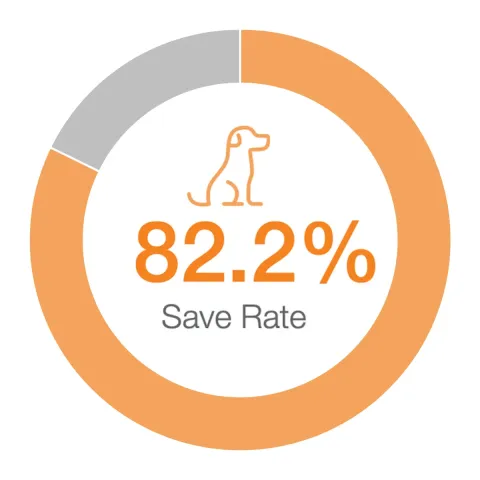
For dogs, 2025 was a breakthrough year. For the first time since 2020, we saw the number of dogs killed in shelters go down, by an incredible 8.5%.
The lifesaving rate for dogs was 82.2%, a slight uptick from 2024 which translates to nearly 20,000 fewer dogs all over the country who were killed in 2025.
In 2025, the | Image
|
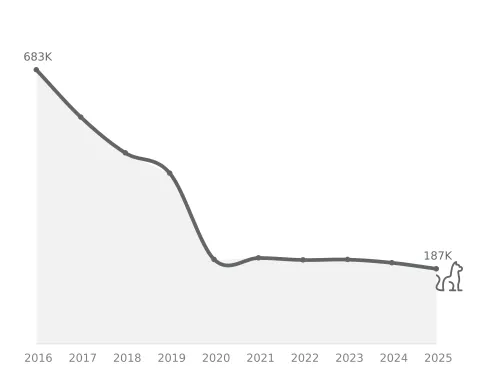
Cats, too, had a history-making year, improving on last year's lifesaving gains. 2024 was the best year ever for cats in shelters, and the momentum is continuing for cat lifesaving, with a nearly 75% reduction in killing for cats in the last 10 years. In 2025, the number of cats killed hit its lowest point ever: 187,000. Cats had a record-breaking high save rate of 82.9% in 2025.
Saving Community Cats Through TNVR Partnership

In February 2025, the ASTRO Foundation in California launched a new trap-neuter-vaccinate-return (TNVR) program with its partner organization the City of Oakdale Animal Shelter.
With only 38% of the cats entering the Oakdale Animal Shelter having live outcomes in 2024, this program was designed to be a lifeline for community cats. Cats are now humanely trapped, then transferred to ASTRO for TNVR before being returned to their original locations. Oakdale Animal Shelter had a nearly 30 percentage point boost in cat lifesaving, in the first 11 months of the new program.
Helping their partner shelter save more cats is a major goal — but it’s the not the only reason this partnership is seeing success. “Many of these cats had caregivers who were waiting for them,” says ASTRO Foundation President Jaydeen Vicente. “And this program made it possible for them to return to the places — and people — they knew.”
Momma Cat is a perfect example. When it came time to return this cat to her neighborhood home, the ASTRO Foundation discovered a group of children in a neighborhood daycare who’d worried while she was gone. Learning Momma Cat was alive and well, “they all erupted with cheers.”
“She was able to return to the community and the people who cared about her, continuing her life safely and healthily," Jaydeen says, “We are so pleased to be continuing this program in the years to come.”
We can close the lifesaving gap and reach another new lifesaving milestone by implementing and expanding effective, data-backed no-kill programs; collaborating even more with lifesaving partners; and further engaging our communities.
Here are some ideas you can start implementing right away:
- Start or expand your foster programming. Organizations with foster programs have adoption rates as much as 20 percentage points higher as those without — organizations that fully empower fosters have adoption rates nearly 30 percentage points higher.
- Shifting to some weekend or evening hours for adopters and fosters could mean a 20-point increase in adoption rates.
- Shelters that post more of their pets to Adopt a Pet and Petfinder have higher save rates — so post your pets!
- Use the Friendly Finder Playbook to engage your community and help more lost pets get back home.
- Expand or implement your community cat programming to make a real difference for cat lifesaving in your community, such as those piloted by participants in 2025’s Community Cat Challenge — who saw a 48% improvement in cat lifesaving compared to the same period the previous year.
- Are you holding back on community cat programming because you’re worried about complaints? This webinar covers responses, deescalation, mitigation, and other ways to resolve community concerns and save more cats.
This is just a sample of the resources and tools you’ll find on the Best Friends Network website, to help you save more lives.
Fostering Saves Lives

In just one year, the Rankin County Animal Shelter in Mississippi has made a remarkable 19-point dog save rate increase, from 73% in 2024 to 92% in 2025. That kind of progress is inspiring, and the best news is that it’s replicable!
After attending the Best Friends National Conference in 2024, shelter manager Sgt. Debra Murphy and her small, dedicated staff were inspired to implement lifesaving practices that would get more pets into homes. That included eliminating barriers to adoption — and creating a brand new foster program.
The shelter’s staff, sheriff’s department, and community were fully invested — and within the foster program’s first full year, 89 pets went into foster homes. Debra says that of these, 85% were adopted by their foster!
Even those who weren't adopted by their fosters, are getting the benefits of time in a home — like Katie, who was stressed and shutting down in the shelter, but after living in a foster home got adopted at an adoption event.
Intake Remained Steady
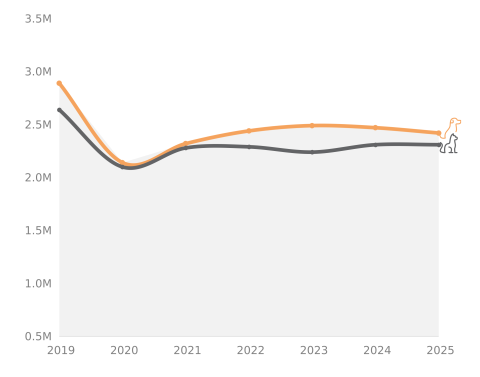
Nearly 4.7 million pets entered U.S. shelters in 2025: 2.4 million dogs and 2.3 million cats.
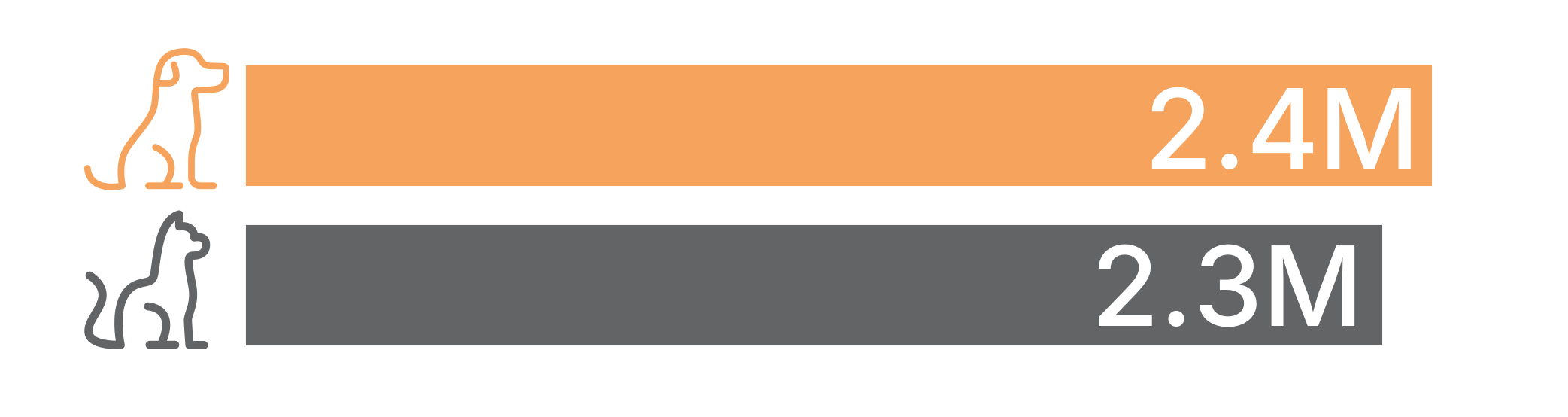
2.4 million dogs entered U.S. shelters in 2025, about 50,000 fewer than in 2024. The majority of that decrease was from a 3.8% drop in stray intake, with about 1.3 million dogs coming into shelters as strays. Dogs surrendered by their owners also decreased slightly in 2025 by 1.8%, to about a half a million dogs.*
2.3 million cats entered shelters in 2025, essentially unchanged from 2024 — showing that cat intake has stabilized post-pandemic and cats are seeing the benefits of community cat programming. 1.3 million cats entered shelters as strays and just over half a million cats were surrendered.*
Intakes stayed | Image
|
You can help keep more pets in homes with community support and pet retention programs and strategic managed intake and pathway planning. Share rehoming resources like Home to Home and Rehome by Adopt a Pet for community members who can't keep their pets, to help them navigate finding that pet a new home — and consider putting up courtesy posts for pets in your community who are being rehomed.
Outcomes
Adoptions
About 2.5 million pets were adopted.

About 2.5 million pets were adopted from shelters in 2025: 1.1 million dogs, and 1.4 million cats. This is a slight reduction of 2.0% from 2024.
In 2025, 46% of all dogs who entered shelters were adopted while 59% of cats who entered shelters were adopted. With adoption the primary live outcome we track, this shows opportunity to grow adoption numbers and boost lifesaving.
In 2025, private shelters saw an increase in adoptions of 4.9% overall — with dogs seeing a 5.2% and cats seeing a 4.7% increase in adoptions.** This trend is holding since we saw it emerge in the mid-year report, and the increasing adoptions at privates is paving the way for an increase in transfers from municipal agencies.
973 Doggy “Recesses” Engage the Community and Get Dogs Adopted

The Sioux Falls Area Humane Society has made some major improvements in lifesaving in the last four years. In 2022, the shelter had just a 56% save rate — in 2025, they reached 80%.
Director of Operations Christy Kellen ties the most impact to the Rescue Dog Recess Program, launched in May 2025. Through this doggy day out program, volunteers choose from a list of eligible dogs, pick a dog-friendly outing, and the shelter provides all necessary supplies — engaging the community and giving dogs a break from the shelter.
“That small investment of time creates meaningful experiences for the dogs and significantly improves their chances of adoption,” Christy says.
In just eight months, the Sioux Falls Area Humane Society completed an astounding 973 recesses. “That’s 973 times dogs got outside of the shelter, totaling 2,935.19 hours of enrichment and time out of the shelter,” Christy marvels.
One of the dogs who participated in the recess program was Boo.
Boo came into the shelter so scared he had to be carried through the building. Through the recess program, volunteers took Boo on short breaks, including multiple afternoon and overnight stays.
Boo learned to walk on a leash and began seeking attention instead of hiding. With newfound confidence, and all his new friends, says Christy, before long “Boo was adopted!”
Looking for ways to increase adoptions? Try out the proven strategies that Bring Love Home Challenge participants successfully used to get more dogs and cats into homes — like reducing adoption fees, shortening applications, eliminating home checks, and offering multilingual adoption and foster support.
The results speak for themselves: With 219 organizations reporting, and 177 planning to continue their piloted strategies long-term, an incredible 15,279 dogs and cats found homes during the December 2025 challenge period and countless more will benefit in the future. Learn about how they did it with the Bring Love Home 2025 Operations Guide — and then use these ideas to boost adoptions and foster placement at your organization!
Return-to-Home (RTH)
470,000 dogs were returned to their homes.
35.8% of stray dogs who entered shelters were returned-to-home, a number that has held steady since 2024.
The 3.8% reduction in stray intake is likely driven, in part, by increased in-field return-to-home efforts — proactive work by animal services officers that reunites lost dogs with their owners in the community before shelter entry is necessary. Additionally, as more and more shelters add publicly-available microchipping stations, the public is increasingly able to support reuniting pets with owners in their own communities. Fewer dogs entering as strays is a sign of more dogs making it home sooner, not fewer dogs being helped, but they're often not counted in the shelter population. This is why we encourage shelter partners to capture return-to-home in field data as it tells a more complete story of how pets are being helped in the community.
Of the 1.3 million dogs that entered shelters as strays, 35.8% returned to their homes.

With 1.3 million dogs coming into shelters as strays, this still leaves significant room to increase return-to-home efforts. Some easy steps to take right away are sharing information with your community about what to do if you find a lost pet, or if you lose your pet, including posting on Petco Love Lost; and creating a “friendly finder” program to engage the community in reuniting lost pets with their families.
Want to reunite even more lost pets with their families? Use the Return to (Owner) Home Playbook to build an effective RTH program at your organization — and try out the operations successfully piloted by 2025’s Paws in the Field Challenge participants to increase your return-to-home rates both in the field and in the shelter. Ninety-nine percent of organizations reported that they will continue the RTH practices they piloted during the challenge.
Return-to-Home Means a Dog Is Back Where He Belongs

Keeping pets at home has been a priority for Fort Worth Animal Care & Control in Texas for years, and as part of that effort they’ve long maintained an emphasis on reuniting lost pets with their families.
In 2025, FWACC further ramped up return-to-home efforts — including by providing special flyers for their field officers to print and distribute in the areas where lost pets were found. They also implemented a stronger follow-up framework for pets with identifying information like a tag or microchip.
One pet who benefited from that improvement was a dog named Blue.
Blue came to the shelter with a dead-end microchip, but luckily the shelter didn’t give up. Blue was marked as “found” in the microchip company’s database, says Shelter Superintendent Anastasia Ramsey, and “shortly after, we heard from Emerald, who was searching for him.”
Blue had gone missing in Nashville three years earlier, with Emerald looking for him ever since. Now living in North Carolina, Emerald desperately wanted Blue back — but had no way to get him from Texas.
Fort Worth Animal Care & Control didn’t give up, once again. They arranged for Blue to be driven to North Carolina by a nonprofit partner. A thousand miles later, “he’s back where he belongs, safe, loved, and right at home with Emerald,” Anastasia says.
Anastasia believes that putting in the legwork to find a lost pet’s family, and help get them home, may seem like a lot of work but it can be more cost-effective than “keeping them in the shelter for however many days,” and it fulfills the mission of keeping families together.
“Ultimately,” Anastasia says, “not having to find a home for an animal, because they already have one, is the best use of our resources.”

Transfers
765,000 pets were transferred out of shelters.

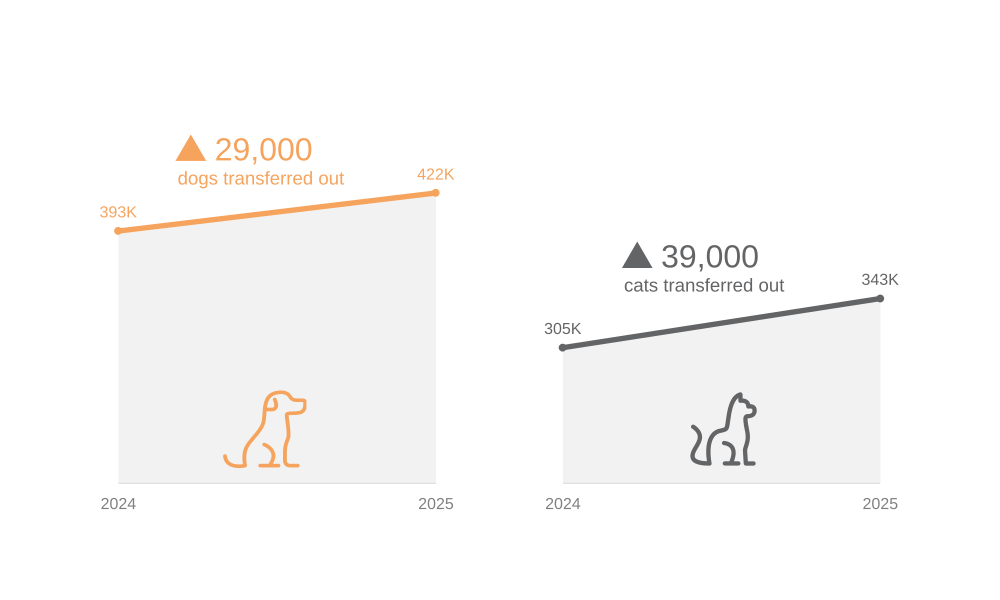
765,000 pets were transferred out of shelters in 2025: 422,000 dogs and 343,000 cats.
This is an increase of 68,000 pets from 2024, and represents a 9.7% improvement. Dogs saw an increase of 29,000 transfers out, or 7.4%, from 2024. There were 39,000 more cat transfers out in 2025 than in 2024, a 12.7% increase.
2025 was the second year in a row that the number of dogs and cats transferred out of shelters increased. This is a factor in the reduction of pets killed, with support from private organizations for government shelters relieving bottlenecks, private organizations increasing adoptions, and organizations of all types collaborating to save lives.
68,000 more pets were transferred out of U.S. shelters in 2025 than 2024.
Whether a shelter transfers in or transfers out animals is largely dependent on organization type.**
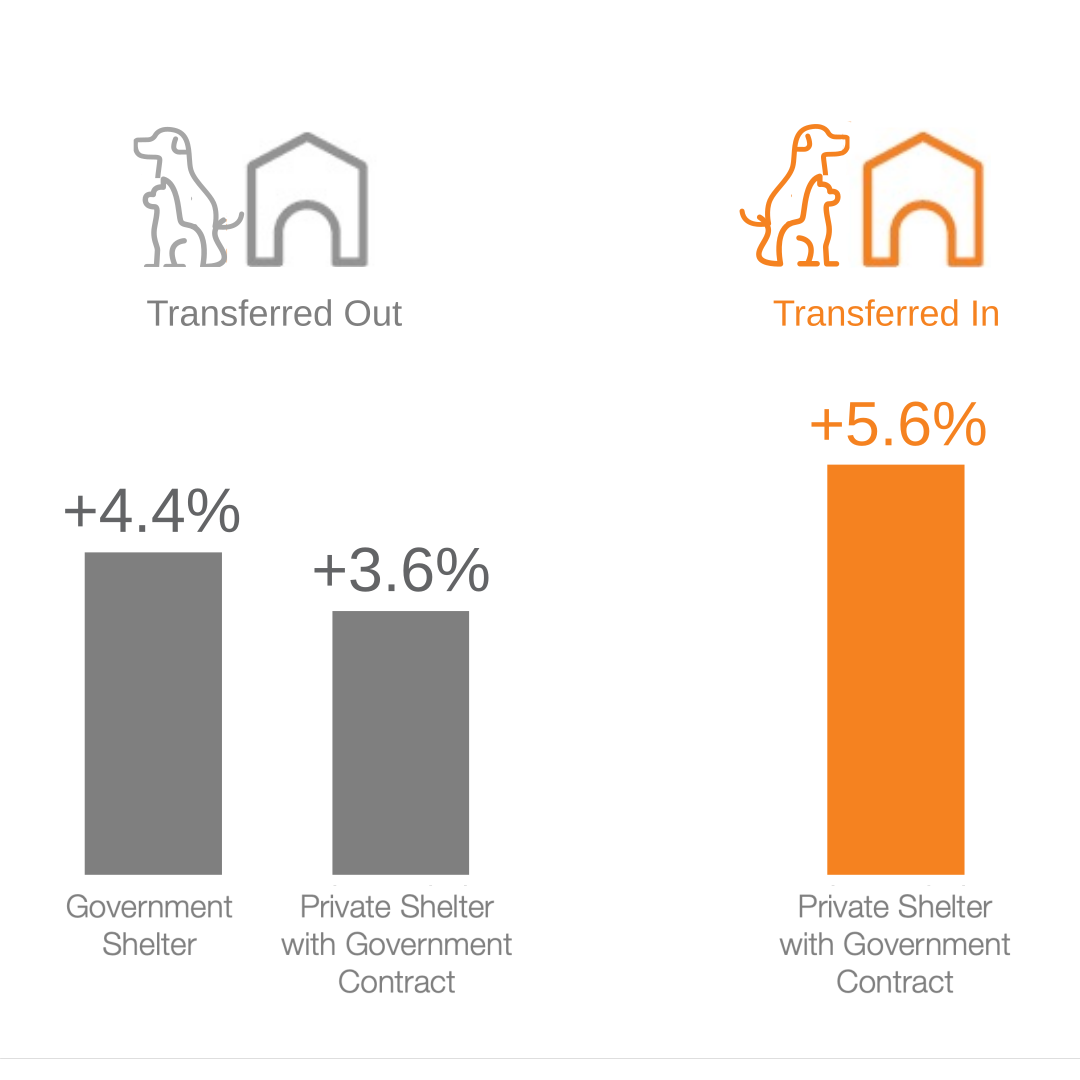
The data shows transfers out of municipal and private shelters with government contracts increased in 2025 — opening up much-needed capacity.
Transfers out of government shelters increased by 4.4% — with an increase of 1.5% for dogs, and 8.5% for cats.
Transfers out were up by 3.6% for private shelters with government contracts. Dog transfers out increased by 1.3%, and cats by 6.6%. This is another substantial increase after the important gains of 2024.
Private shelters without government contracts increased transfers in by 5.6% — increasing dog transfers in by 5.7%, and cats by 5.6%.
Transfer partnerships helped increase the percent of animals transferred in 2025 compared to 2024.
These numbers, which continue a trend we first saw in the mid-year data, highlight the critical role of collaboration — with rescues and private shelters working with government shelters, and shelters with government contracts, to save lives through transfer partnerships. It is going to take all of us doing our part for the nation to truly achieve no-kill, and this type of collaboration is a critically important part.
This progress didn’t happen by chance, or by working alone. This momentum is a result of data-backed programs and partnerships that work, because of collaboration and engaging your community, and because rescues and shelters across the country have dedicated themselves to saving lives.
We haven't yet reached no-kill everywhere — but the 2025 data shows important momentum and progress. Together, we can and will get to no-kill in every shelter, in every community, across the country. The Best Friends Network is here to support you in leveraging lessons from your peers, driving collaborative partnerships, and increasing your lifesaving.
This work isn’t easy. It can be overwhelming, facing each day's challenges while striving toward even more.
You can see in these 2025 numbers that what you are doing is making a difference — in your community, across the country, and to every dog and cat who is napping on a couch today because you committed yourself to giving them that chance.
About our data
Best Friends Animal Society has the most comprehensive and accurate dataset in the industry, providing key insights and analytics from more than 10,000 shelters and rescue groups across the United States, and sharing it in the most transparent way possible.
Our annual report on national shelter data includes ALL of the nearly 4,000 shelters in the country. More than 80% of shelters in this report have collected and current data (12 consecutive months in the last 24 months), with the small remainder being estimated from historical and community data using a method approved by two independent peer reviews.
Data is publicly available through our pet lifesaving dashboard down to the shelter level, making it the ONLY centralized place to see individual shelter data. Best Friends believes trusting the public with this level of data transparency is critical for a community to achieve no-kill.
It is also essential that our team has access to the most accurate data available so we can provide the right support to partner organizations. Our team of skilled strategists comb through data to identify the most rapid and effective solutions to save more dogs and cats today as well as long term solutions for the future.
How we use data
Our goal is to make every shelter in the country no-kill, so our strategy is to work with shelters who have the greatest opportunity to achieve no-kill, build on that momentum and inspire others to follow their lead. Our team of skilled strategists comb through data to identify the most rapid and effective solutions and locally focused programming to save more dogs and cats today as well as long term solutions for the future.
*The remaining other intakes come from other sources such as puppies/kittens born in care, pets in clinics, or pets who are quarantined.
**Analyses of specific organization types’ data was limited to 1205 shelters — 48% government shelters, 23% private shelters with a government contract, and 29% private shelters without a government contract — that reported both 2024 and 2025 data with complete intake/outcome subtype and species-specified data.