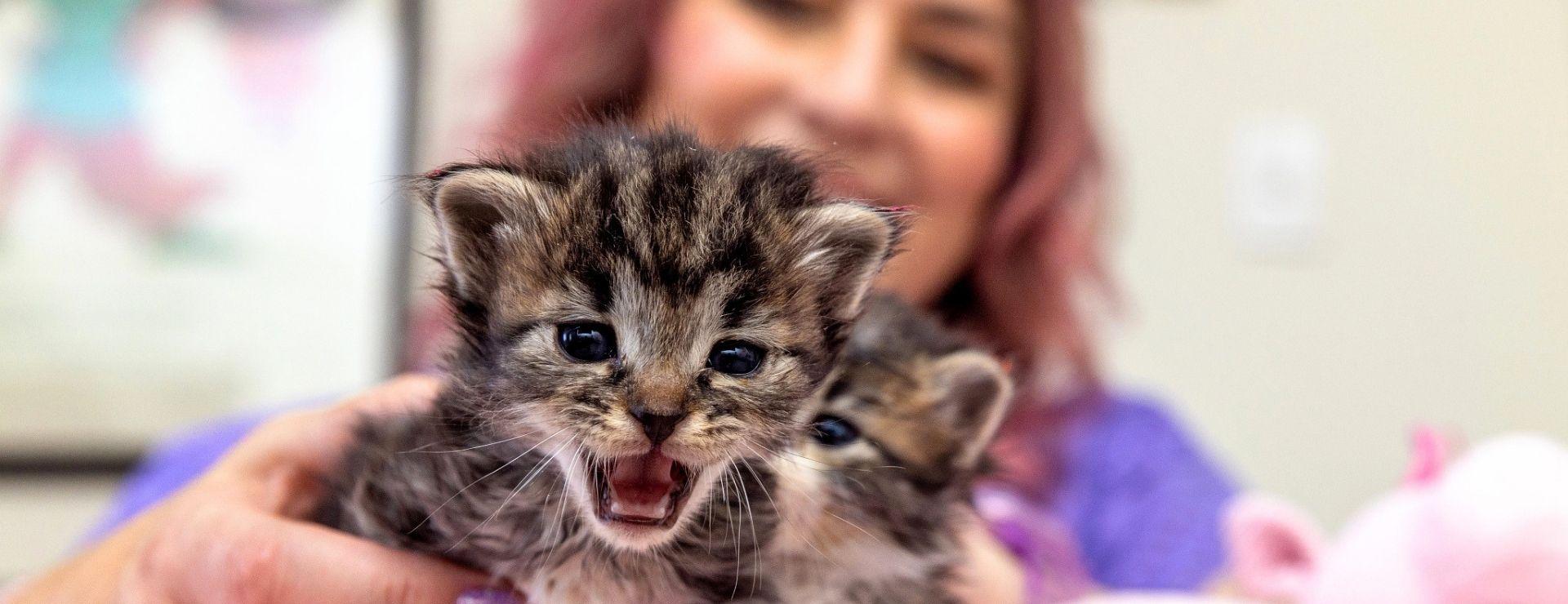
Kittens Are the Most Vulnerable Shelter Population, but Among the Most Adoptable
New data analysis shows that neonatal kittens are the pets least likely to survive in a shelter — but with a short period of supportive care, they get adopted quickly.
New data analysis comes with a clear call to action: Neonatal kittens have the highest mortality of all shelter populations, but that once they reach eight weeks old, they become among the most adoptable.
A short period of supportive care for neonatal kittens who come into shelters, ideally in a foster home, gives them the chance to make this transition from at-risk to adopted.
This should be paired with community education about when kittens should come into shelters, i.e., when they are sick, injured, orphaned, or otherwise in danger, and why it is generally best to leave others with their moms.
The research was conducted by the Best Friends data team, in collaboration with Dr. Julie Levy, director of the Shelter Medicine Program at the University of Florida, examining 460,671 records from 232 shelters, a mix of municipal shelters, private shelters with government contracts, and private shelters without government contracts.
The researchers found that the overall number of cats and dogs died in shelters were roughly equal. But that changed once age was factored in.
More than four times as many kittens entered shelters as puppies — 49,600 kittens under six weeks of age compared to 11,029 puppies — and their fates were much worse. Kittens younger than 6 weeks old made up 47.5% of cat deaths, while puppies in that same age range made up just 5.4% of canine deaths.
Futures were bright for the kittens who survived. Over half of cat adoptions were of kittens younger than 4 months old. Puppies of the same age, by contrast, made up just under 30% of dog adoptions.
Image

| Find more strategies for saving kittens’ and cats’ lives in this roundup of lifesaving shelter programming. |
The great news? You don’t have to tackle this alone. Your community wants to help and there are easy ways to channel that energy to give kittens the chance they need:
- Public awareness is one of the most important parts of cat lifesaving. Share this flyer about what people should do if they find a kitten outside so they won’t have to guess, or inadvertently put lives at risk while trying to help.
- Use the Neonatal Kitten Toolkit to apply best practices for saving the youngest kittens.
- Invite your community to help build your neonatal foster network so that incoming kittens will have a clear, fast path into a foster home where they can be closely monitored, given individual attention and care, and stay healthy.
- Develop foster finder programming so that people who find kittens of any age will have resources, know-how, and support to keep them safe at home until they are ready for adoption.
- Ask your community to donate “kitten kits” with supplies your fosters can use to care for a neonatal kitten, like bottles and nipples, syringes, kitten milk replacer, and a heating pad or other device to keep kittens warm. Some organizations host kitten kit packing parties, where volunteers can help assemble the kits that will go out to kitten caregivers in the community.
- Partner with your local trap-neuter-vaccinate-return (TNVR) community to help keep kittens from entering the shelter in the first place. If you’re looking for low-lift ways to strengthen that partnership or start one, the practices from Best Friends’ 2025 Community Cat Challenge — who saw a 48% improvement in cat lifesaving compared to the same period the previous year are a great place to start.

Peter Wolf
Senior Strategist
Best Friends Animal Society

Arin Greenwood
Senior Strategist -
Network and Advocacy Communications
Best Friends Animal Society
