Owl covered in concrete returns to the skies at last
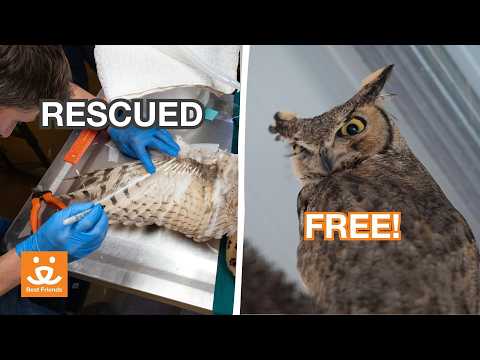
With a few silent, powerful wing beats and a great swooping arc, the owl who found himself trapped in a cement mixer in the fall of 2025 made his return into the wilderness. The owl spent time recovering at Best Friends Animal Sanctuary in Kanab, Utah, after his harrowing ordeal. Then, a special procedure to graft new feathers onto his broken ones made it possible for him to be released back into the wild.
A young owl in need of help
Seven months ago, Wild Friends, the state and federally licensed wildlife rehabilitation area of the Sanctuary, received a call that a good Samaritan had found a young great horned owl inside the drum of a cement mixer. When the young owl arrived at the Sanctuary, veterinary staff and caregivers discovered much of his body, including one wing, was coated in dried and drying concrete.
The team quickly came up with a plan to remove the concrete in the least invasive way possible. While the owl was under anesthesia for short baths, they used toothbrushes and even their fingers, along with dish soap, to meticulously remove the concrete.
Baby barn owls survive accidental road trip
The next step: time. With time would come the owl’s spring molt of his damaged feathers that prevented him from flying silently. Without silent flight, he wouldn’t be able to hunt in the wild, so he continued his recovery at Wild Friends.
The molt, however, did not go as planned, and damaged feathers remained.
A feather-by-feather recovery
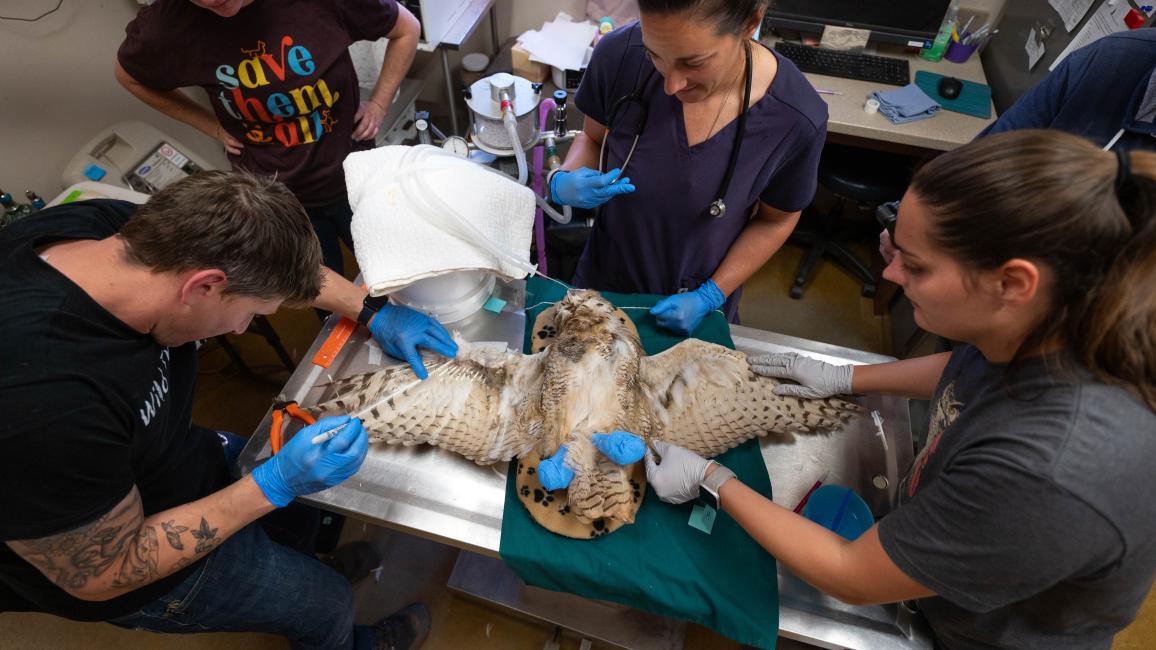
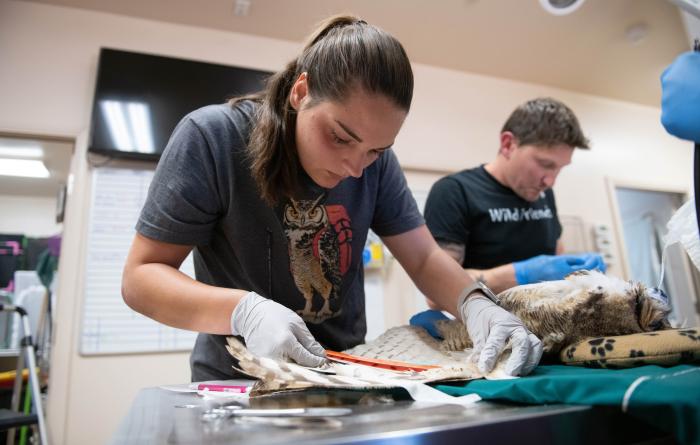
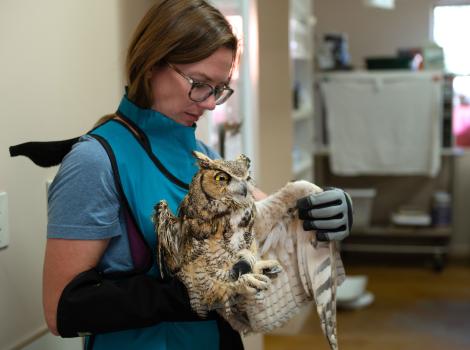
The Wild Friends team pivoted and took a training course on a specialized procedure called imping. This procedure adheres donor feathers from another bird (in this case provided by Utah Wildlife Foundation from a great horned owl of similar size who had passed away) to the shafts of damaged feathers that have been cut.
“We looked at his feathers every few weeks, so we knew which ones would have to be done, snipping damaged shafts in advance,” Wild Friends supervisor Bart Richwalski says. The Wild Friends team measured the feathers and patterns to ensure the best possible fit.
An owl's rare return to Best Friends Animal Sanctuary
The whole procedure took 90 minutes with Wild Friends staff and Best Friends veterinarian Dr. Kelsey Paras working diligently to ensure the precise placement of each feather they adhered.
“The first few feathers were extremely nerve-racking,” Bart says. “But as we got into the groove, the imping became more comfortable, and everything went smoothly.”
Ready for the skies
The goal after imping is to release the animal as soon as possible, but there were a few checks that needed to happen before the youngster could be released into the wild safely. Bart and the team brought the owl to an aviary to test his flight and measure the sound of his wing beats.
“Once we were in the flight aviary, we let him rest and get his bearings,” Bart says. “We came back a few hours later to check sound to make sure he was flying silently.”
Using a decibel reader, Bart measured the noise level and determined the owl could safely return to the wild. He was flying successfully to the highest perches in the aviary. He was ready.

Back where he belongs
Blue skies and the wide-open world awaited overhead as the aviary’s roof retracted. The Wild Friends team held their breath, but all the work and care they had put into helping this owl recover shined as he gained altitude and hovered for the briefest of moments before soaring off.
“Once I saw him fly out the opening in the roof, it was such a sight to see,” Bart says. “I’d love for him to be an owl and disappear into the wilderness and live a great life.”
With a few silent wing beats, the owl disappeared into the horizon — exactly the outcome the Wild Friends team had spent months working toward. After surviving an encounter with a cement mixer and months of recovery, he was no longer a patient. He was free again.
Let's make every shelter and every community no-kill
Our goal at Best Friends is to support all animal shelters in the U.S. in reaching no-kill. No-kill means saving every dog and cat in a shelter who can be saved, accounting for community safety and good quality of life for pets.
Shelter staff can’t do it alone. Saving animals in shelters is everyone’s responsibility, and it takes support and participation from the community. No-kill is possible when we work together thoughtfully, honestly, and collaboratively.
You can help save homeless pets
You can help end the killing in shelters and save the lives of homeless pets when you foster, adopt, and advocate for the dogs and cats who need it most.


Saving lives around the country
Together, we're creating compassionate no-kill communities nationwide for pets and the people who care for them.
Get inspiring animal rescue stories delivered straight to your inbox
Never miss a feel-good animal story. When you give us your email, we’ll send you inspiring animal rescue stories each week, along with tips on different ways you can help save homeless pets in your community and beyond.