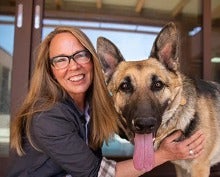
For Amy Dixon, helping pets starts with helping people
If you’ve ever walked into an animal shelter, you know that feeling: the one where you turn the corner and wait for the eager eyes behind that next kennel door to meet yours. You know their excitement when they see you, wagging their tail in the hope that your attention could be their ticket out of there.
Amy Dixon started volunteering at her local shelter as a teenager. She remembers dogs recognizing her before she even reached their kennels. They knew her presence meant a walk, some affection, and a little time outside.
“These pets were just like my own dogs,” she says. “There was no difference except for the fact that these didn’t have a home yet.”
We cannot control what life throws at us. But it was for that exact reason that, years later, Amy began to look at the people on the other side of the equation. Behind many of these animals was a person who loved them and had hit a point where they probably needed help.
Today, Amy is the founder and director of the Human-Animal Support Coalition in Temple, Texas. Rather than operating as a traditional rescue organization, Amy and her team help families solve the challenges that could force them to give up their pets in the first place.
It always begins with the same question: “How do we get to a ‘yes’?” Amy says. “How do we help keep families together?”

Sometimes that means helping a family facing eviction or homelessness. Sometimes it’s domestic violence, divorce, food insecurity, or the need to enter treatment. These are human crises, but when a pet is involved, suddenly the options get a whole lot smaller.
Amy has met people who lived in their cars because they had nowhere else to go with their cats and refused to surrender them. She has spoken with people who said that after losing a child, their dog gave them a reason to keep living.
“If we want to look at a person holistically, we have to include their pet in that consideration,” she says. “Those are family members.”
Still, people who ask for help caring for a pet are often met with judgment. “If you can’t afford a pet,” they’re told, “you shouldn’t have one.” Amy doesn’t buy that logic any more than she would for dumping any other dependent family member when times get tough. Life changes. People lose jobs. They get sick. Housing disappears. Families break apart. None of us knows when we might suddenly need our neighbors to help us get through something we never saw coming.
There are often programs that help people who need food, housing, clothing, education, or medical care. But when the need involves a pet, the hands seem to stop reaching out to offer support.
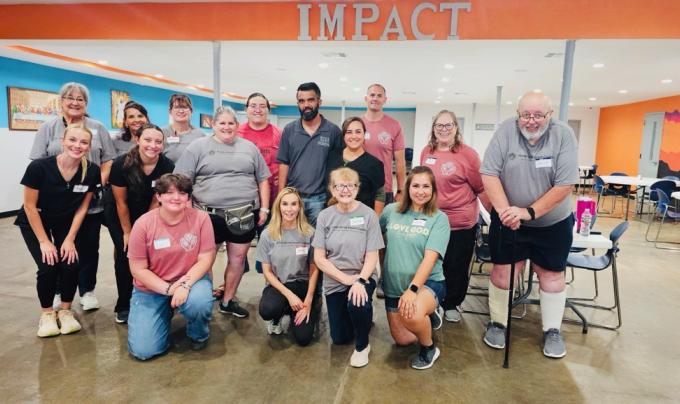
Check out the resources they provided just this summer!
“People are willing to help you with everything but not your pet,” Amy says. “I don’t understand that distinction.”
At the Human-Animal Support Coalition, asking for help isn’t treated as a failure or met with judgment. It’s the beginning of a relationship.
“How can I partner with you in this journey to help your pet?” Amy asks. “You’re invested, I’m invested, and we’re coming together as a team.”
Keeping a pet safely with a family can cost far less than bringing that animal into a shelter, housing them, providing medical care, and searching for another home. It protects the bond between people and their pets while preserving shelter space for animals who truly have nowhere else to go.

Amy walked away from a secure federal career to build this. She had spent more than 20 years in environmental science, including leading a Department of Defense team responsible for protecting drinking water for approximately 40,000 people.
In 2025, she left that work and committed herself to animal welfare full time. She felt pulled to those dogs behind the kennel doors she saw as a teenager. And she knew deep down that this work was about solving human problems first — so that pets never even have to enter the shelter.
That’s what I love about Amy’s approach. As Amy said, all the dogs in those kennels are our dogs sleeping on our couches right now. Those people going through crisis could be any one of us should life throw us a curveball next week.
It takes a fresh perspective and a whole lot of guts to drop your career to stick your neck out for the animals. But countless animals have been diverted from shelters, countless families have stayed together, and countless lives have been saved because of Amy and her team.
See more of and support the in-depth work that Amy and Human-Animal Support Coalition are doing here.
-Julie