When we know better, we do better. Independent high-quality shelter data allows Best Friends to understand what's happening in animal shelters and determine the best way to help. In a field where millions of lives depend on decisions made with limited resources, knowing the truth with precision and acting on it collectively is essential to save the lives of every healthy treatable dog and cat.
The data submitted to SPDA is aggregated with all other available data in the Pet Lifesaving Dashboard — Best Friends' online tool designed to provide a consistent, data-driven picture of lifesaving in our nation's animal shelters — so individuals across the country can understand the lifesaving progress being made in their own community and know how they can help be part of the mission to save cats and dogs. For media related questions, please contact pr@bestfriends.org.
Save rate
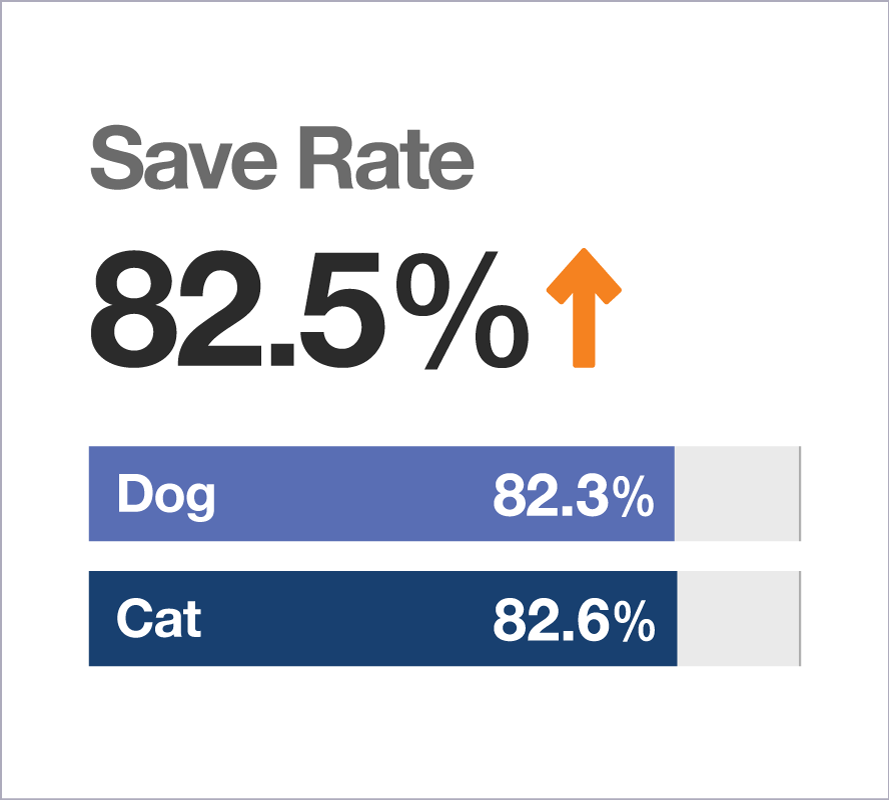
The U.S. saved 82.5% of pets in shelters and the trend is moving in the right direction.
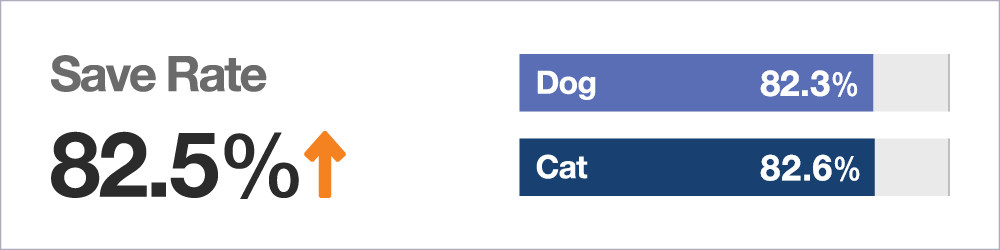
An animal shelter's save rate is the percentage of animals who leave a shelter alive or are still there waiting for an outcome. Save rate is calculated as: (Live Intakes – Non-Live Outcomes) / Live Intakes = Save Rate. The 90% save rate is a common benchmark for measuring a shelter’s success in lifesaving efforts.
To be considered no-kill, an organization must achieve and maintain at least a 90% save rate in aggregate over the course of a 12-month period. An organization can reach a 90% save rate for the year, even if not every month within that 12-month period has a 90%+ save rate.
Live intake
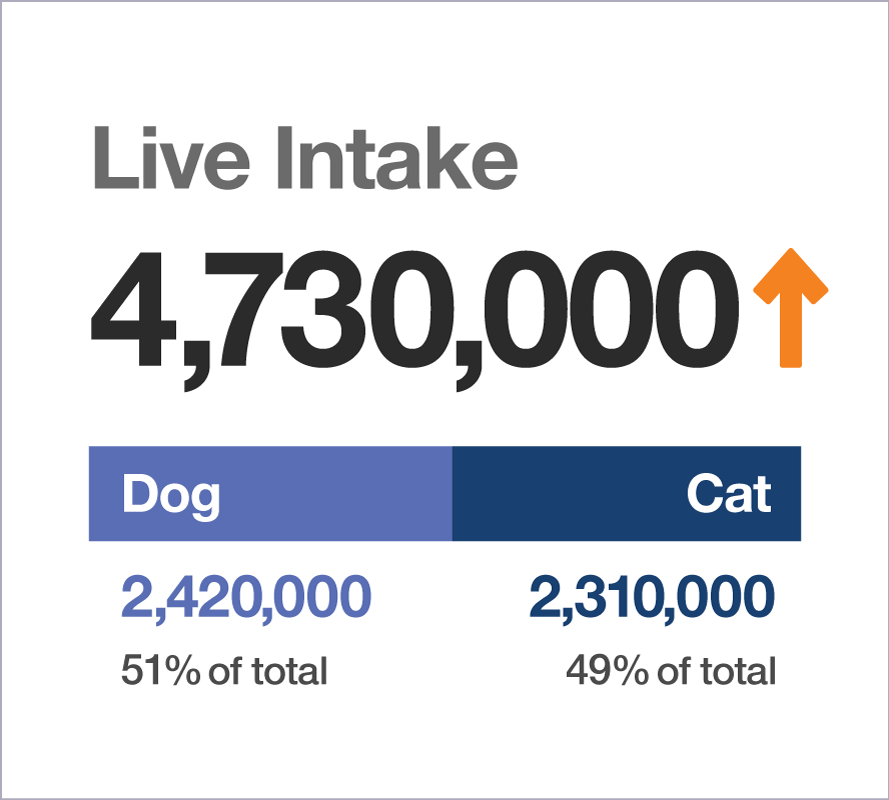
4,730,000 animals came through shelter doors in the U.S., with cats making up 49% and dogs 51% of shelter intake.
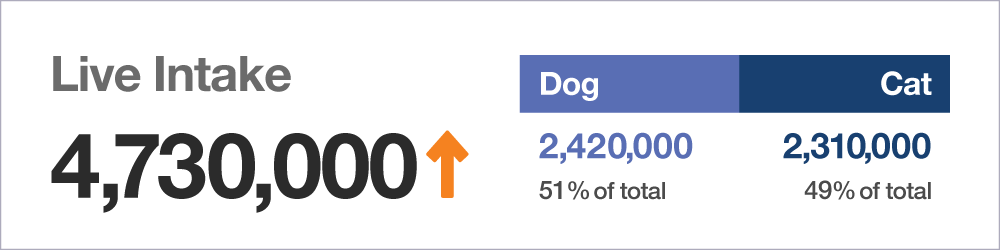
Intake is the number of animals admitted to a shelter. Strategic managed intake is a proven practice that recognizes that entering an animal shelter is not the best outcome for many pets.
For many years, we've told people that if they found a stray animal or couldn't care for their pet anymore, the best thing to do was to take the animal to the shelter. But that one-size-fits-all approach has had serious consequences — many shelters just don't have the space, staff, or resources to care for all those animals. The sad truth? Too many pets have lost their lives simply because the system was overwhelmed. Today, we know there's a better way: strategic managed intake.
This means thinking carefully about which animals truly need to come into the shelter and when. At their core, strategic managed intake programs provide options for animals to be kept in their homes, returned to their homes, or moved to new homes without them having to enter the shelter at all. It's a win-win for everyone.
Non-live outcomes
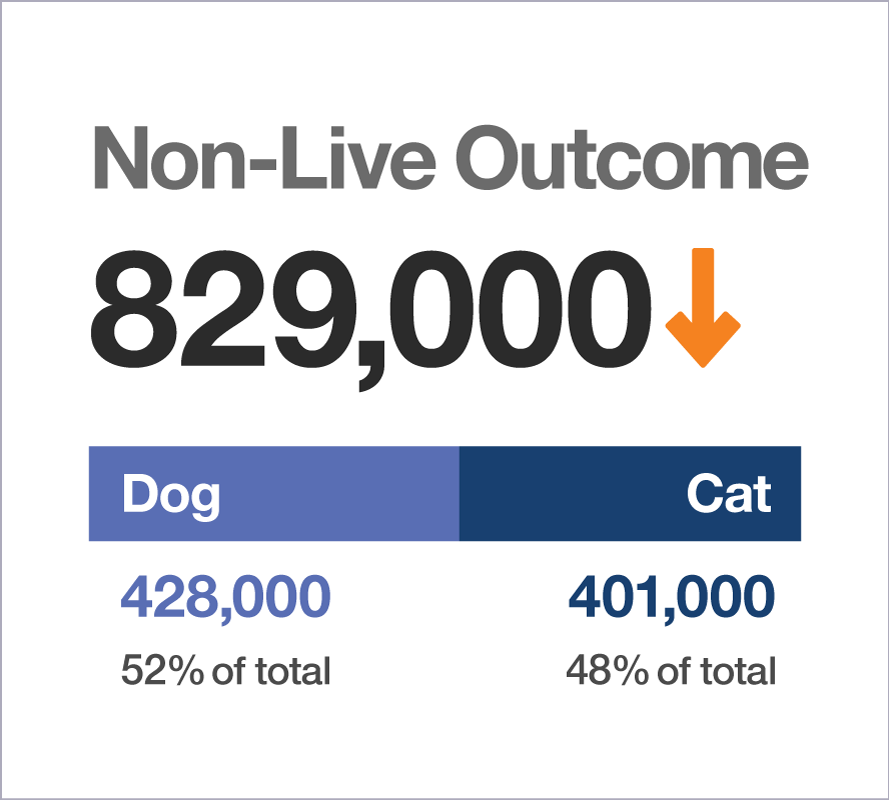
There were 829,000 non-live outcomes for pets in U.S. shelters split nearly evenly between dogs (52%) and cats (48%).
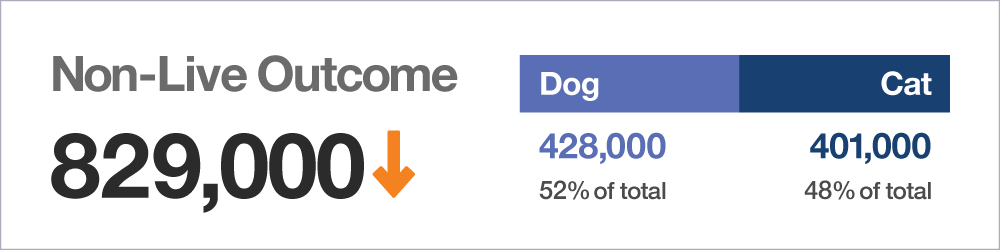
Non-live outcomes include animals who die, are lost, are euthanized, or are part of owner-requested euthanasia cases. Best Friends distinguishes between the terms "killed" and "euthanized" because killing is something we want to prevent and euthanizing, when it is a true mercy, is something we support.
Typically, the number of pets who are suffering from irreparable medical or behavioral issues that compromise their quality of life and prevent them from being rehomed is not more than 10% of all dogs and cats entering shelters. Therefore, we designate shelters that meet the 90% save-rate benchmark as no-kill. The ultimate goal, however, is to ensure that every shelter has the resources to save every dog and cat who can be saved.
Pet adoptions
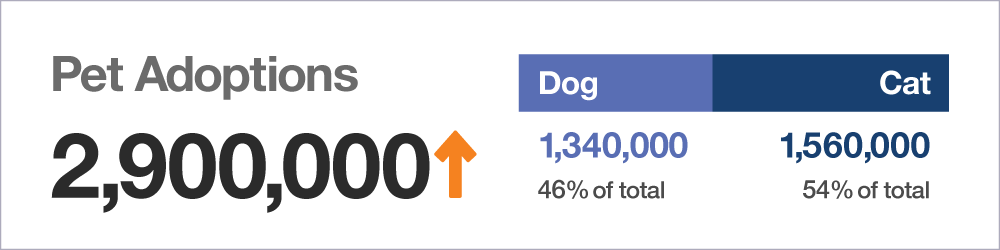
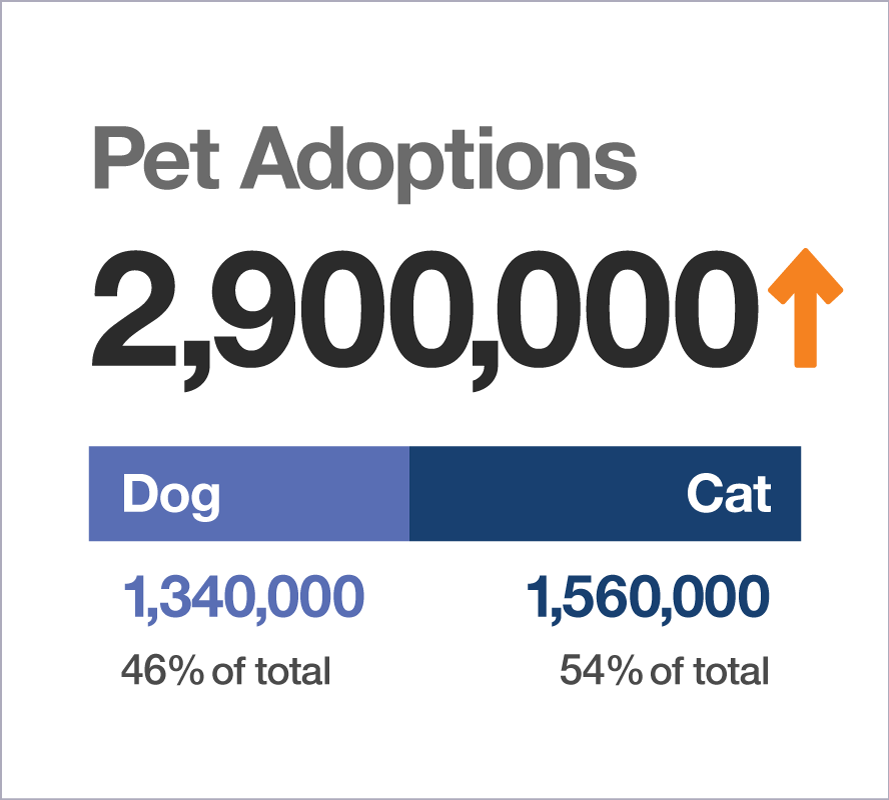
Adoption policies should be geared toward finding a path to say yes versus looking for reasons to say no. Long applications, high adoption fees, and barriers like home checks, background checks, and veterinarian references not only eliminate potential loving homes, but research has shown they do not actually increase the "quality" of adopters for pets in shelters.
We believe conversation-based adoption counseling, where staff talk to potential adopters about the unique qualities and needs of the animal, is a better way to find the right match between pet and adopter and save more animals in the process.
Transfers out
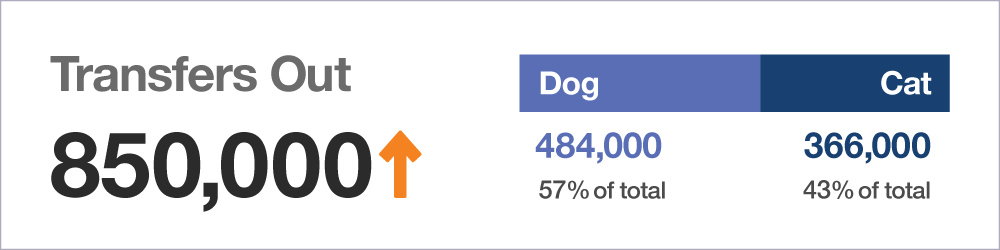
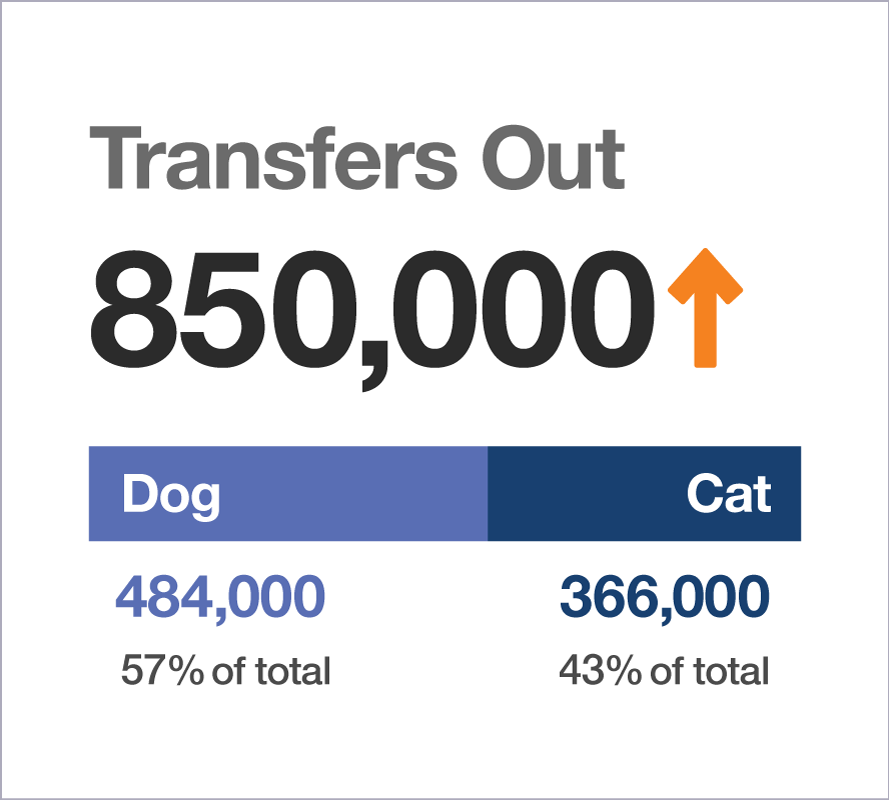
Improving and expanding transfer partnerships is a key strategy to increase lifesaving. Organizations facing larger numbers of homeless pets can find positive outcomes through programs that transfer pets to organizations with lower numbers of adoptable pets and greater demand.
An effective transfer program not only reduces the killing of pets, but it also allows the source shelter to implement sustainable, proven lifesaving practices and help more pets in their own community. Transfer can also benefit receiving organizations by expanding the variety of adoptable pets available, attracting more potential adopters, and meeting community demand.
Return to home
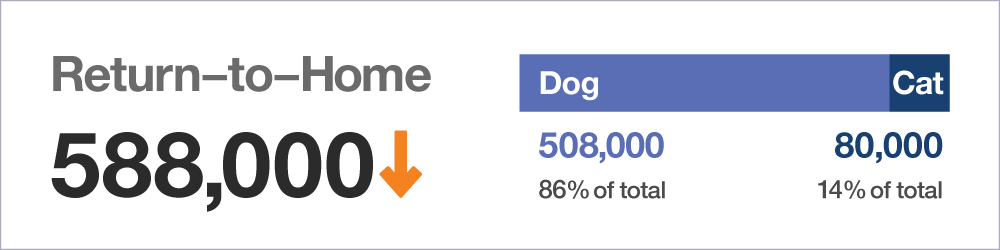
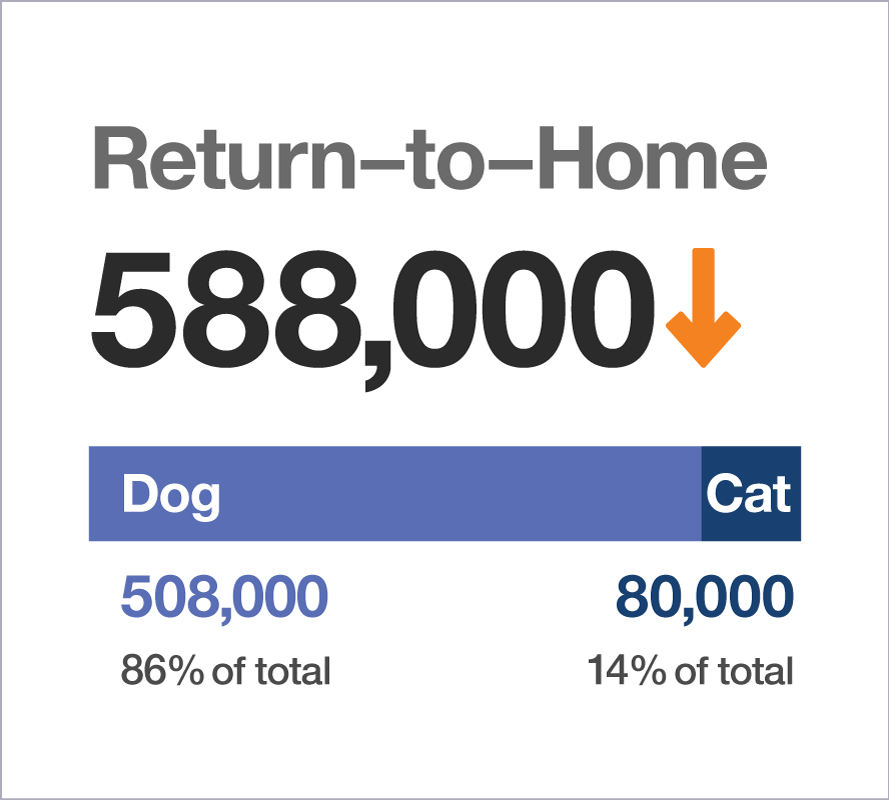
Reuniting lost pets with their people is one of the most critical roles for shelters across the country — and individuals can help. Most dogs you see outside are not homeless. Most who wander are just lost, and you can help them find their way back home. Did you know that 70% of lost dogs are found less than a mile from home? And if they're brought to a shelter, they have a 75% less chance of returning to their family.
So next time you find a lost dog, don't take them to an already busy shelter. Instead, be a hero to the dog, family, shelter, and entire community — help them find their way home.

Connect with us on social media to stay in the loop about the lifesaving progress we’re making together.


Dashboard Methodology
About the Data