Adoption alone isn’t enough
Saving homeless cats is often framed around adoption: Get more people to adopt, get more cats out of shelters, and watch the numbers improve. And while adoption is essential to saving dogs and cats in shelters, it doesn’t tell the whole story.
Ten years ago, a cat entering a shelter had roughly a coin flip's chance of getting out alive. Today, the number of cats killed in shelters has dropped by 75%. The national save rate for cats has climbed from 62.5% to 82.9% — a 20 percentage point swing.
For a shelter taking in 2,000 cats a year, that's 400 more animals walking out the front door instead of not walking out at all.
What makes the singular focus on adoption misleading is that no community only adopted its way to those numbers. There is a ceiling on how many new animals a community can adopt in a given year. The adopter pool is important but finite, and it doesn't scale fast enough to explain a 75% reduction in cats killed.
Something structural changed, and it wasn't on the demand side.
The biggest shift has been in how shelters take in animals. Notably, community cat programs — where healthy cats who live outdoors are spayed or neutered, vaccinated, and then returned to the neighborhoods where they already live — moved from a niche practice into the mainstream.
Cats returned to their outdoor homes went from 97,000 to 162,000 over the past decade, a 66% increase. That's not an adoption story. It's a fundamentally different answer to the question of what a shelter is supposed to do with an animal who was never going to be a realistic candidate for traditional adoption.
A cat who's spayed or neutered living outdoors with a feeding network and a vaccination record isn't a problem the shelter failed to solve. It's a problem the shelter learned to define correctly.
The data actually understates this. Many jurisdictions don't count cats from trap-neuter-vaccinate-return (TNVR) programs as shelter admissions, which means the full scale of TNVR is only partially visible in the numbers we track nationally. The measurement system hasn't caught up with the practice — which is its own kind of problem if you're trying to understand what's working and replicate it.
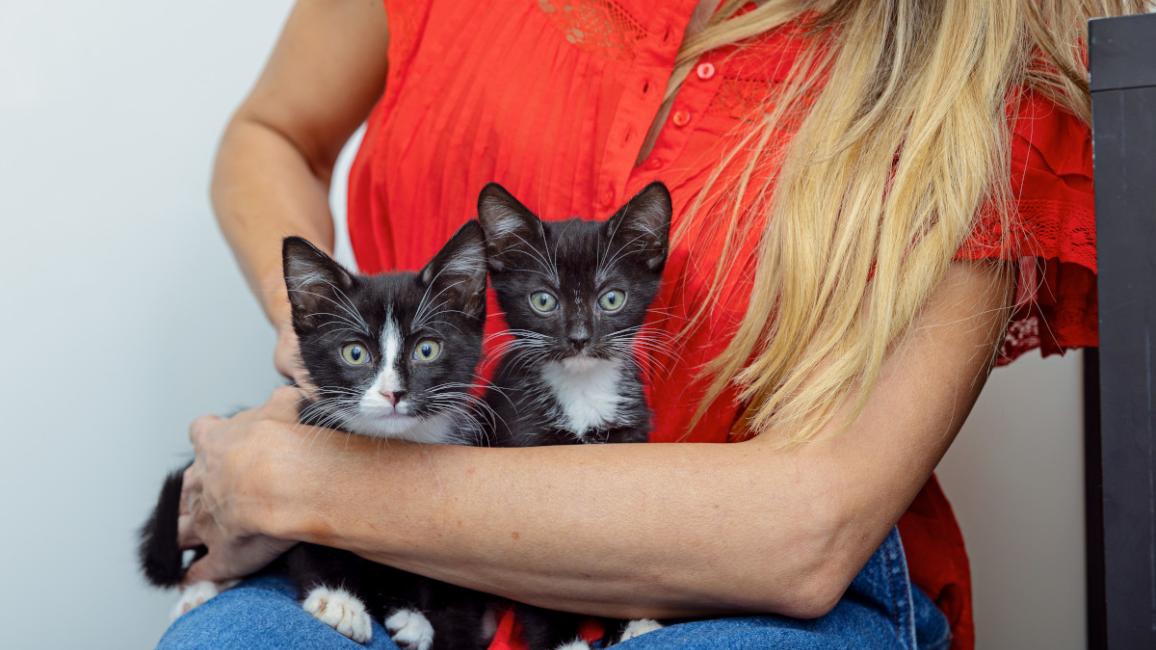
Kittens are the other part of the story when it comes to cat lifesaving in shelters. More than half of all cat admissions at shelters are kittens, based on data from a sample of around 200 shelters. Tiny kittens are medically fragile in ways that a shelter environment can actually make worse. That's where foster programs that move kittens into homes where they can grow strong and healthy come in. These programs are essential infrastructure to save kittens' lives.
There are roughly 200,000 cats at risk of being killed in shelters this year. The instinct is to frame that as an adoption gap — 200,000 more homes needed. But if the past decade has shown anything, it isn’t only about asking how we can place more cats in homes. It's asking how many of those cats need placement at all and what would it take to keep them where they already are.