Faces of No-Kill: The puppy who started life in reverse
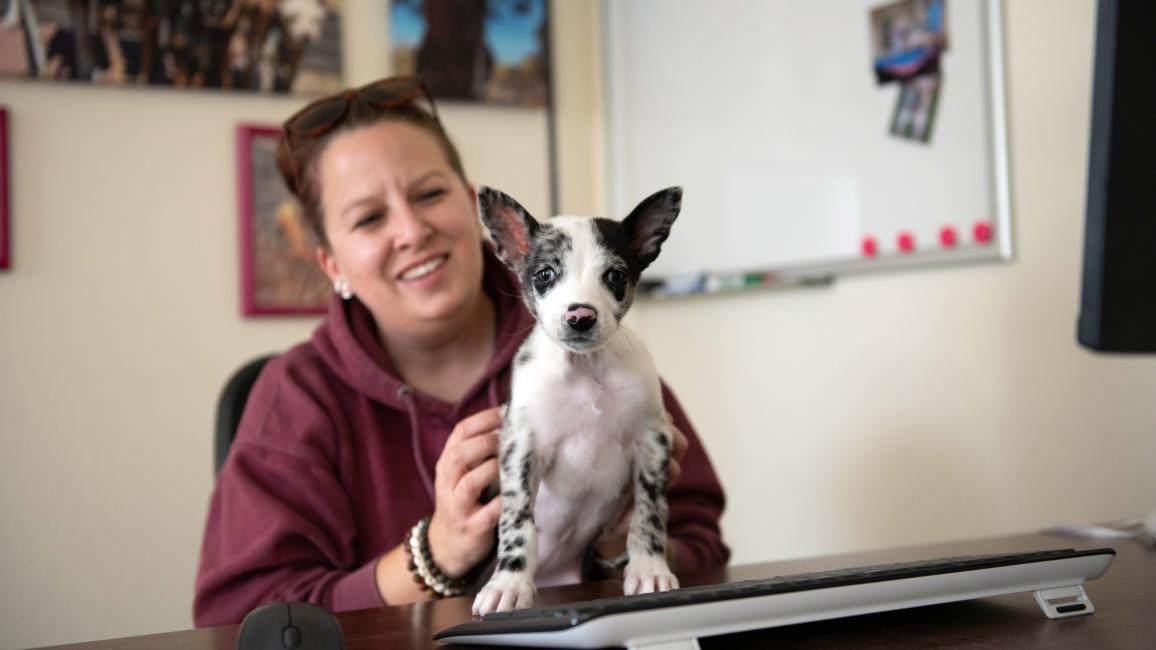
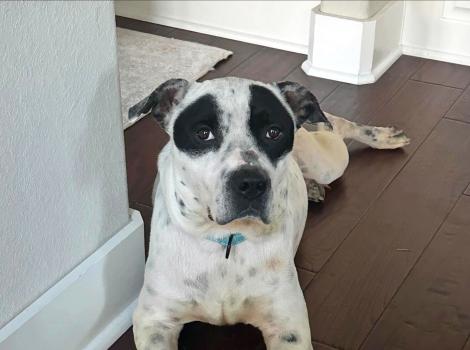
Tapping keys and tapping paws are a common sound in the offices at Best Friends Animal Sanctuary in Kanab, Utah. Polly Pocket can’t quite help the tapping her back legs do, but it doesn’t stop her enthusiasm for coming to work with Best Friends staff person Jessica Harrington, who’s fostering the pup.
This story is a part of our Faces of No-Kill series, highlighting the journey of pets who lost their place to call home. These pets are thriving today thanks to animal shelters that said yes to lifesaving with a community that found a way to save them. Best Friends’ goal is for every shelter and every community to reach no-kill, and this story shows why that’s so important.
Polly Pocket arrived at the Sanctuary malnourished and a third of the size of her siblings, weighing just over 2 pounds. She went directly into foster care to give her around-the-clock care.

Life in reverse
“From the beginning, I noticed she would move backward instead of forward when exploring my house,” says Jessica. “Something just seemed off.”
During Polly Pocket’s initial veterinary exam, the team discovered she was likely blind or had very limited vision. Jessica suspected that the backward scooching was the tiny puppy’s creative way of avoiding bonking her head while she figured out the layout of her new world.
“Her back legs seemed to be a little unstable to begin with,” Jessica says, which prompted an in-depth assessment by the Best Friends veterinary team for neurological conditions. Also, with how small Polly was in comparison to her siblings, the team wanted to see whether proper nutrition might help with some of her issues.
Polly Pocket had no intention to let her tap dancing and wobbly gait set her back though. Jessica set up a quiet, cozy area of the house for her at first, but as soon as Polly started getting proper nourishment, she gained strength — and spunk.

A life-changing toy
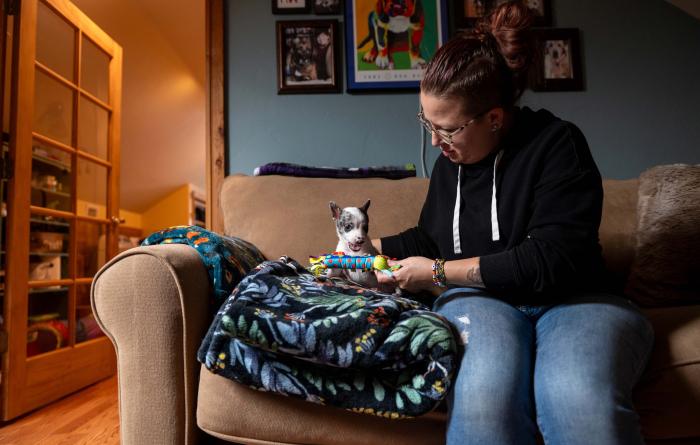
It was Polly's new favorite toy that helped to build her confidence and coordination: a simple cat wand toy.
“She just loved cat toys,” Jessica says. “It really seemed to help her figure out movement too.” In her excitement to chase the cat toy, something clicked: Polly Pocket started moving forward.
Then, she expanded her circle of playmates to other dogs. “She preferred the gentle dogs because they respected her instability,” Jessica says. But Polly Pocket charmed everyone she met.
Frolicking into the future
“As she started to feel better, her personality came out, and her favorite thing was to play with toys but second to that was to sneak attack and try to herd me,” Jessica says with a laugh. “She'd be so proud of herself and bounce away in a happy frolic.”
Polly’s eyesight, while still a little impaired, improved with the help of tracking toys. And while she still wobbles a bit, the extra nutrition and a lot of love helped her regain her strength, even if she still tackles the world at her own pace and with her own flair.
[Resilient pup overcomes injury, learns to walk again]
All those backward scoots and tiny tap-dance steps turned out to be the warm-up for her real debut. With a little help (and a cat toy she’d definitely call essential), Polly Pocket learned how to charge ahead, explore boldly, and shout her personality to the world. She may have started life in reverse, unsure of where to step next, but every bit of patience, play, and kindness helped her move full speed ahead into a home of her own.

Let's make every shelter and every community no-kill
Our goal at Best Friends is to support all animal shelters in the U.S. in reaching no-kill. No-kill means saving every dog and cat in a shelter who can be saved, accounting for community safety and good quality of life for pets.
Shelter staff can’t do it alone. Saving animals in shelters is everyone’s responsibility, and it takes support and participation from the community. No-kill is possible when we work together thoughtfully, honestly, and collaboratively.
You can help save homeless pets
You can help end the killing in shelters and save the lives of homeless pets when you foster, adopt, and advocate for the dogs and cats who need it most.


Saving lives around the country
Together, we're creating compassionate no-kill communities nationwide for pets and the people who care for them.
Let’s be friends!
Connect with us on social media to stay in the loop about the lifesaving progress we’re making together.


