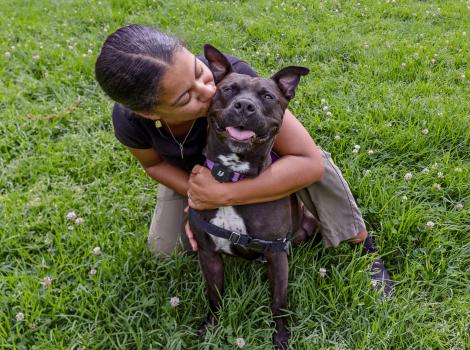
How size restrictions hurt renters with big dogs and affect shelters

Admissions data from nearly 300 U.S. animal shelters suggests the average adult dog (over 1 year old) in a shelter weighs approximately 44.6 pounds. This means roughly half of dogs — and their people — are unwelcome in many rental properties.
It’s not uncommon for apartments to have weight limits for dogs in the 40- to 50-pound range, making it difficult for people who rent and have dogs to find housing. In fact, data compiled by the Pet-Inclusive Housing Initiative shows that less than 10% of rental properties have no breed or weight restrictions. (Because breed and weight are closely related, weight limits are often used to exclude large-breed dogs.)
Weight restrictions for housing can affect a shelter’s lifesaving in two important ways: increased admissions and reduced adoptions. Having fewer rental options means people might have to consider relinquishing their “big dogs.” In a Best Friends analysis of 1.1 million owner-surrender records, housing was the second most common reason people gave up their pets, cited in nearly 14% of cases. A more recent Pet-Inclusive Housing Initiative analysis found that “housing-related issues account for 21% of pet rehoming cases.”
In addition, renters wishing to add a large dog to their family might be unable to, which is a missed opportunity to save more dogs. Data from the U.S. Census Bureau suggests that 25% of renters have at least one dog.
All this to say: Weight restrictions in rental housing almost certainly contribute to the challenges in saving big dogs faced by shelters around the country, hurting far too many dogs, and their humans, in the process.