One year later: What L.A.’s wildfire crisis taught us about saving lives with data
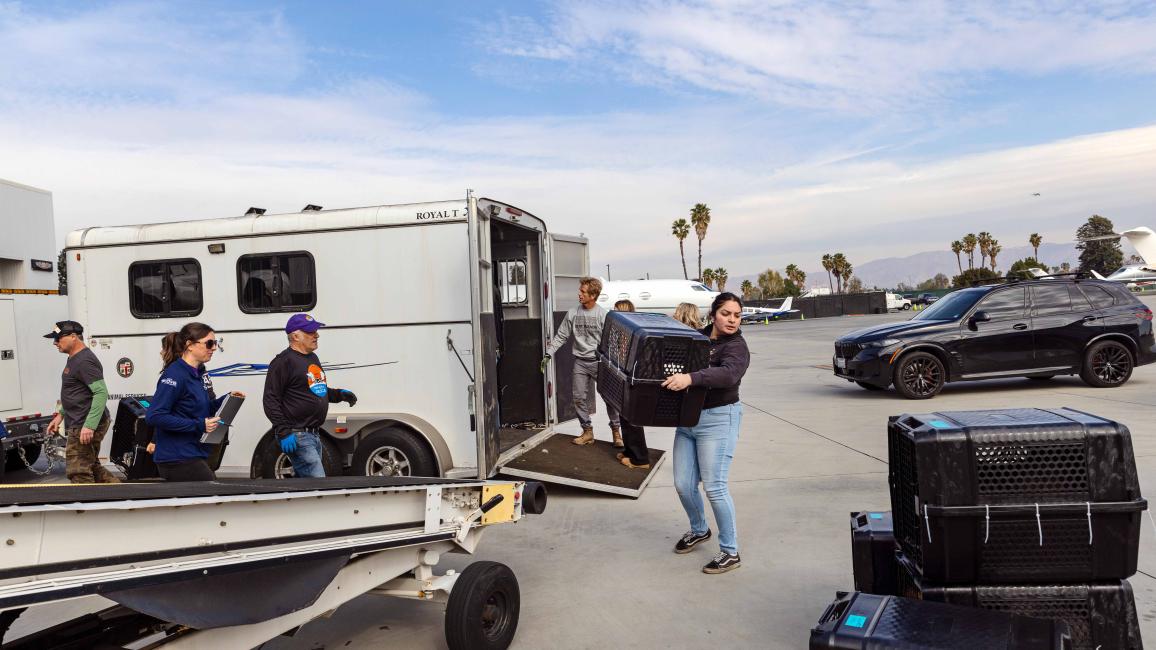
One year ago, three major wildfires tore through Los Angeles County. The Palisades Fire consumed 23,448 acres. The Eaton Fire burned 14,000 acres. The Hughes Fire added another 10,400 acres to the devastation. While news coverage focused on homes lost and communities displaced, a quieter crisis unfolded: What happens to animals in shelters when the shelters themselves are in the evacuation zone?
The answer, it turns out, depends less on heroic improvisation and more on boring infrastructure — the kind of data systems most organizations already have but rarely think to leverage in emergencies.

The crisis nobody saw coming
When the Hughes, Palisades, and Eaton fires ignited in January 2025, L.A.’s animal welfare network faced an impossible coordination challenge. Our own Best Friends Pet Adoption Center in L.A. was at risk of evacuation. Multiple partner shelters needed immediate support. Thousands of animals required emergency placement. Volunteers from across the country wanted to help but needed direction. Financial resources had to be deployed within hours, not days.
First, we had to put on our own oxygen masks, ensuring the pets and people at our L.A. center were safe. Then, we could help coordinate the broader response.
At Best Friends Animal Society, we had minutes to make decisions that would typically take weeks of planning. Which shelters were in the most immediate danger? Where could we safely move animals? Which foster families were outside the fire zones? How many vehicles could we mobilize? Who was qualified to handle medical cases versus behavioral cases?
The stakes were clear: Get the coordination right, and we’d save lives. Get it wrong, and animals would die — not from the fires themselves but from our inability to organize an effective response.

The unsexy truth about emergency response
We learned pretty quickly that it’s not about having the fanciest technology. It’s about knowing how to repurpose the systems you already have.
We didn’t build new software during the L.A. fires. We had maps that brought in NOAA’s publicly available fire data for other emergencies we had staffed. Repointing these dashboards to the L.A. community, we were able to quickly see which shelter locations, foster family addresses, and transport corridors were at risk.
We didn’t create a custom volunteer management platform. In fact, we didn’t even use our typical volunteer tracking system because we needed more flexibility and control than what our typical system allows. Instead, we used Airtable — the same tool our team had been using for routine project tracking — to coordinate hundreds of volunteers. Within days, 1,304 volunteers and 1,191 fosters signed up. This enabled 420 foster placements, and 292 animals were adopted directly through the L.A. community response. Each person knew exactly where they were needed and when.
We didn’t develop AI-powered predictive models. We used our shelter management software and customer relationship management systems to track every animal movement: which shelters they came from, where they went, who was responsible for their care at each step.
The result? We coordinated the safe relocation of 2,037 animals: 509 direct admissions to Best Friends facilities, 63 pre-fire transfers to other organizations to create shelter space, and 1,465 animals moved through stipend-supported partnerships with other organizations.
None of this happened because Best Friends showed up and ran the show — it happened because LAAS, Pasadena Humane, and dozens of other organizations had the instincts and infrastructure to act.

When data meets human judgment
The most important lesson from that crisis: Data doesn’t make decisions. People do.
Our dashboards could show us which shelters were closest to the fire line. They couldn't tell us where human connection and coordination were needed most. Our systems could calculate transport logistics. They couldn’t assess whether a particular driver was too exhausted to safely continue. Our financial tracking showed available resources. It couldn’t predict which community partnerships would be most effective three weeks into the crisis.
Every critical decision during those fires required human judgment informed by data, not replaced by it. In an era obsessed with artificial intelligence and automation, the L.A. wildfires reminded us that the most sophisticated emergency response system includes a well-informed human being making real-time calls based on incomplete information.
This is the paradox of modern crisis management: We need robust data infrastructure not to eliminate human decision-making but to support it. The organizations that responded most effectively to the L.A. fires weren’t the ones with the most advanced technology. They were the ones whose people knew how to think clearly under pressure while leveraging whatever tools were available.

What this means for your community
L.A. won’t be the last community to face a wildfire crisis. As climate patterns shift, more regions will confront similar emergencies — wildfires, floods, hurricanes, or disasters we haven’t yet imagined.
Sometimes we hear “never let a good crisis go to waste,” which sounds calculating and heartless, but in this case, the L.A. wildfire crisis enabled us to help these shelters and communities beyond when the fires were contained.
What's most remarkable is how LAAS and Pasadena Humane sustained and built on their own momentum after the crisis ended. At Los Angeles Animal Services, transfers of pets out to other groups averaged 911 animals per month before the fires. By August 2025, that number had grown to 946 — and their save rate improved from 85.4% to 86.2%. At Pasadena Humane Society, transfers increased from an average of 26 per month to sustained levels around 44, with their save rate climbing from 89.5% to consistently above 90%. That 90% threshold matters: it’s the national no-kill benchmark, and Pasadena crossing it is a meaningful movement milestone, not just an operational stat.
The emergency response created new partnerships, new transportation routes, and new capacity that persisted long after the crisis ended. That’s the real lesson: Crisis preparation isn’t just about surviving disasters — it’s about building infrastructure that strengthens your entire network permanently.
The question isn’t whether your community has the data infrastructure for emergency response. The question is whether you know how to use what you already have when a crisis hits.
Here’s what our partners have taught us:
Agility beats perfection. Fast, shared data drives action. We didn’t wait for perfect information — we used Excel spreadsheets and Google Sheets alongside our sophisticated systems because they could be accessed and updated by partners quickly.
Data feedback loops create rapid learning. Tracking admissions and outcome flow (“noses in, noses out”) daily allowed us to balance capacity and lifesaving impact in real time. We learned and adjusted every single day.
Context matters as much as metrics. The numbers told us which shelters needed help, but human judgment told us where coordination and support were needed most.
Scrappy data use drives long-term readiness. The multi-organizational collaboration tools we improvised during the crisis — simple shared spreadsheets with limited access restrictions — became permanent infrastructure that’s still improving outcomes today.

The boring infrastructure that saves lives
One year later, the L.A. fires are a case study in how unsexy preparedness saves lives. Not dramatic AI breakthroughs. Not revolutionary technology. Just competent people using reliable systems to coordinate complex operations under pressure.
This is the future of emergency response: Organizations that invest in boring infrastructure — data governance, staff training, partnership protocols, system integration — will be the ones that save lives when crisis comes.
The animals we helped during the L.A. fires didn’t care whether we used cutting-edge technology or decade-old software. They cared that when the smoke came, someone was ready to get them to safety.
That’s what data-enabled emergency response looks like in practice: not flashy innovation but methodical preparation that makes the difference between chaos and coordination when every second counts.
One year later, 2,037 animals are alive because a network of organizations was ready to act.The next crisis is coming. The question is: Will you be ready?
Michelle Dunivan is senior director of insights & analytics at Best Friends Animal Society and leads the Shelter Pet Data Alliance, supporting over 2,200 animal shelters and rescue groups nationwide.