Running Grand to Grand for homeless pets
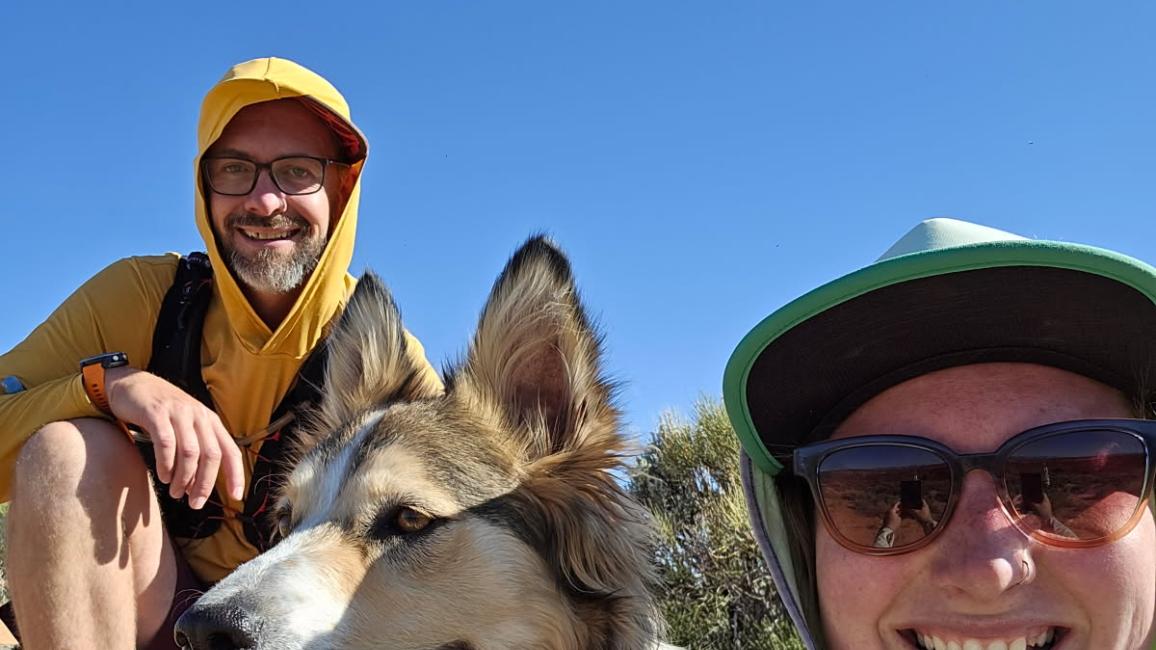
The path to saving homeless pets isn't always a smooth road. For one dedicated group of animal lovers, it’s a 171-mile run through sand, rock, and desert heat.
This September, five Best Friends Animal Society supporters and staff members will take on the Grand to Grand Ultra, one of the toughest footraces on Earth. This seven-day, self-supported ultramarathon covers some of the most remote terrain in the U.S., with runners carrying all their own gear, food, and determination.
Most years since the race began, one or more participants — including late Best Friends co-founder Gregory Castle — have run the Grand to Grand to raise funds for the animals. Part of the course winds through Best Friends Animal Sanctuary, where dogs, cats, bunnies, parrots, horses, wildlife, and other animals have found healing and second chances — and where the animals themselves serve as inspiration to keep runners moving toward the finish line.

Doing it for the animals
Each runner on the Best Friends team is raising funds to support homeless pets at the Sanctuary and across the country.
“This race lets me give back,” says Kieran Corrigan, a longtime guide in the Kanab area and owner of local business Willow Canyon Outdoor. “Supporting Best Friends feels like a natural extension of my connection to animals.”
[Runners face a desert challenge to help animals]
For Pete O’Dea, a Best Friends caregiver at the Sanctuary, the race is a chance to combine two passions: running and helping animals.
“I’ve used running as a way to fundraise for causes I care about for years,” says Pete, who finished fifth overall in the Grand to Grand in 2019. “This is an opportunity to support the mission of achieving no-kill in our country.”

Pushing boundaries, finding purpose
Completing the Grand to Grand Ultra takes grit, strategy, and months of training, often before sunrise or after long workdays.
“Training gets scheduled around everything else,” says Pete. “Marriage, family, animals, work. Some imbalance is inevitable, but doing my best to attend to all my duties is important to me.”
For Kieran, the biggest challenge is carving out time while running a business.
“Balancing two jobs and setting aside two hours a day for training is difficult yet rewarding,” he says. His motivation? His dog Mayzie. “If she doesn’t get out for her run, she’ll let me know. She’s my running coach.”

United by a cause
Other teammates include animal lovers from all walks of life like Best Friends regional strategist Desiree Triste-Aragon from Albuquerque, who’s running to raise awareness for pets in shelters in under-resourced areas. “New Mexico is both a real desert and a resource desert for pets,” she says. “We have incredible dogs and cats here who just need a chance.”
James Lee, who's been a runner for 15 years, sees running as a way to appreciate life more deeply and this race as a chance to grow. He’s also running alongside his friend Simeon Gilmer, a vegan fitness coach who’s excited to combine his passion for animals and endurance sports.
[Runners accept ‘ultra’ challenge to save dogs and cats]
“I haven’t done a race this long before,” James says, “but meeting new people and running seven days sounds fantastic.” His motivation? Helping animals and sharing the journey with like-minded people.
Simeon agrees: “I can’t think of a better way to bridge my love of fitness and my compassion for animals than to raise money for Best Friends.”

More than a race
Whether they’re longtime ultrarunners or it’s their first time, everyone on the Best Friends team is running for something bigger than a finish line.
“My favorite part of running this race is meeting people from all walks of life,” says Pete. “You hear their stories, watch them struggle, and see them succeed. It’s inspiring.”
And every step helps save lives.

Let's make every shelter and every community no-kill
Our goal at Best Friends is to support all animal shelters in the U.S. in reaching no-kill. No-kill means saving every dog and cat in a shelter who can be saved, accounting for community safety and good quality of life for pets.
Shelter staff can’t do it alone. Saving animals in shelters is everyone’s responsibility, and it takes support and participation from the community. No-kill is possible when we work together thoughtfully, honestly, and collaboratively.
You can help save homeless pets
You can help end the killing in shelters and save the lives of homeless pets when you foster, adopt, and advocate for the dogs and cats who need it most.


Saving lives around the country
Together, we're creating compassionate no-kill communities nationwide for pets and the people who care for them.

Let’s be friends!
Connect with us on social media to stay in the loop about the lifesaving progress we’re making together.


