We don't need to worry about puppy adoptions, right?
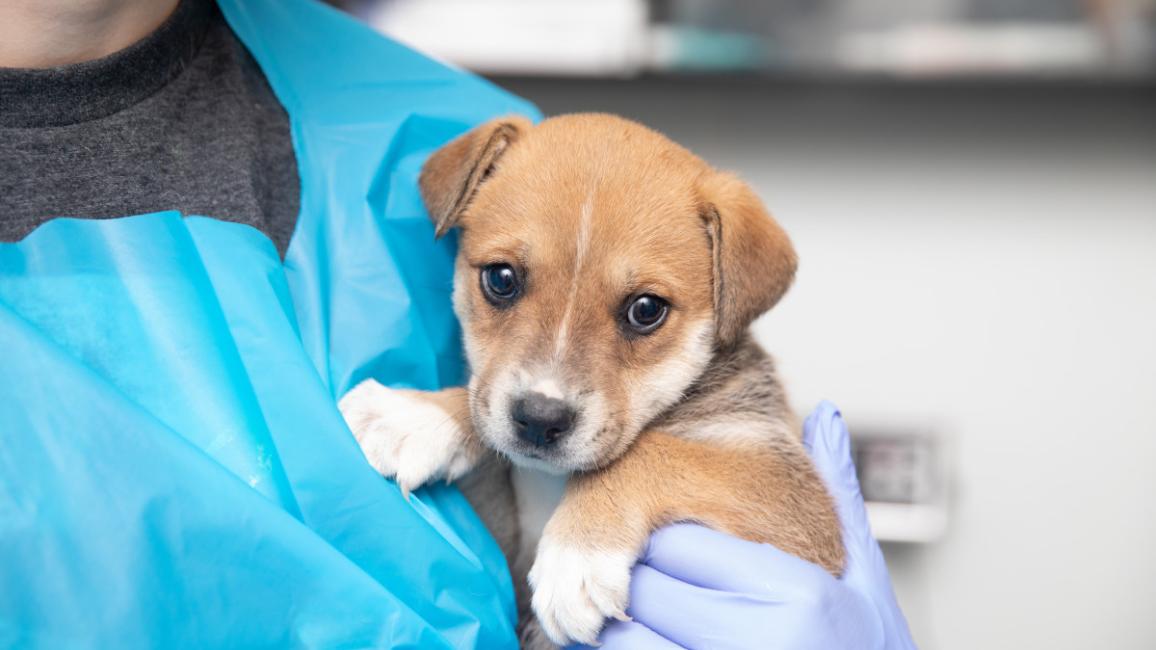
Getting adorable puppies adopted: That's one part of animal sheltering that's supposed to be easy, right? It's the feel-good story that writes itself — the adoption event that doesn't need marketing. And for the most part, that's true. The vast majority of puppies who enter shelters move quickly on to new homes.
But 3.8% don't.
That might not sound like much until you do the math. Across the roughly 400 animal shelters providing data to Shelter Pet Data Alliance — Best Friends' platform that helps shelters share and analyze data — 3.8% of puppies admitted to shelters in 2025 were still there after 60 days. Scale that to national shelter admissions numbers, and you're looking at approximately 21,500 puppies a year who are in a shelter long term. Not adult dogs with complicated behavioral issues. Not seniors with medical needs that make placement harder. Puppies.
The obvious question is why. The honest answer is we don't know — not because no one's curious but because the data infrastructure to answer that question reliably doesn't exist in most shelters.
Breed identification is inconsistent. Behavioral assessments vary. Animals who are receiving veterinary care and not yet adoptable get recorded differently from one organization to the next. The information that would let us all understand what's actually keeping these puppies in shelters past 60 days isn't being captured in a way that makes analysis possible.
So that means even though we're talking about one of the most adoptable groups in any shelter, we can't explain what's happening to the ones who aren't readily adopted.
It's easy to get stuck in anecdotal narratives about who's at risk and assume the picture is complete. If we're not letting the data tell us which populations are falling through, we find out late. Or we don't find out at all.
That's the irony. The animals we assume need the least attention are also the ones we know the least about when things go wrong. It's far less common, for example, to flag a 4-month-old puppy for specialized behavioral support in a shelter the way a year-old pit bull-type dog who's been kenneled for weeks might be.
The data we do have can’t distinguish among the most likely explanations. Some of these puppies are neonates — born in a shelter’s care, not yet old enough to be legally adoptable in states that require a minimum age. Some are working through medical cases, such as parvo or distemper, where 60 days is what recovery looks like. Some are in foster care. We don’t know the proportions. We don’t know whether the number is consistent across most shelters or driven by a handful of organizations whose admissions mix runs heavier on neonates or medical cases by design. That’s not a small distinction. It changes what the 21,500 figure means.
We need more solutions for these puppies. Foster care is one — and it is lifesaving without a doubt — but even that is more complicated than it might seem. The available data doesn't show how many of those 21,500 puppies are in a foster home versus in a shelter. And that distinction matters because 60 days in a home is fundamentally different from 60 days in a kennel.
There's also the question of whether a puppy in a foster home becomes harder to find. If the animal isn't in the shelter or on the organization's website the same way as a foster pet, are they visible to the person who would have taken them home? That's not a reason to avoid foster care but rather to measure what's actually happening inside it.
We can count them: 21,500 puppies a year. We just can't say much about why they're still in a shelter, what's happening to them during their stay, or what would be best to help them land loving homes more quickly. For the population everyone assumes is the easy part, there's a remarkable amount we haven't figured out yet.