An owl's rare return to Best Friends Animal Sanctuary

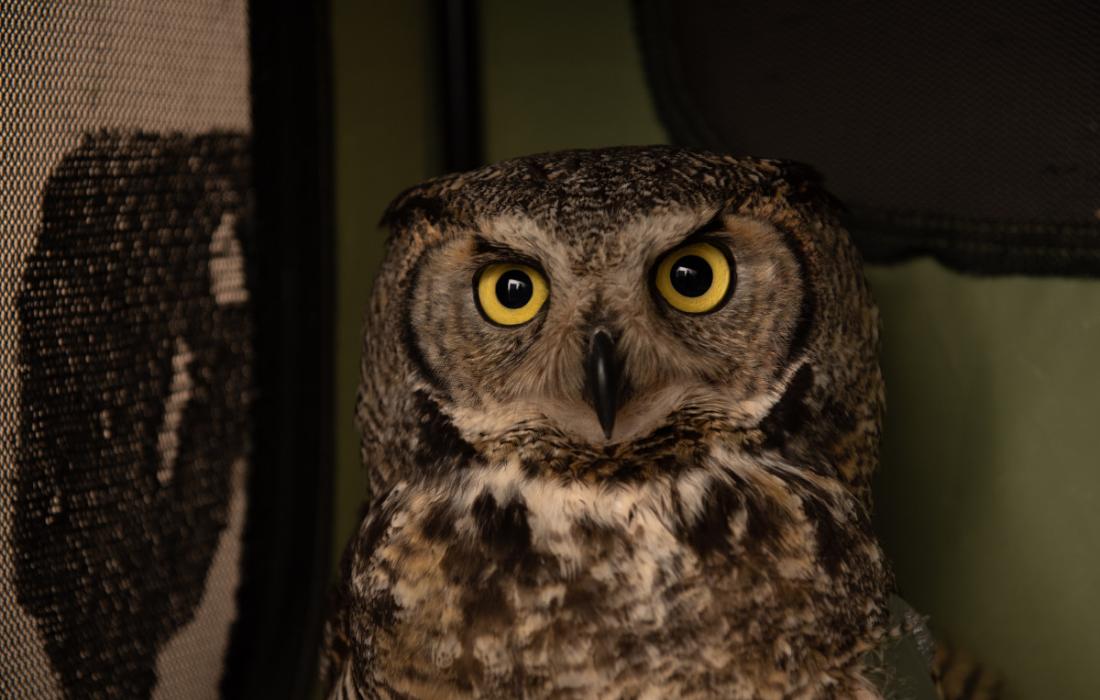
The happily-ever-after for most wildlife rehabilitation stories is a return to the animal’s natural habitat. Archie’s took a different turn — one that led her right back to Best Friends Animal Sanctuary.
Last fall, the great horned owl came to Wild Friends, Best Friends’ state- and federally licensed wildlife rehab center, with an injured wing. After surgery and weeks of care and rest, she was strong, plump, and flying well — all signs that she was ready to go. Caregivers released her near where she was originally found.
Then a few weeks later, Archie brought herself right back to Best Friends.
Owl be seeing you
Archie didn’t just return to the area — she flew straight to the enclosure at the Sanctuary where another great horned owl named Tali lives. Caregivers guessed the two might have heard each other hooting through the night — that deep, familiar call so typical of great horned owls. Archie was thin and clearly seeking both help and company. She allowed caregivers to gently scoop her up with a towel, so they could assess what was wrong.
[Baby barn owls survive accidental road trip]
“She flies great and can see just fine,” says caregiver Bart Richwalski. “But when we tested her again, we noticed she makes just a slight bit of noise when she flies — which for an owl is a big problem.” Silent flight is key to survival, and Archie’s noisy wing makes hunting nearly impossible. Whether it’s just the way her wing healed or her body’s muscle memory of the injury, no one really knows.
[Bringing up orphaned barn owls]
But what’s certain is this: When Archie needed help, she knew exactly where to go. Of all the places she could have flown, she chose the Sanctuary. She chose company. She chose safety. And maybe she even chose friendship.
“We’ve seen Archie and Tali hanging out together on the same perch or sometimes even eating together,” says Bart.

A new life
While Archie can no longer live in the wild, she still has a full life, now as part of Wild Friends’ educational animal ambassador program — alongside Tali. Together, the two great horned owls help visitors learn about owls, wildlife conservation, and the work of wildlife rehab centers.
And that’s where she’ll stay — safe, cared for, alongside a fellow owl, and exactly where she chose to be: home.
Let's make every shelter and every community no-kill
Our goal at Best Friends is to support all animal shelters in the U.S. in reaching no-kill. No-kill means saving every dog and cat in a shelter who can be saved, accounting for community safety and good quality of life for pets.
Shelter staff can’t do it alone. Saving animals in shelters is everyone’s responsibility, and it takes support and participation from the community. No-kill is possible when we work together thoughtfully, honestly, and collaboratively.
You can help save homeless pets
You can help end the killing in shelters and save the lives of homeless pets when you foster, adopt, and advocate for the dogs and cats who need it most.


Saving lives around the country
Together, we're creating compassionate no-kill communities nationwide for pets and the people who care for them.
Let’s be friends!
Connect with us on social media to stay in the loop about the lifesaving progress we’re making together.


