Blind dog’s world shines brighter than ever
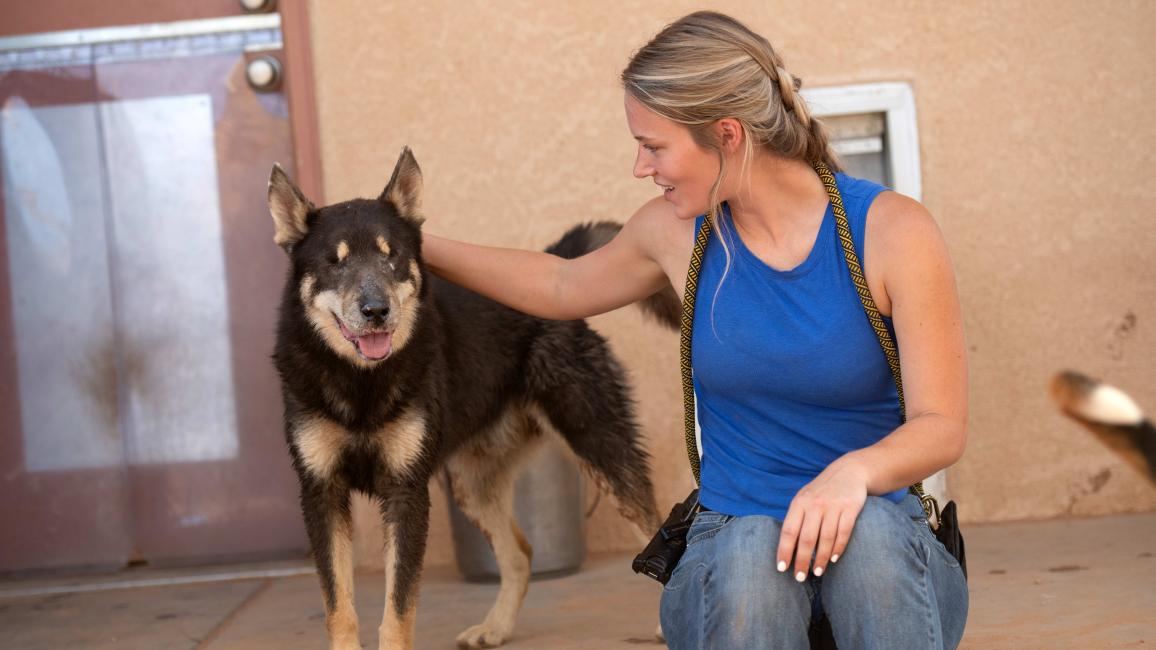
Woody experiences the world a little differently from most dogs. He hears the wind rustling the trees, feels a person’s loving embrace, tastes all the treats — and smells, well, everything. He just doesn’t have eyes. Yet even without them, he hasn’t missed out on any joy life has to offer. But his life wasn’t always so rich.
When this shy pup came to Best Friends Animal Sanctuary from a shelter in Los Angeles, his eyes looked unusually round and glossy, almost as if they were too big for his face. He also stumbled into things, which suggested he had trouble seeing.
“He was extremely shy and very reserved,” recalls caregiver Anna Morin. “You could tell he wasn’t sure of things.” Best Friends veterinarians discovered he had glaucoma, a disease that causes increased pressure in the eyes and eventually leads to vision loss. It’s also painful, and while daily medication can help, in many cases eye removal surgery is the best treatment option.
Woody could have become a statistic when he landed in a shelter, especially if that shelter were already full and struggling to save healthy animals. Best Friends' goal is for all shelters across the country to reach no-kill — and that means working together to save pets like Woody who need extra care or time.

From cautious to confident
Woody underwent surgery at the Best Friends clinic to relieve the pressure and pain, leaving him with a strikingly expressive face framed by black fur and tan eyebrows — features that only add to his charm. For Woody, the change meant a chance to move forward.
“Removing his eyes didn’t take away anything except the pain,” says Anna. “And that was obvious right away. Within a few weeks, he was a different dog.”
[Blind dog can still find his favorite things]
Woody went from quiet and reserved to exuberant and playful, leaping and wrestling like a puppy discovering a squeaky toy for the first time. He began romping with other dogs and even taught himself to bound into the dog park pool using the narrow ramp — no help needed from the caregivers beside him.
“Sometimes we joke he must be able to see,” says Anna. “He doesn’t run into anything now.”
With all the goofy energy of a puppy, he bounces around with Anna — and then shifts gears, curling up in her lap and giving the gentlest little licks on her face.
Smart, silly, and sweet
Woody also showed everyone just how clever he is, learning new spaces quickly. When Anna fostered him in her apartment, he mastered three flights of stairs in just a few days. With that new confidence, he was soon hopping into the car for rides, nose lifted to the wind.
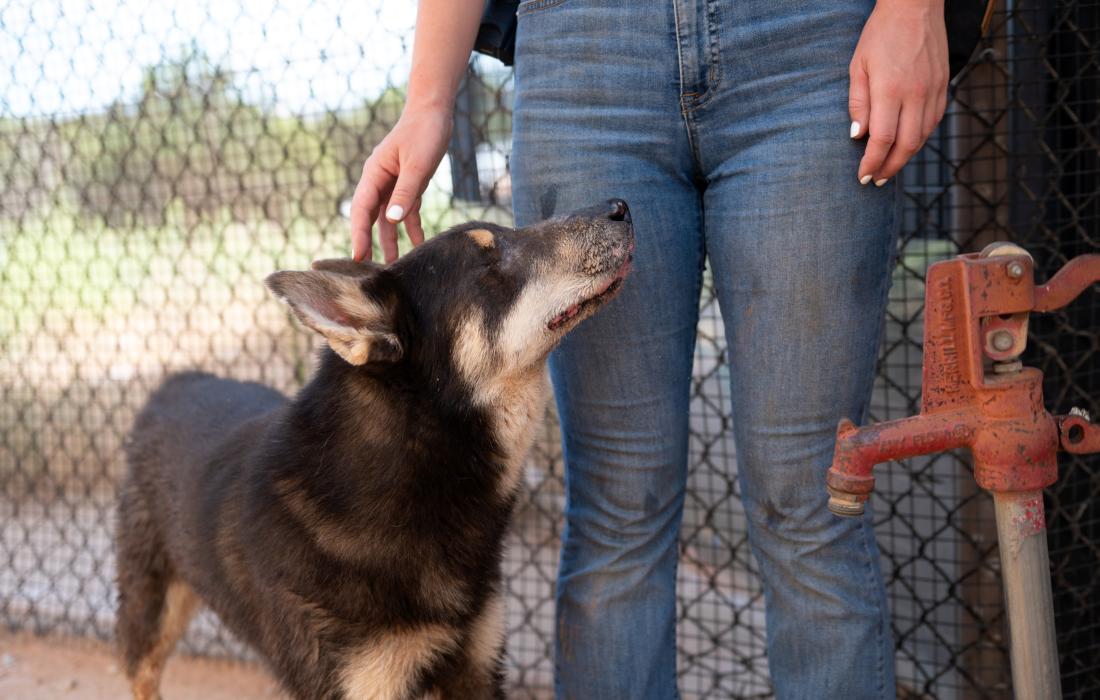
The Woody who once shied away from people now shines with confidence. At first, volunteers had to sit quietly near him just so he could get used to them. Now, he eagerly takes treats, enjoys being petted, and goes on walks right by their side.
“He’s cute, smart, and playful,” says Anna. “He just needed the right care and time to show who he really is.”
Now, Woody’s ready to bring all he’s learned — and his special way of experiencing the world — to a home of his own. He's not defined by what he lost but by everything he’s gained: confidence, joy, and a world he experiences more fully than ever.
[Learn more about Woody and other adoptable dogs at Best Friends]

Let's make every shelter and every community no-kill
Our goal at Best Friends is to support all animal shelters in the U.S. in reaching no-kill. No-kill means saving every dog and cat in a shelter who can be saved, accounting for community safety and good quality of life for pets.
Shelter staff can’t do it alone. Saving animals in shelters is everyone’s responsibility, and it takes support and participation from the community. No-kill is possible when we work together thoughtfully, honestly, and collaboratively.
You can help save homeless pets
You can help end the killing in shelters and save the lives of homeless pets when you foster, adopt, and advocate for the dogs and cats who need it most.


Saving lives around the country
Together, we're creating compassionate no-kill communities nationwide for pets and the people who care for them.
Let’s be friends!
Connect with us on social media to stay in the loop about the lifesaving progress we’re making together.


