Does the public support no-kill shelters?
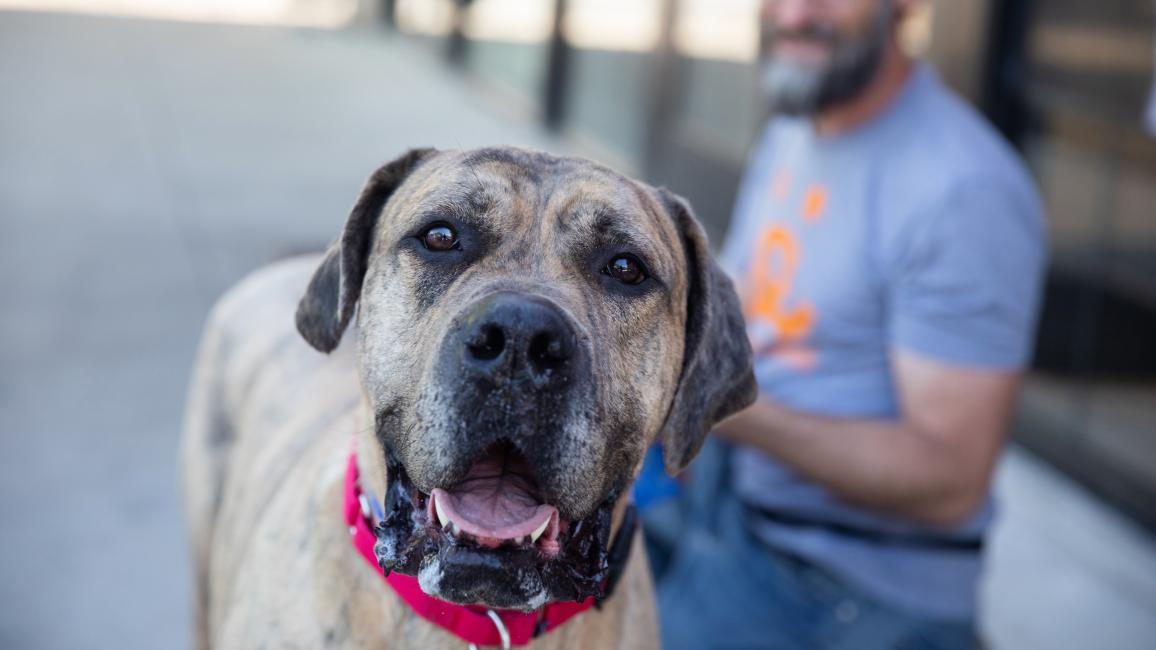
The other day I popped by Dogtown at Best Friends Animal Sanctuary and said hello to a few of our residents. Some dogs have been with us only a couple of days, others years, as we work to place them in homes of their own.
And I thought about what it means that they’re still here: that the system worked well enough to get them off a ticking clock and into our care, with every chance still in front of them. That’s no-kill — saving every healthy or treatable pet who can be saved. I don’t have to explain that to you, and as it turns out, I don’t have to explain it to most Americans either. While animal welfare continues debating the term, the general public has already embraced and adopted “no-kill” because, simply put, it’s the common-sense right thing to do.
My colleague Brent Toellner presented some of this research at the 2026 Best Friends National Conference, and a few takeaways have stayed with me ever since:
- Two-thirds of Americans already recognize the term “no-kill.”
- 58% say having a no-kill shelter in their community matters to them.
- 72% say they’re more likely to support a shelter that identifies as no-kill or is transparently committed to getting there.
That support holds no matter where you look.
But because the national scope doesn’t always paint a picture of what’s happening on the ground, Best Friends also conducts surveys in specific communities. Brent shared results from three that could not be more different from each other: a large blue metro, a midsize purple city, and a midsize city in one of the reddest parts of the country. People with different lives, different politics, different everything. Nearly identical support.
Each community was then given a simple two-sentence definition of no-kill: “No-kill means that all healthy and treatable animals who enter a shelter are found homes. A widely accepted goal for a no-kill shelter is that 90% of dogs and cats leave alive.”
After reading the definition, survey respondents were then asked whether their local shelter should become no-kill. Yes votes in support of the proposition ranged from 71% to 80%, with opposition landing between 4% and 11%. In a political age filled with disagreement, no-kill comes remarkably close to consensus.
And that consensus means something. Some in animal welfare have long debated the term “no-kill” itself. And while that conversation has gone on, the general public has moved forward. They’ve adopted the language. They use it to express something quite simple that they deeply believe in: that every healthy or treatable pet in a shelter deserves a chance at life. No-kill, as a philosophical principle, is exactly that. It’s a commitment to saving every pet who can be saved. It’s taking a look at each individual animal and their situation and working to find the best individual outcome for that pet. The public gets it. The term “no-kill” belongs to them now. As Brent put it:
[The general public] still wants pets’ lives to be saved. And no-kill is their language for expressing that value. Regardless of what many of us in the industry think about the term ‘no-kill,’ the language is no longer owned by us. The public owns it.”
But don’t just take our word for it. Earlier this year, Matrix Consulting Group — a government consulting firm with no connection to animal welfare — polled residents of Cedar Rapids, Iowa, on behalf of local officials.
- 88% said they wanted their shelter to operate as no-kill.
- 77% said they’d pay more in taxes to make it happen.
Cedar Rapids is about as middle-of-America as you can get, and the fact that this data comes from a firm with no stake in animal welfare makes it one of the most meaningful validators we have.
So yes, people support no-kill shelters. They support the mission of saving every healthy or treatable pet. And that’s true whether a shelter has reached the 90% no-kill benchmark or is still working toward it. Supporting your local shelter that isn’t yet no-kill and supporting the no-kill movement aren’t mutually exclusive. Every no-kill shelter in this country used to be a not-yet-no-kill shelter. Every single one. That’s kind of the whole story of this movement. And every shelter on this no-kill journey deserves your support, your fostering, your adoptions, and your donations.
The data is clear, the public call for action is clear, and the path forward is clear. No-kill is where we’re all headed, and the American public has been saying so all along. I think that’s worth listening to.
-Julie