Faces of No-Kill: Dog goes from barking to bliss
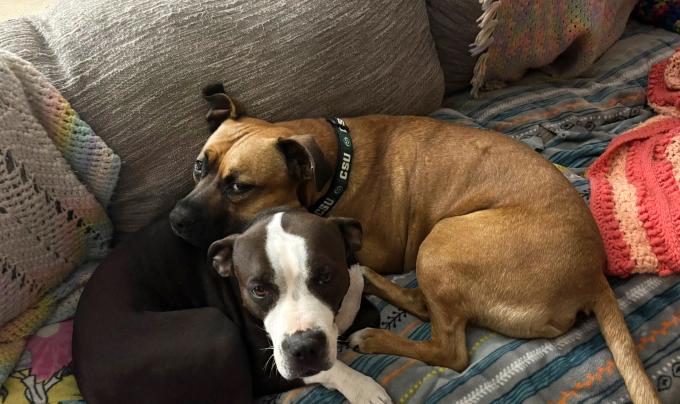
Nigel’s daily routine lately is pretty sweet: jaunts through the neighborhood, splashing in the pool, playing with whichever toy catches his fancy, and being tucked in at night alongside his family. But not long ago, this now-social pooch was quite the opposite.
Nigel had landed at a shelter in New York City, where staff noticed that life in the city — with its constant sounds, smells, strangers, and surprises — was becoming overwhelming for him. He would lunge and bark at new people, and it seemed like he’d lost his joyful spark.
This story is a part of our Faces of No-Kill series, highlighting the journey of pets who lost their place to call home. These pets are thriving today thanks to animal shelters that said yes to lifesaving with a community that found a way to save them. Best Friends’ goal is for every shelter and every community to reach no-kill, and this story shows why that’s so important.
The shelter team tried everything they could think of to help Nigel — training, treats, changing his location for something quieter — but Nigel was still having a hard time finding his peace. He needed a change of pace, and that’s just what he would get at Best Friends Animal Sanctuary, nestled in the peaceful red rocks of Kanab, Utah.
Peace, predictability, and new pals
Best Friends caregiver Natalie Nilsen remembers when Nigel first arrived in Dogtown, a sprawling section of the Sanctuary full of parks, housing areas, and trails, where hundreds of dogs on any given day are cared for and loved in their home-between-homes. Caregivers started working on a routine for Nigel that would help him know what to expect and build his confidence.
“In New York, Nigel struggled with lunging at people while out on walks,” Natalie says. “Because of that, we had two caregivers use two leashes to walk Nigel.” This way they could prevent Nigel from lunging one direction or the other, keeping both him and caregivers safe.
How to Manage Dog Leash Reactivity
But it turned out that wouldn’t be necessary for long. “We found quickly that something had changed, and we really didn’t need the second leash because the leashes were always slack,” Natalie says.
Nigel’s caregivers also created predictability by developing routines for how they would put on his harness, how they’d put down his food bowl, and how he would meet new people. It was all to help Nigel feel confident and secure.
How to teach a dog to be calm with a daily routine
For introductions to new people — something Nigel wasn’t so sure about before coming to the Sanctuary — Natalie and the other caregivers created a meet-and-greet routine. Natalie would approach a new person slowly, tossing treats near them and encouraging Nigel to “check it out” at his own pace. Over time, those careful introductions turned into walks on the trails through Dogtown with new people who, it turned out, he quite liked.
Nigel had regained his joyful spark. And soon he’d meet some new friends who would become family.

New routine, same happy Nigel
All his progress at the Sanctuary prepared Nigel for his biggest adventure yet: going home to Colorado. Tracy Wrinkle made the trek out to the Sanctuary with one goal: meet Nigel. And now, Nigel was more than prepared to happily meet a new person. It was love at first treat toss. Tracy adopted him, and off they went on the car ride back to Colorado.
As with any big change, Nigel needed time to settle in. He started learning the rhythm of home life — getting to know his new dog siblings, the rest of his human family, and the art of using the doggy door. But Nigel was now a pro at adapting to new situations. He quickly mastered his new routine, even the doggy door.
These days, Nigel has settled comfortably into Colorado life. He goes on walks with his family and dog siblings, swims in the pool, lounges on the furniture, and snuggles up at night. He adores his new family, and the feeling is mutual. When Tracy’s daughter came home from college, Nigel was happily reunited with his beloved human sibling — complete with new collegiate gear to wear.
For a dog who once found the world overwhelming, home life looks pretty cozy.

Let's make every shelter and every community no-kill
Our goal at Best Friends is to support all animal shelters in the U.S. in reaching no-kill. No-kill means saving every dog and cat in a shelter who can be saved, accounting for community safety and good quality of life for pets.
Shelter staff can’t do it alone. Saving animals in shelters is everyone’s responsibility, and it takes support and participation from the community. No-kill is possible when we work together thoughtfully, honestly, and collaboratively.


You can help save homeless pets
You can help end the killing in shelters and save the lives of homeless pets when you foster, adopt, and advocate for the dogs and cats who need it most.


Saving lives around the country
Together, we're creating compassionate no-kill communities nationwide for pets and the people who care for them.
Get inspiring animal rescue stories delivered straight to your inbox
Never miss a feel-good animal story. When you give us your email, we’ll send you inspiring animal rescue stories each week, along with tips on different ways you can help save homeless pets in your community and beyond.