Bringing spay/neuter and care closer to home on the Navajo Nation
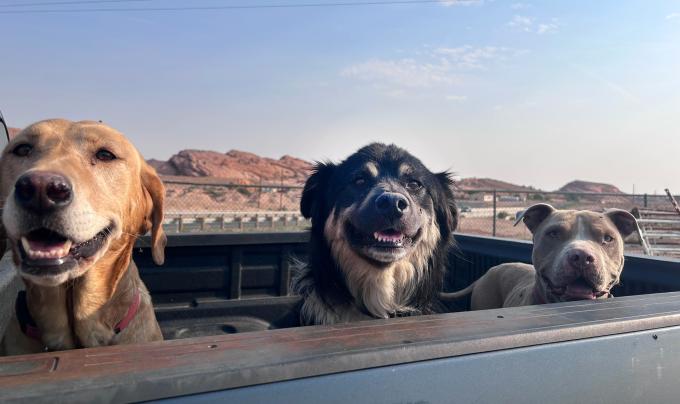
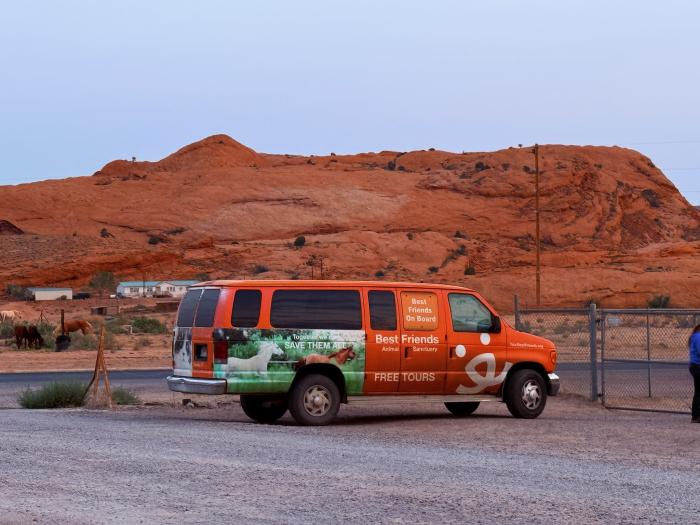
Before the sun is fully up over the sandstone mesas of the Navajo Nation, a busy team of volunteers has already been scurrying around. The Best Friends mobile veterinary clinic is parked out front of Kayenta Animal Care and Control after driving just over three hours from Kanab through the southwest scenery. Staff, volunteers, and local community members are unfolding tables, arranging crates, and sorting supplies. The morning air is cool, dogs are barking in the distance, and horses graze nearby. They're ready to welcome families and their pets.
Within a few hours, there’s a place for surgeries, a place for pets recovering from anesthesia, a drive-through vaccination clinic, and a team ready to help animals who are sick or injured.
And then, the cars begin to arrive.
Some families bring one pet. Others have several dogs, a litter of puppies, or a collection of cats in carriers. The team gets to work, helping each family access the care their animals need. There are vaccines to administer, surgeries to perform, medical concerns to investigate, and plenty of paperwork to keep everything organized. Every animal has a place in the process, and every person has a role to play.
Here’s how the day works.
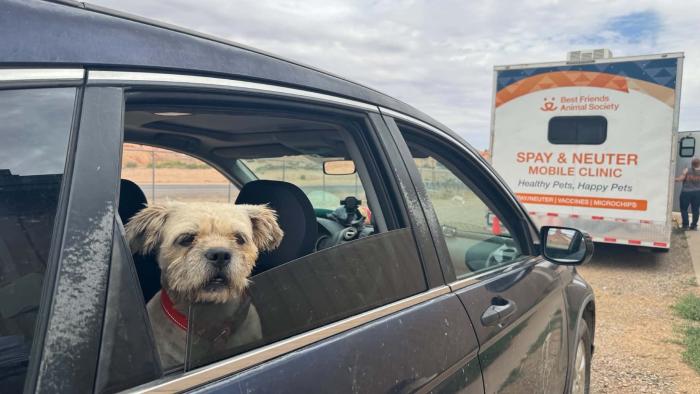
Across the Navajo Nation, families face significant barriers to veterinary care. The distance between communities is vast, and veterinary resources are few and far between. For some, getting to one of only three veterinarians on the Navajo Nation — an area encompassing more than 17 million acres of land, about the size of West Virginia — means a long drive. It’s a drive that, for many, must be made with time they don’t have, substantial fuel costs, and an appointment that may be difficult to secure in the first place.
Through our partnership with Kayenta Township, Best Friends’ mobile clinic helps bring essential veterinary services closer to the people who need them. Working alongside Navajo leaders, community members, local animal welfare partners, and other organizations, we provide spay/neuter surgeries, vaccinations, and wellness care for pets across the Navajo Nation through our clinics in Kayenta Township and Tuba City.
But if you ask me what makes these clinics especially meaningful, I’d tell you it goes beyond the services we provide. It’s about the relationships we build, the people who make the work possible, and the opportunity to show up for our neighbors in a tangible way.
A team that comes from everywhere
We offer the opportunity for Best Friends staff from across the country to join these clinics. When they arrive, everyone becomes part of the same team. Recently, our colleague Alexis Pugh joined a clinic in Kayenta, Arizona, helping with vaccinations, paperwork, wellness care, and preparing cats for surgery.
The clinic’s experienced team provided training and support and returning Best Friends staff members shared what they had learned to the new faces.
The mobile clinics give our staff a chance to become part of a team that is doing something immediate and tangible for animals and the people who love them. At the heart of this, we are all part of something bigger than ourselves.
Love for pets bridges the miles
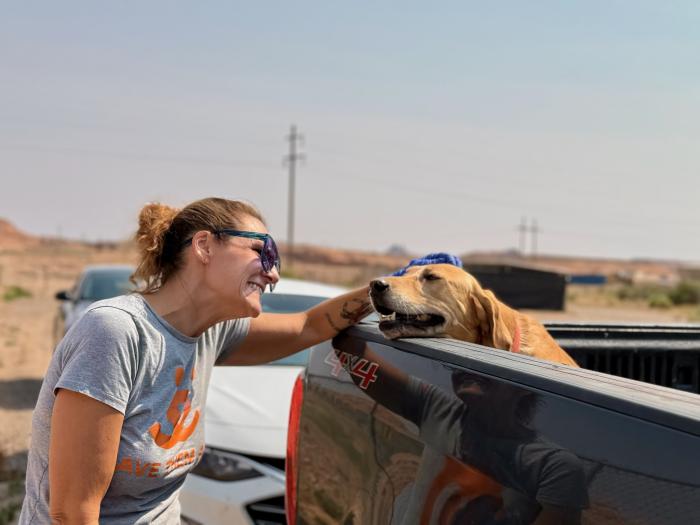
The life lessons extend far beyond how to draw a vaccine or help a cat recover from anesthesia. With every clinic, we are reminded that while our day-to-day lives might look a little different, we all love our animals.
The Navajo Nation is sparsely populated rural and agricultural land, so it’s not unusual to see a dog living outdoors or roaming freely. Understanding the realities of caring for a pet means listening rather than making assumptions from a distance.
Many families brought multiple pets so each could receive attention. Some came back for follow-up vaccinations and ongoing care, in some cases driving an hour or more each way. One thing remained true for everyone who came by the clinic: the love for pets was front and center.
We know that the human-animal bond is not limited by geography, income, or circumstance. And whether a family can get their animal to a vet shouldn’t depend on how far they live from one. Our role here is to make sure that access to veterinary care doesn’t stand between people and the love they have for their pets.
Spay/neuter is part of the bigger picture
Providing veterinary care also means thinking about what sustains a community. Spay/neuter is a critical part of that work and therefore a critical part of our mobile clinics. By helping to prevent unplanned litters, spay/neuter can reduce the number of animals entering shelters, while vaccinations and wellness care help pets live healthier lives and can help avoid costly surprises later on.
At our Navajo Nation clinics, these services all come together in one coordinated effort.
And this work is part of a much broader commitment at Best Friends. We perform more than 34,000 spay/neuter surgeries every year, invest millions of dollars in grants to shelters and rescue groups nationwide, and make spay/neuter access a core part of our training with shelters.
At the same time, we know that there is no single solution to keeping pets out of shelters. Spay/neuter alone can’t solve those problems. Building communities where every pet can remain with a loving family requires us to use every resource available — from accessible veterinary care to community partnerships, shelter support, pet food pantries, and programs that help people keep the pets they love.
That’s why this work matters at every level. A surgery can help prevent an unwanted litter, a vaccination can protect a puppy from disease, treatment for an injured animal can ease a family’s worry, and a consistent presence in a community can help build the trust that makes it possible to keep doing this work together.
Showing up, together
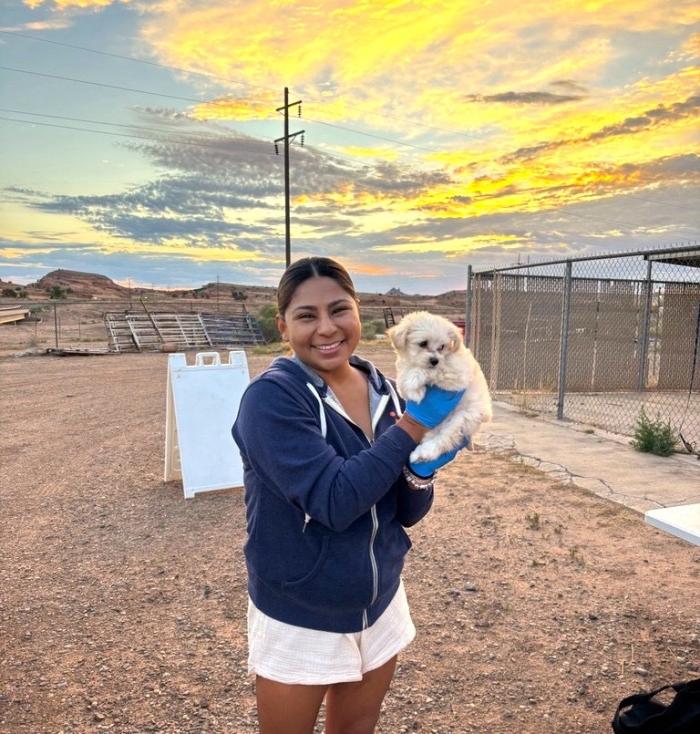
When a clinic ends, the team cleans kennels, inventories supplies, packs crates, and dismantles the temporary facility. By morning, the space looks much as it did before we arrived, but 200+ pets have received the care they need and families have gone home knowing support exists.
About a month later, we will come back together to do it all over again.
We couldn’t do this work without the community members trusting us to care for their beloved animals, our Navajo partners inviting us in and helping us to understand where support is most needed, and the many people and organizations working toward a brighter future for pets on the Navajo Nation.
We move closer to that future when we listen, when we collaborate, and when we show up for one another, again and again.
It takes a community to make lasting change. I’m proud that we get to be part of this one.
-Julie