The most up-to-date animal shelter statistics available
At Best Friends Animal Society, we’re powering lifesaving progress through the most comprehensive animal welfare data in the industry.
Best Friends Animal Society has the most comprehensive and accurate dataset in the industry, providing key insights and analytics from more than 10,000 shelters and rescue groups across the United States, and sharing it in the most transparent way possible.
Our annual report on national shelter data includes ALL of the nearly 4,000 shelters in the country. More than 80% of shelters in this report have collected and current data (12 consecutive months in the last 24 months), with the small remainder being estimated from historical and community data using a method approved by two independent peer reviews.
Our goal is simple and urgent: help more dogs and cats leave shelters alive and make every community no-kill. To do that, we must clearly understand the full picture — how many shelters exist, how many animals are admitted to shelters each year, and how many pets are saved annually. This allows us to focus our efforts on where we can save the most lives.
But data alone isn’t enough — especially if it doesn’t drive action. Our team of experienced strategists analyzes trends, identifies lifesaving gaps, and translates insights into action, using what the data tells us to guide proven solutions like on-site support, advocacy, and lifesaving programs. This allows shelters to strengthen their save rates and build lasting progress well into the future.

Bigger dogs, longer waits
Larger dogs spend twice as long waiting for a home.
Large dogs (over 40 pounds) wait nearly twice as long to be adopted as small dogs (under 40 pounds).

See where cats are especially popular with adopters
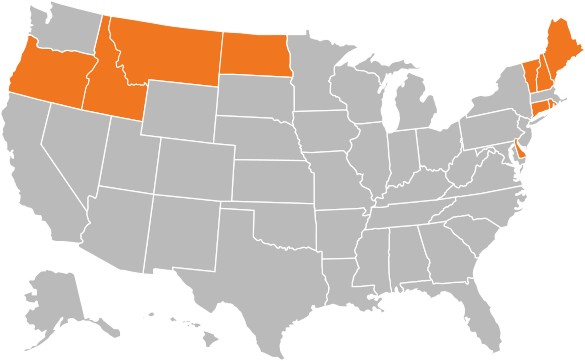
Best Friends’ data shows the top 10 states saving the highest percentage of cats in shelters
Top 10 states saving the highest percentage of cats in shelters
 Spotlight: Shelter Progress
Best Friends reports sharpest drop in pets killed in U.S. shelters since 2020 as 4 million pets find homes last year
34,000 fewer dogs and cats were killed in U.S. shelters compared to 2024
Nearly 4 million dogs and cats in U.S. shelters found homes
A 30% higher adoption rate is found at shelters with a full foster program
47.5% of cat deaths in shelters are kittens younger than six weeks old,
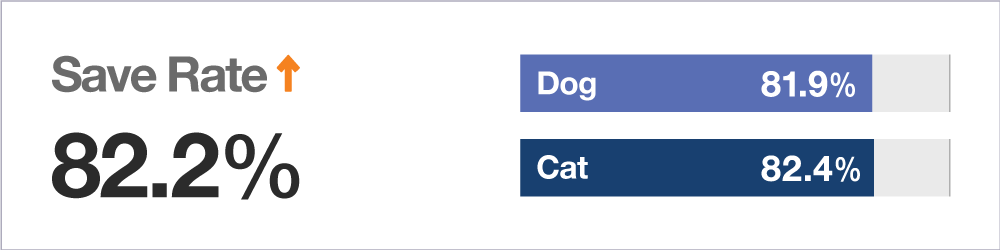
Dogs had a breakthrough year. For the first time since 2020, we’ve seen the number of dogs killed in shelters go down — by 8.5%, which translates to nearly 20,000 additional dogs all across the country who got second chances. The national save rate for dogs is now 82.2%.
Cats made history again. It was once again the best year ever for cats in shelters. The number of cats killed hit its lowest point in history, with a record high save rate of 82.9%.
According to Best Friends Animal Society's data, on any given day, an average of 500,000 dogs and cats are waiting in shelters nationwide. At the halfway point in 2026, Best Friends Animal Society's data shows a slight increase in owner surrenders compared to the same time last year. The organization will continue monitoring this pattern throughout the year, but these figures are a reminder that, while progress is real, investing in support for pets and their people in our communities is vital to helping pets stay in loving homes — and out of shelters.
 Spotlight: Long-staying puppies
Long-staying puppies: The 4% who need you most
3.8% of puppies become long-term residents at shelters
Over 20,000 puppies
These puppies may take longer to find homes due to size, breed, behavior, or medical needs. But with the right puppy socialization techniques, both puppies and adopters can be set up for success.

The reality for dogs and cats in U.S. shelters
4.74 million dogs and cats
209,000 dogs
187,000 cats
396,000 dogs and cats
One life lost roughly every 80 seconds
The U.S. saved 82% of pets in shelters and the trend is moving in the right direction:

Support for no-kill is growing in strength
4 million dogs and cats
66% of U.S. households
More than half of adults
72% of adults

No-kill isn’t just possible; it’s within reach
More than 2 out of 3 U.S. animal shelters
Less than 1,300 U.S. animal shelters
Just 100 or fewer additional pets

Communities across the country are proving that no-kill is possible
Across the country, shelters and communities are working together to save more lives. And the results show real, measurable progress. No-kill community programs are succeeding nationwide.
What does reaching no-kill mean?
No-kill is defined by a 90% save rate, a commonly accepted benchmark that recognizes some animals may be too sick or injured to save or may pose a safety risk.
82.5% 2025 national save rate
80% of shelters
But better yet? This progress is translating into statewide momentum.
6 states
6 more states
23 states

Pet adoption is on the rise
7 million U.S. households
2.5 million dogs and cats
1 out of 17 households

Lifesaving programs that save homeless pets
Every day, Best Friends Animal Society works alongside partners nationwide to put proven lifesaving strategies into action. Transport programs give pets a second chance by bringing them to communities where they’re more likely to be adopted. Low-cost spay/neuter programs reduce the number of pets entering shelters in the first place.
296 registered sending organizations
53 low-cost spay/neuter clinics
Pets who are spayed or neutered are more likely to be adopted:
- Cats and dogs who enter the shelter/rescue system spayed or neutered are about 25% more likely to be adopted than cats and dogs who aren’t already spayed or neutered.
- Cats and dogs who aren’t spayed or neutered when they enter the shelter/rescue system are about twice as likely to lose their lives in the shelter than cats and dogs who enter spayed or neutered.
- Cats and dogs who enter the shelter/rescue system spayed or neutered spend on average five fewer days in care than cats and dogs who aren’t already spayed or neutered (18 days versus 23 days).
The data shows us that we’re now closer than ever to reaching no-kill
When communities come together around proven lifesaving solutions and understand the needs of their local shelters, real change happens.

What does ‘no-kill’ really mean?
In animal welfare, no-kill is defined as achieving at least a 90% save rate for dogs and cats entering a shelter. This benchmark is widely accepted because it reflects a compassionate, realistic standard of care. In any community, a small percentage of animals (typically no more than 10%) may be suffering from severe medical conditions or behavioral challenges that make lifesaving outcomes impossible or unsafe.
When a shelter reaches or exceeds a 90% save rate, it means the vast majority of pets who can be saved are being saved — and that the community has the programs, partnerships, and support in place to make lifesaving the norm.
Why are pets killed in shelters?
Dogs and cats who are healthy or treatable are killed in shelters for one heartbreaking reason: They don’t have a safe place to call home. Shelters can become overwhelmed when there aren’t enough adopters, foster homes, or resources available.
That’s why community involvement is essential. When people adopt, foster, volunteer, donate, and advocate for their local shelters, pets move into homes faster — freeing up space, reducing stress, and saving lives. Lifesaving isn’t just a shelter effort; it’s a community effort.
How do we achieve no-kill?
Reaching no-kill happens when communities work together using proven, evidence-based lifesaving programs. These include strong partnerships among shelters and rescue groups, expanded adoption and fostering, moving pets to areas with greater adoption opportunities, and advocating for policies that support lifesaving.
Just as important is understanding where a community stands today. By using data to identify lifesaving gaps and focusing support where it’s needed most, communities can save more lives — locally and nationwide. Together, these efforts make no-kill not just possible but within reach.
No-kill success stories
Read how data-driven insights are saving the lives of shelter animals.

The latest from our data experts
See how our animal shelter partners around the country are using data to save homeless pets in their communities.












Understanding our data
To understand where dogs and cats need the most help, we rely on data to guide every decision we make.


About our data collection policies
Let's be friends!
When you give us your email address we'll send you emails with inspiring stories and ways to make a difference for animals in your community and around the U.S.