The simple way to stop puppy mills
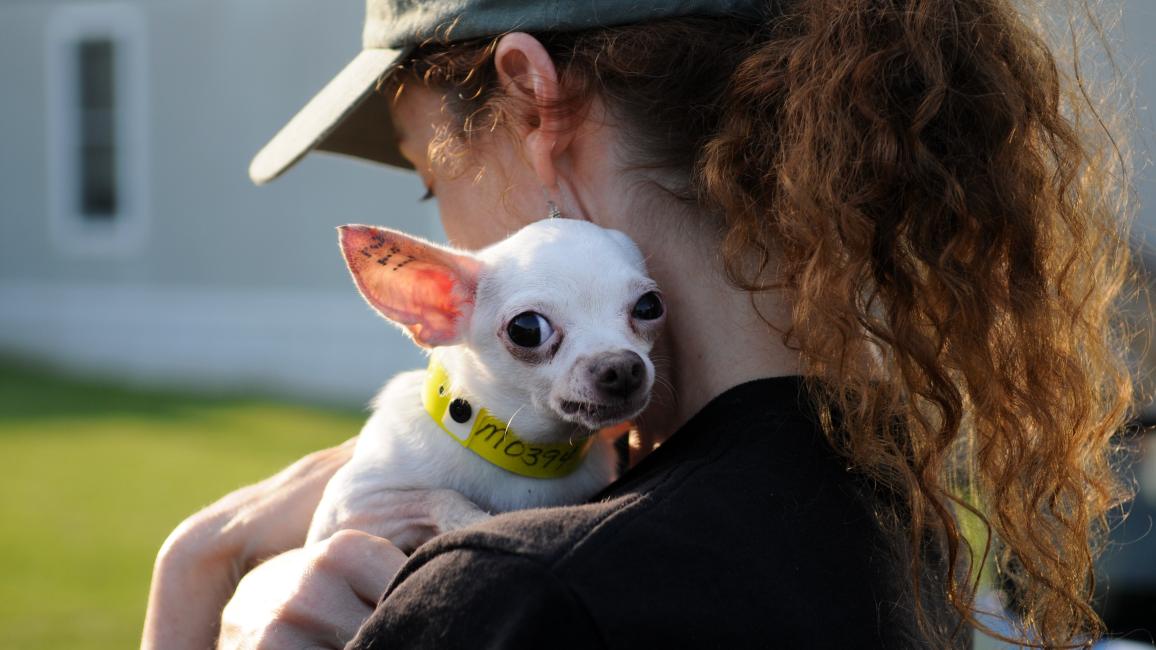
It was a dream job. I was an 18-year-old college freshman, and because I love animals more than anything, I applied at the two places in town where I could work with pets: a veterinary clinic and a local pet store. The pet store hired me, and I couldn’t have been happier about it. I thrived taking care of the tropical fish, the hamsters and parakeets, and above all the kittens and puppies.
The other staff and I felt so lucky that it was our job to cuddle and care for the tiny, adorable puppies and kittens. We’d eagerly await the list of new ones coming in, bought by the store owner from pet brokers. A lifelong nerd of all things related to dogs and cats, I had so much fun meeting the purebred pups and selling them to customers who were just as excited as we were about them.
I worked there for two years, and it wasn’t until I changed schools and moved to another town that I heard the term “puppy mill.”
Behind the scenes
That’s when I thought back to some of the other things that happened at the pet store. There was the Lhasa apso puppy who looked just like Barkley, the dog on Sesame Street — all orange fur and long legs. His hips swayed when he walked, and the store owner explained to us: “There’s something wrong with his hips, so he’s on sale.”
His price dropped from $800 to $400. In the back storeroom was a cabinet full of antibiotics that we administered to any puppy or kitten who had the sniffles, which happened all the time.
I had a soft spot for the gorgeous Persian kittens we sold. They were silver-shaded puffballs with button noses, and if there was one pet I was most tempted to buy for myself, it was one of those kittens.
But the $600 price tag was too much for me, a poor college student. Then, one day not long after I’d moved away, the manager called me to say that a Persian kitten in the store had ringworm (a common fungal skin infection), and the vet had shaved off most of her beautiful fur.
The manager said, “We can’t sell her like this, and (the store owner) told me to get rid of her or they’ll euthanize her.” More on her later.
I have endless stories from that time in my life, and even more after I went to work at Best Friends on puppy mill issues. That’s when I began to hear other people’s stories. I dug into the consumer complaints and the breeder inspection reports citing hundreds of dogs on a single property living in horrible conditions. I went to those breeders and saw the same with my own eyes.
I learned that puppy mills are legal and regulated by the U.S. Department of Agriculture (USDA). I also learned that just because they are legal and “regulated,” it doesn’t mean they raise and sell healthy puppies and kittens.
Legal facilities can, and do, keep dozens, if not hundreds, of breeding animals in small cages with no socialization for their entire lives. Their sole purpose is to churn out puppies and make a profit. The breeders have no regard for the puppies’ health beyond the goal of getting them sold, and they’re not concerned about passing on genetic health problems that will plague the pups and their families one day.
I sold those puppies. They were cute, as all puppies are. They had fancy-looking registration papers. They were from puppy mills.

The state of puppy mills today
Awareness of puppy mills has skyrocketed since the days when there were pet stores in malls from coast to coast. Back then, I was young and eager and didn’t know I was part of a system that was terrible for both the animals and the unsuspecting, often well-intentioned customers.
Best Friends and other animal organizations have been working for years on this issue. Thankfully, the small local chain of pet stores where I worked has long since closed. Many others across the country have closed, too, as the public learned the reality behind cute pups in stores and took measures to outlaw retail puppy and kitten sales.
“We now have over 500 local ordinances within the U.S. banning the sale of dogs and cats in pet stores,” says Lisa Kauffman, Best Friends campaign senior strategist. “And eight states have banned the sale of dogs and cats in pet stores.”
A team of Best Friends volunteers checks local Craigslist sites every day and flags ads selling puppies and kittens (which aren’t allowed on the site, but people still try it). “Since 2019, they’ve flagged over 1.9 million ads,” Lisa says. That’s a lot of pets breeders are raising to sell for some cash. So there has been fantastic progress, but there’s still more work to do.

Rising to meet a changing industry
The remaining stores that sell puppies and kittens push “designer” — i.e., mixed-breed — pups, whose popularity has exploded. Websites use chatbots to prompt customers to buy pets online, and those pets are shipped to them at the tap of a few buttons.
Legislation and awareness campaigns are adversely impacting the puppy mill industry, but one challenge has been there all along: Breeders keep finding new ways to reach potential customers.
Laura Donahue, Best Friends senior director of advocacy, says, “The challenge with this industry is that they keep changing and innovating their business model whenever we put a squeeze on one of their pipelines. They just build a different pipeline.” Pet stores and classified ads used to be easy ways for breeders to sell pets, but as both have mostly fallen out of favor, the industry has adapted.
Today, breeders are finding ways to serve unsuspecting buyers who plunk down hundreds or even thousands of dollars on puppies who often have severe genetic health problems, as well as common parasites, viruses, and other infections.
The breeders have even co-opted language used in animal welfare that makes customers feel better about their choice, referring to “adopting” puppies they’ve bred who “need forever homes.”
While online sales are king, many breeders sell puppies in front of stores, at flea markets, and sometimes on a scrap of open land along a busy road. That’s why Best Friends pushes for even small-scale and “backyard” breeders to be licensed by their city, county or state, and for outright bans on roadside sales. “A lot of backyard breeders aren’t regulated at all,” Lisa says.
And there are often no municipal regulations for selling pets. Without rules in place, anyone can breed their dogs and sell the puppies, even if the puppies end up sick or have crippling hip dysplasia or other common, heartbreaking health or temperament challenges.
That’s not so easy, though, when it’s illegal to set up shop for the day and sell pups from a roadside. This spring, Best Friends supported successful statewide bills in Georgia and Texas that make it illegal to sell dogs, cats, or rabbits in public or commercial spaces, including roadsides, parking lots, sidewalks, parks, and recreation areas.

Lessons learned
“Do you want her?” That’s what the pet store manager asked me about that kitten with ringworm. I answered, “Yes, I’ll come and get her.” And that’s how I took home a free, bedraggled Persian kitten from the pet store where I used to work. Employees had stashed her in the store’s bathroom in the back room for weeks because there was nowhere else to separate her (and her ringworm fungus) from other pets — and customers — in the store.
I drove three hours back to my former college town to pick up the little cat, whom I named Gracie. Sure enough, she was shaved to the skin and much older and bigger than the teensy 8-week-old, gloriously fluffy kittens the store could easily sell. Off to the vet we went — and I came home with instructions for weekly baths with the bright yellow, incredibly stinky medication (it smells like rotten eggs) that would kill off the ringworm spores. It took a while, but Gracie’s ringworm infection cleared up and her luxurious coat grew back.
Gracie was with me for nearly 18 years. I loved her fiercely and supported her through allergy flare-ups that plagued her off and on throughout her life. She came with me when I moved to Kanab, Utah, to work at Best Friends. When I began working on puppy mill initiatives, I pulled out the information that came with her from the pet store.
Kitten mills are less common than large-scale puppy mills, but they present the same problems.
Using my new research skills, I typed her breeder’s name into the USDA commercial breeder database. Sure enough, a record popped up. Pet breeders only need a USDA license if they’re raising and selling a lot of animals, and usually those sales are either to brokers, who in turn sell them to pet stores, or for research. There were no egregious violations noted — nothing indicating that a kitten from that breeder might have health problems her whole life. It was just another commercial pet breeder churning out animals.
[5 steps to using your power for pets]
Gracie and all the other pets I knew from my pet store employee era are long gone. But I never forgot the name of my pet store cat’s breeder. So, while working on this story, I googled the name. The breeder’s website was the first result. They’re still raising and selling kittens but are now selling them online directly to customers. The kittens currently for sale look just like the ringworm-carrying kitty who ended up in my home years ago.
The website encourages people who want an adorable little puffball of a cat to “adopt” the purebred kittens raised by the breeder.
My greatest hope is that more people today — upon seeing those cute puppy or kitten faces for sale in a pet store, on a sidewalk, or online — will choose to walk away or scroll right on by. Don’t buy anything at stores that sell pets.
Animal shelters and rescue groups are full of equally adorable, loving pets. Visit them, follow them on social media, and fill your feed with their posts. Get involved with breed rescue organizations for your favorite type of pet and sign up to foster.
It’s really that simple. Each one of us has the power to stop puppy (and kitten) mills by never, ever buying what they’re selling.

This article was originally published in the September/October 2025 issue of Best Friends magazine. Want more good news? Become a member and get stories like this six times a year.
Let's make every shelter and every community no-kill
Our goal at Best Friends is to support all animal shelters in the U.S. in reaching no-kill. No-kill means saving every dog and cat in a shelter who can be saved, accounting for community safety and good quality of life for pets.
Shelter staff can’t do it alone. Saving animals in shelters is everyone’s responsibility, and it takes support and participation from the community. No-kill is possible when we work together thoughtfully, honestly, and collaboratively.
You can help save homeless pets
You can help end the killing in shelters and save the lives of homeless pets when you foster, adopt, and advocate for the dogs and cats who need it most.


Saving lives around the country
Together, we're creating compassionate no-kill communities nationwide for pets and the people who care for them.
Let’s be friends!
Connect with us on social media to stay in the loop about the lifesaving progress we’re making together.


