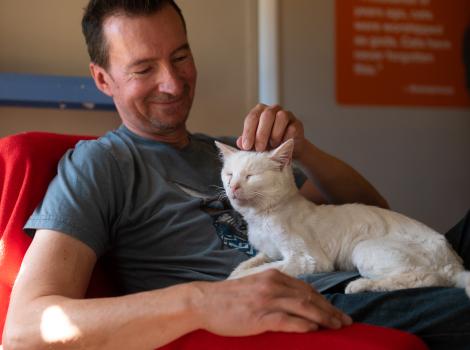
Are foster programs magic?

We recently surveyed our Network partners to see if they had foster programs and, if so, what roles their foster caregivers play in getting pets adopted. It was no surprise to learn that some level of engagement is better than none — but we didn’t necessarily expect a boost of 20 percentage points. Although shelters and rescue groups without foster programs adopt out just under half of the animals in their care (48%), on average, those with some level of foster involvement have an average adoption rate of 68%.
For an organization admitting 500 animals each year, that’s another 100 pets going home.

The benefits are even greater for organizations that go all in on fostering, allowing their foster caregivers to process adoptions. These organizations are adopting out more than three-quarters of the animals in their care — an average of 77%.
The impressive results described by survey respondents (nearly 650 in all) were felt across the board, but most noticeably by non-profit rescue groups and municipal animal shelters. Private shelters (e.g., local humane societies) saw more modest improvements.
Foster programs can address a range of needs for shelters and rescue groups. In the most general sense, they expand an organization’s capacity for animal care into the community, housing and providing care for animals until they can be adopted (or transferred to another organization). In this sense, all fostering is temporary. But temporary fostering programs are designed specifically to provide short-term care (e.g., overnight or even daytime outings).
Other program variants include emergency fostering (e.g., to rapidly reduce the number of animals in shelters during the early days of the coronavirus pandemic), urgent care fostering (e.g., for people undergoing a health crises), and foster-to-adopt programs (i.e., essentially a trial period for potential adopters). Kitten fostering is just what it sounds like: programs designed to keep young kittens out of shelters during this most vulnerable period of life.
These programs are effective for a number of reasons. Away from dozens, or even hundreds, of other animals, the dogs and cats in foster care are less stressed and have a chance to be themselves. And because “foster parents” get to know the animals in their care so well, they’re primed to be excellent matchmakers. As it turns out, they’re also primed to recruit other foster caregivers.
Foster programs have been around many years now, long enough that they’ve been the focus of several research studies with their own impressive results. Time and again, these studies demonstrate how fostering — in all its forms — save lives, whether in its more traditional form or just a “brief outing” of a few hours.
Curious to know more about fostering for your local shelter? Check out our Pet Lifesaving Dashboard to learn which shelters are in your community.