A bunny finds her stride
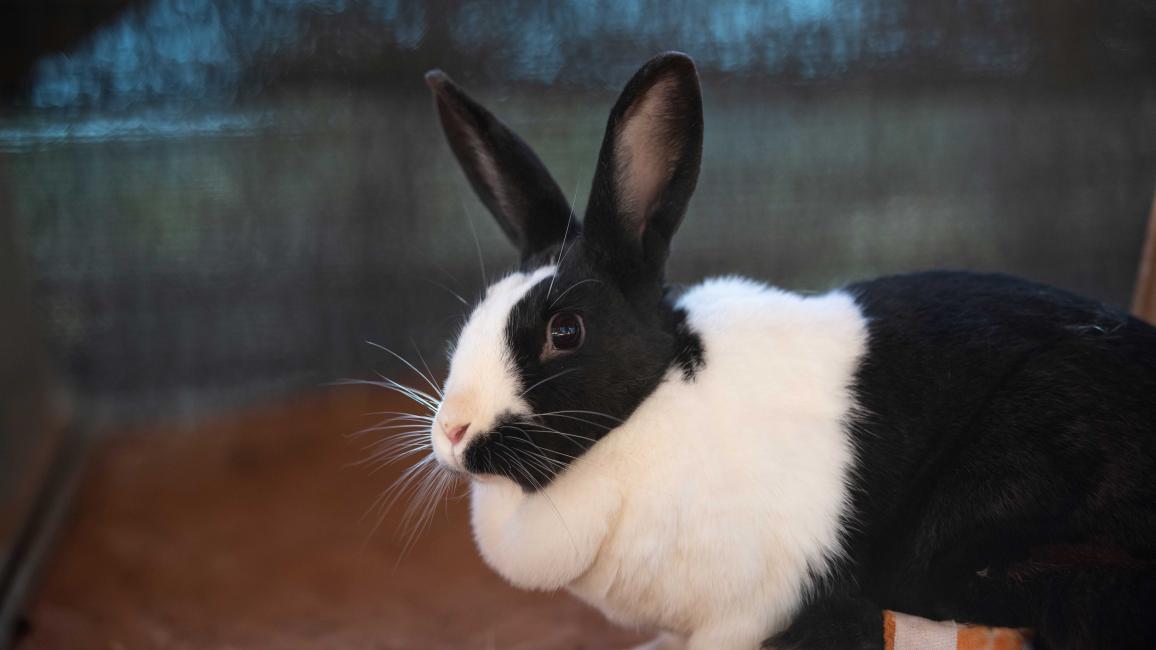
And stretch — only two more repetitions and Autumn will have finished another physical therapy appointment. Not quite the expected to-do list for a bunny, but Autumn doesn’t mind the special attention to help her get her hop back.
When Autumn arrived at Best Friends Animal Sanctuary in Kanab, Utah, it was clear that something wasn’t quite right. Though alert and curious, one of her back legs appeared to have undergone some sort of soft tissue injury that hadn’t healed correctly, lacking the strength and shape it should have had. The veterinary staff at Best Friends Animal Clinic took X-rays, but they revealed no fractures or other issues, which pointed to a different cause of her symptoms: muscle atrophy.

Reviving a bunny’s hop
Most likely, Autumn had spent too much of her life after the injury in a small enclosure without the room she needed to hop, stretch, and restrengthen her leg. Bunnies are built for movement, relying on strong back legs to propel them forward, navigate their environment, and express natural behaviors. Without the opportunity to move freely, muscles can weaken quickly, leaving lasting effects on mobility and overall well-being.
To help Autumn get back on her feet, her caregivers developed a physical therapy routine focused on strengthening her back leg and improving its flexibility.
[Resilient bunny zooms into life on 3 legs]
During sessions, caregivers work slowly and gently, encouraging proper positioning and movement while ensuring Autumn remains comfortable and relaxed. The sessions are gentle but purposeful, designed to rebuild muscle and restore her confidence in her movement.
Over time, these small, consistent efforts began to add up.

More room for a busy bee
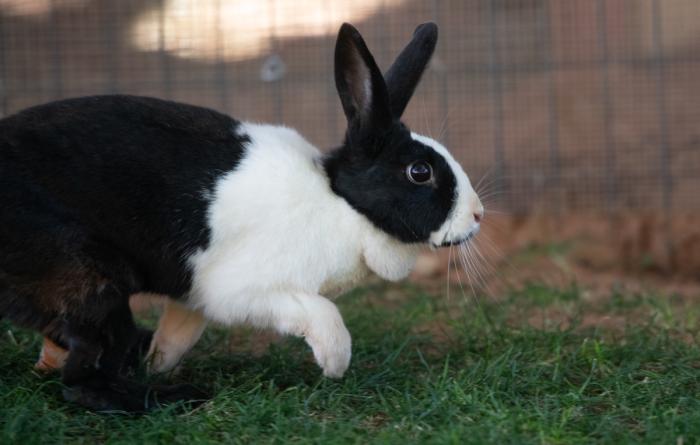
Just as important as therapy sessions, though, is playtime. As she gained strength, Autumn could show off her leaps and newfound abilities, both in her spacious abode and in the Sanctuary’s grassy bunny park — a large, outdoor enclosed space where the bunnies play in the grass, dig in the dirt, and enjoy what the outdoors can offer with safety ensured by fencing and watchful eyes of caregivers.
Time in the park also gives Autumn new things to sniff and a wider space to explore. The park always has new sights, sounds, and smells for Autumn to enjoy, especially now that she has the strength to do so.
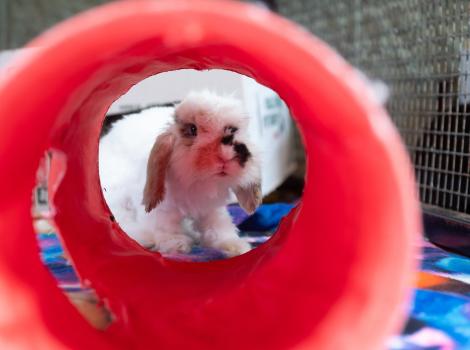
“Autumn is a very busy girl, and she wants to explore everything,” Best Friends caregiver Stephanie Vosburgh says. That curiosity and drive to move are critical to her recovery. Like the falling leaves her name brings to mind, Autumn is constantly in motion, darting through her tunnel and adjusting her blankets and hay just the way she likes them.

Healthy hops for happy bunnies
Movement plays a vital role in a rabbit’s overall health. A lack of movement doesn’t just affect a bunny’s muscles; it can also cause problems with their gut health. So caregivers were thrilled to see Autumn showing off the strength she’s built — including some “binkies.”
When bunnies hop and leap, they often perform “binkies” — joyful jumps and twists that signal happiness and well-being. “Binkies are crucial for their health,” Stephanie explains.
[Bunny with a head tilt gets second chance at Best Friends]
Since starting physical therapy, Autumn has gained far more than strength. Her jumps are smoother, her posture stronger, and her confidence unmistakable. Now she spends her days exploring every inch of the play park, diving through tunnels and boxes, and making new friends.
“She has a zest for life,” Stephanie says. Her strength has returned, and Autumn is well on her way to her next chapter: a family of her own.

Let's make every shelter and every community no-kill
Our goal at Best Friends is to support all animal shelters in the U.S. in reaching no-kill. No-kill means saving every dog and cat in a shelter who can be saved, accounting for community safety and good quality of life for pets.
Shelter staff can’t do it alone. Saving animals in shelters is everyone’s responsibility, and it takes support and participation from the community. No-kill is possible when we work together thoughtfully, honestly, and collaboratively.
You can help save homeless pets
You can help end the killing in shelters and save the lives of homeless pets when you foster, adopt, and advocate for the dogs and cats who need it most.


Saving lives around the country
Together, we're creating compassionate no-kill communities nationwide for pets and the people who care for them.
Let’s be friends!
Connect with us on social media to stay in the loop about the lifesaving progress we’re making together.


