Hope for a cat with a once-fatal prognosis
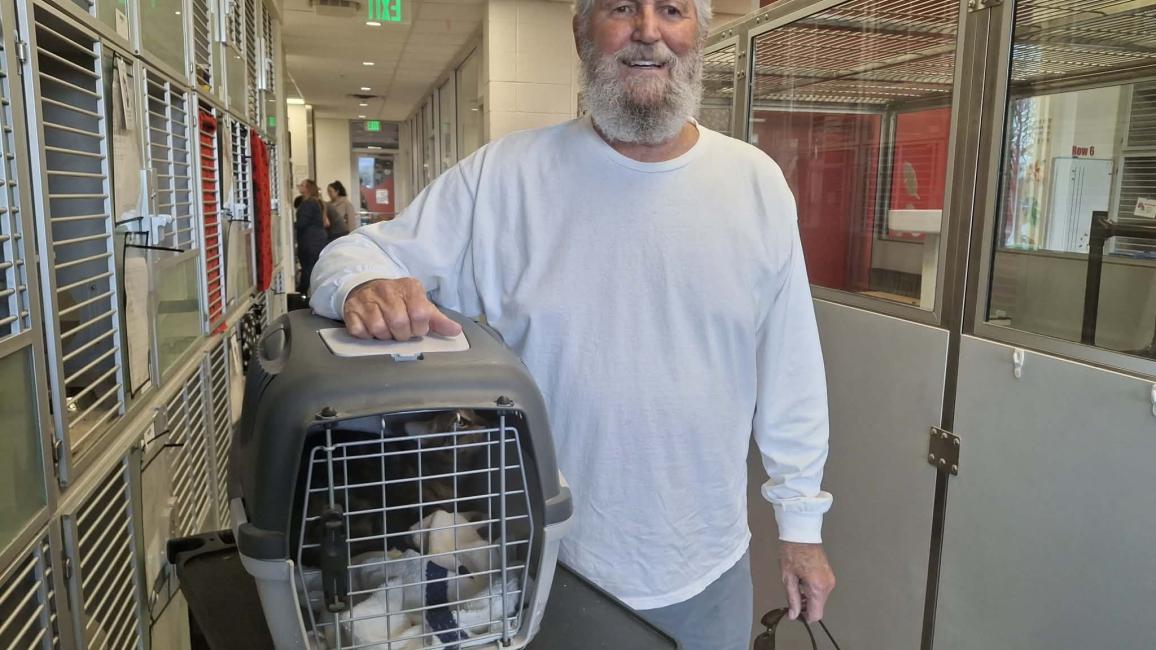
Just because you can’t touch a cat doesn’t mean you don’t love them — or bring them their favorite food and a comforting blanket while they’re in the hospital. Such was the case for Mike Weigel and Buster.
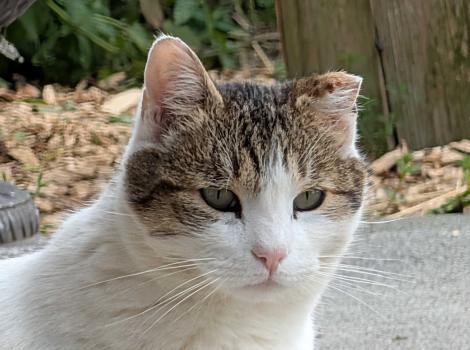
Buster is one of the cats who live outdoors — often called community cats — in Mike’s Tucson, Arizona, neighborhood, and Mike helps to feed and care for them. Mike noticed that Buster was growing thin and weak, so he set out to get his feline friend some help.
Mike took Buster to the veterinary clinic run by Friends of Pima Animal Care Center, a nonprofit that helps support the government shelter (Pima Animal Care Center) and a Best Friends Network Partner.
The bad news was that Buster had feline infectious peritonitis (FIP), a virus in cats that until recently had no effective treatment and was fatal. The very good news was that groundbreaking new FIP treatments are now giving options and hope.
Pima Animal Care Center (PACC), also a Best Friends Network Partner, took Buster into their community cat program for treatment. There was hope.

Caring for the community's cats
Every year, PACC has about 3,000 cats coming in through their community cat program — a lifesaving initiative through which cats are humanely trapped, spayed or neutered, vaccinated, and treated for any ailments or injuries before they are returned to their outdoor homes.
Most of these cats only stay at PACC for 24-48 hours, so as not to cause undue stress to a cat used to being outdoors. A variety of conditions could keep a cat at PACC for a bit longer, such as an upper respiratory infection, a dental infection, a wound, or a broken bone.
FIP requires 84 days of treatment. PACC has treated a handful of cats per year for FIP — with Buster being just the second community cat.

A cozy road to recovery
For the course of his treatment, Buster received antiviral drugs every day. And PACC staff did their best to keep him feeling safe and serene during his long stay. He was in a special section of the shelter dedicated to community cats that is not open to visitors and is kept quiet and calm. He had cozy places where he could tuck himself away and hide if he felt like it, along with toys and even a window to look out.
Buster also had a devoted visitor in Mike, who came to see him every week.
Clinical trials aim to save cats from deadly FIP virus
Mike brought blankets that Buster's cat friends back home used, so their scent could help him feel at home. Mike also toted in bags full of Buster’s favorite treats and food — bringing enough to share with other cats. “I wanted to be sure the food was familiar when he went to the hospital,” Mike says.
He’d sit for 15 minutes or so to talk to Buster and see how he was doing. Buster still hadn't warmed up to people petting him, but that was perfectly OK with Mike. He just wanted Buster to feel comfortable.

Healthy, happy, home
As Buster neared the end of his treatment, the handsome tabby began showing signs of returning Mike’s affection. He recently started “making biscuits” when he heard Mike’s voice and meowing as Mike came and went. He even allowed Mike to brush him.
“I couldn’t believe it,” Mike says, with awe and love in his voice.
Then, after nearly three months, Mike got the call that everyone had been hoping for: Buster’s treatment was complete. The tests showed the treatment worked. He was ready to go home.
Faces of No-Kill: Cat thrives after FIP treatment
“I’m relieved and excited,” Mike says. “It’s been a long haul for that boy.”
Now, as before, Mike sees his job as providing Buster with whatever it is that makes him comfortable, healthy, and happy in his precious kitty life that so many people worked so hard to save.
“Buster is the star,” Mike says. “He’s got heart.”

Let's make every shelter and every community no-kill
Our goal at Best Friends is to support all animal shelters in the U.S. in reaching no-kill. No-kill means saving every dog and cat in a shelter who can be saved, accounting for community safety and good quality of life for pets.
Shelter staff can’t do it alone. Saving animals in shelters is everyone’s responsibility, and it takes support and participation from the community. No-kill is possible when we work together thoughtfully, honestly, and collaboratively.

You can help save homeless pets
You can help end the killing in shelters and save the lives of homeless pets when you foster, adopt, and advocate for the dogs and cats who need it most.


Saving lives around the country
Together, we're creating compassionate no-kill communities nationwide for pets and the people who care for them.
Get inspiring animal rescue stories delivered straight to your inbox
Never miss a feel-good animal story. When you give us your email, we’ll send you inspiring animal rescue stories each week, along with tips on different ways you can help save homeless pets in your community and beyond.