A horse who chose connection
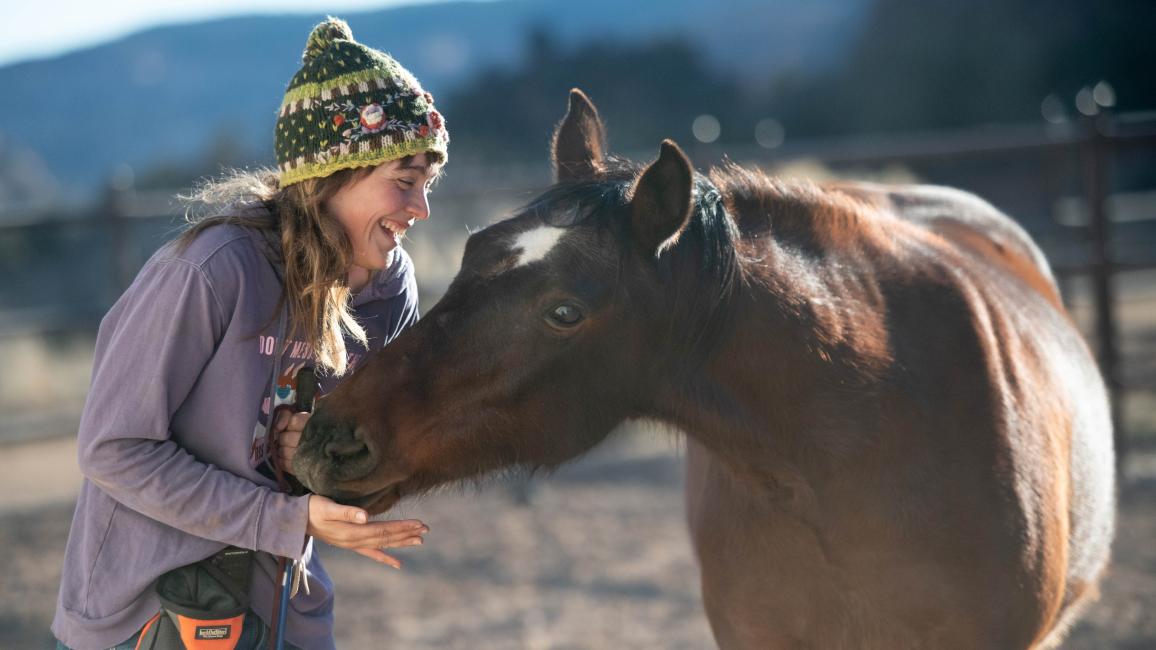
Where oh where could she be? An eager nicker echoes off the canyon walls when Clint peeks around the corner of the barn to find his friend. She can’t be far; the tasty smell of Clint’s favorite cookies wafts through the air. More than that, Best Friends equine trainer Shy DeLand’s giggles may have given away her hiding spot.
When Clint first arrived at Best Friends Animal Sanctuary in Kanab, Utah, he was “very worried about being handled,” Shy says. Horse Haven manager Jen Reid began laying the groundwork, spending quiet time with him before Shy started building a friendship of her own.
Learning Clint’s language
“All we really know about Clint is what he’s told us through his actions,” Shy says. He’s very communicative. And he has plenty to say.
He’s clear about his “I’d rather nots,” especially when it comes to things like having his hooves trimmed. But he’s just as quick with a yes. He’ll point out an itchy shoulder that needs scratching or the flies he can’t swat with his tail. He nickers at his favorite people approaching the pasture. Clint is a horse who knows what he wants — and isn’t afraid to say so.
That honesty became the foundation of their work together. Shy made sure not to rush him or ask for more than he was ready to give. “He blew me away with how ready he was to form a connection with me if I just simply listened to what he was asking of me, too,” she says. With Clint, trust isn’t taken — it’s earned.
Listening between the lines with horses
Working with Clint changed the way Shy thinks about training, too. Their games of hide-and-seek — and quiet moments together in the arena without a halter or rope — reminded her of the value of low-pressure work, where horses are given space to choose connection rather than be pushed toward it.
“He’s taught me the value of listening to our horses,” Shy says. “If you’re honoring their communication and communicating back, they offer you so much more than you ever could have imagined.”

Ready or not, here comes Clint
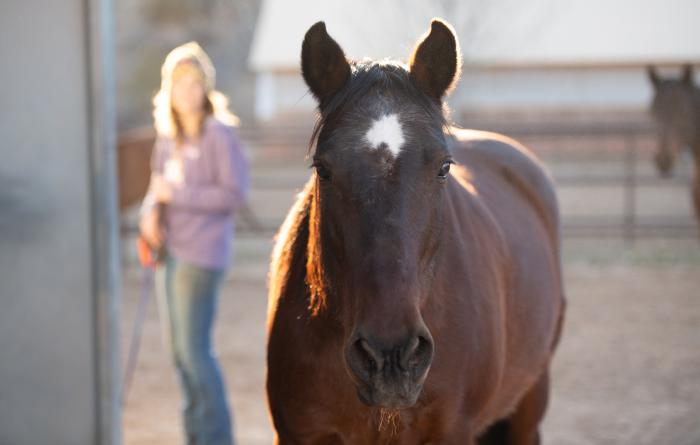
One day out in the pasture, Shy was curious just how in tune Clint was with her, even without a lead rope to guide him. Shy snuck behind Clint’s shelter. He paused, but he crept around the shelter with a proud nicker when he found Shy.
“He seemed so engaged and excited that I thought why not keep going with this,” she says.
For horses who haven’t always trusted people, games like this can mean something bigger than fun. Each playful search helped Clint build confidence, strengthen his connection with Shy, and learn that time with people can feel safe, rewarding, and entirely worth seeking out.
Clever Clint loved hide-and-seek so much that he would make Shy seek him out from time to time. She’d wait out of sight while he went off to find his most perfect spot to make her find him for a change.
“I want the horses I work with to feel like I’m part of the herd,” Shy says. When horses view their people as honorary herd members, it signals something important: trust. It means they feel safe, even when they leave the comfort of their pasture and encounter something unfamiliar.

Finding friendship and going home
Over time, Clint didn’t just learn to seek out Shy during their games. He began calling for her when she approached the pasture — a horse once worried about being handled by humans now eager to greet a friend.
“Hearing him calling for me as I’m walking up to the pasture and knowing that that is not how he’s always felt about people is the most rewarding thing I have ever felt,” Shy says. “It’s such a high compliment to be loved by Clint.”
Now Clint is bestowing the compliment of his friendship on his new family — because he was adopted. Clint has since gone to a home of his own, where he has a family to share that love with.
Let's make every shelter and every community no-kill
Our goal at Best Friends is to support all animal shelters in the U.S. in reaching no-kill. No-kill means saving every dog and cat in a shelter who can be saved, accounting for community safety and good quality of life for pets.
Shelter staff can’t do it alone. Saving animals in shelters is everyone’s responsibility, and it takes support and participation from the community. No-kill is possible when we work together thoughtfully, honestly, and collaboratively.
You can help save homeless pets
You can help end the killing in shelters and save the lives of homeless pets when you foster, adopt, and advocate for the dogs and cats who need it most.


Saving lives around the country
Together, we're creating compassionate no-kill communities nationwide for pets and the people who care for them.
Get inspiring animal rescue stories delivered straight to your inbox
Never miss a feel-good animal story. When you give us your email, we’ll send you inspiring animal rescue stories each week, along with tips on different ways you can help save homeless pets in your community and beyond.