Mourning the loss of Richard Avanzino, the father of the no-kill movement
This past week, I lost a mentor, friend, and singularly one of the most important influences in my life. Rich Avanzino was the first person to stop and say, “WTF? Why are we killing our best friends rather than trying to save them?” And he was the first person to actually do something to change it. It was a radical and visionary notion that changed the lives of millions of people and pets.

Losing him is going to take a while to feel real. My heart is broken. Animal welfare lost far more than the man we call the father of the no-kill movement — we lost an iconic man who truly changed the world.
Rich saw early on what the rest of the field eventually came to understand: We didn’t have to kill our way out of the homeless pet crisis. We could save our way out of it instead. And once he saw it, he spent the rest of his life proving it and teaching the rest of us how.
Best Friends knows that proof firsthand. The first significant grant we ever received came from Rich, back when he was leading Maddie’s Fund, designed to make Utah a no-kill state. Its impact reached far beyond its initial intention. It forever changed the landscape, and really the entire trajectory, of Best Friends’ growth and enabled us to build so many of the innovative coalition, spay/neuter, and adoption programs considered standard practice in this field today.
Outside of his impact for the animals and on Best Friends, what I’ll remember most is how funny Rich was, how warm he was, and how quick he was to hand the credit off to someone else, even (and often) when it was rightfully his. Just last fall, we had the honor of celebrating Rich at our Benefit to Save Them All in New York, where I got to introduce him as what he is: a pioneer. I called him the Roger Bannister of the no-kill movement — the person who ran the impossible mile first, so the rest of us would know it could be done.
Today, in honor of his memory, I want to tell you why.
Rich came to the San Francisco SPCA in 1976 with a law degree and a doctorate in pharmacy, and he found an organization on its heels. It was known as the dogcatcher, dependent on its city animal control contract, and it was quietly killing roughly 29,000 animals each year because that was simply how it had always been done. Rich looked at that number and refused to accept it as a cost of doing business.
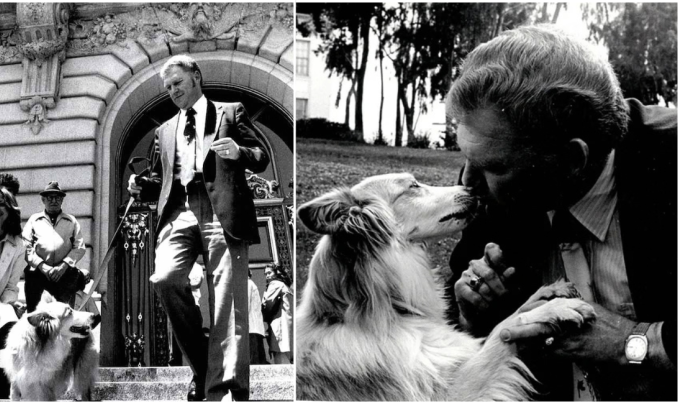
One of the earliest tests of his resolve came with Sido, a sheltie mix whose person had died and left instructions for the dog to be euthanized rather than rehomed. Rich wouldn’t do it. He fought the case in court and pushed for a legislative fix. And he won — not just for Sido but for the principle underneath it: that a life isn’t disposable property and that the public, given the chance, will show up for an animal in need. Thousands of people wrote in offering Sido a home. Rich never forgot what that told him about what was possible.
From there, Rich did something almost no one in the field was willing to do: He gave up power on purpose. In 1984, he told the city of San Francisco that the SFSPCA would exit the animal control business within five years. And in 1989, it did, handing the job to a new city agency Rich helped design and staff with the existing animal control team from the SFSPCA. Now, with a single focus, Rich could pour everything into adoption, fostering, behavior programs, and spay/neuter efforts instead. Rich operated according to a simple rule of “no bash, no trash” — meaning you never tear down another organization to build up your own — and he meant it, even when the going got political.
Rich made San Francisco the first no-kill city in America, and he had to fight for it. He spent years pushing the city’s new animal control agency to formally guarantee that every healthy or treatable animal would find a home. When the agency dragged its feet, Rich didn’t back down. He was prepared to take the fight to the ballot box with a city ordinance and used the fact that a third of San Francisco’s residents were SFSPCA supporters as leverage to force the issue. In 1994, the city finally signed the Adoption Pact, a legally binding agreement making the SFSPCA responsible for every animal the city shelter couldn’t find a home for. Under Rich’s leadership, the city went from killing roughly 29,000 animals each year to about 2,000 mostly sick or injured dogs and cats, the lowest rate of any urban center in the country at the time.
Rich left San Francisco having proven the model worked in one city. Then he spent the next chapter of his life proving it could scale. In 1999, he became the founding president of Maddie’s Fund. And during his tenure there he awarded well over $150 million in grants, built community lifesaving collaborations across the country, and funded the shelter medicine programs at veterinary colleges like UC Davis, Florida, Cornell, and Purdue — which trained a generation of vets to treat shelter medicine as its own discipline rather than an afterthought. He stepped down as president in 2015 and stayed on as a strategic adviser, still showing up for the cause even after handing over the reins.
Rich liked to say that the public isn’t the problem in animal welfare; it’s the solution — if we let it be. That single idea, more than any program or policy, is what he leaves behind. It’s the belief underneath every adoption event, every foster network, every community that has decided its shelters don’t have to be places where animals go to die.
It took people like Rich, and the co-founders of Best Friends, to ask a simple, radical question: Why are we killing our best friends?
Rich spent nearly 50 years answering it — one program, one policy, one dog, one city at a time. Today, more than 2 out of every 3 shelters are no-kill, and an idea that used to be dismissed as impossible became the standard we now hold ourselves to.
Multiply that out across 50 years and a whole country, and the number becomes difficult to wrap your head around. Countless dogs and cats saved, who wound up on living room couches and sunny windowsills instead of euthanasia lists, thanks to one man’s unrelenting tenacity and dedication to his belief that death didn’t have to be the plan.
That is Rich’s legacy. He showed us what proof looks like. And while I don’t completely know how to do this next part without him, I know he’d tell me to get to work. So we will.
Thank you, Rich, for showing us that the impossible was never really impossible at all. It was just undone.
-Julie