Why we love a viral animal story
Every day, a dog or cat goes viral.
We’ve all seen it: the blocky-headed dog tucked in with his favorite toy at bedtime in the shelter, dreaming of a home; the tortoiseshell cat adopting an orphaned kitten as her own; the shivering dog clinging to her rescuer during a rising flood. I watch every single one to the end. And I’m not alone. So many of us hit the share button on these stories because they’re compelling and they’re hopeful, and for a second the internet feels softer.
That response says something important about us. We care deeply about animals. We’re drawn to stories where compassion shows up clearly and where a life is changed for the better. In a world that can feel overwhelming, viral animal stories offer a sense of resolution. Someone noticed and helped — the outcome mattered.
What’s easy to overlook is that these stories don’t just make us feel something; they change outcomes for real animals.

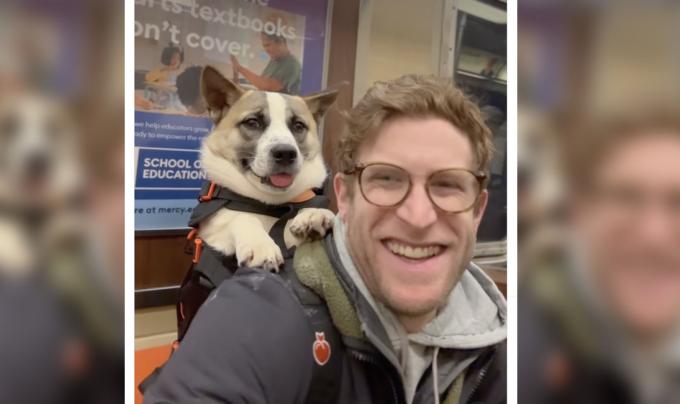
Take Axl, for example. Last year, Bryan Reisberg (of Maxine the corgi fame) took Axl, a dog from our Best Friends Pet Adoption Center in New York, on one of his backpack adventures and documented the outing. Bryan shared the video with his audience, it crossed 2 million views, and within days a family had driven from Virginia to adopt Axl. That one video changed Axl’s life trajectory.

Then there’s Petey, the sweet, overlooked pup who landed on Dog With Sign. A family in Arizona saw the post, recognized something in him, and drove 19 hours to bring him home. Petey didn’t go viral because of production or marketing; he went viral because people felt connected to his story and passed it along.
These are only two examples, of course, but the ingredients are always the same: curiosity, affection, a glimpse into an animal’s life, and a feeling that the viewer could help change the outcome. Viral animal stories work because they create a moment of openness — a moment when people are willing to get involved, root for an animal, and imagine a better outcome.
I’ve spent much of my career watching these moments unfold, both as CEO of Best Friends and before that as chief development, marketing, and communications officer, overseeing the teams responsible for telling animal stories and bringing them to the public. (I also know the storytelling history embedded within Best Friends: Before the internet was so ubiquitous, the founders pioneered the idea of cute, engaging animal stories to help attract a following.) I’ve seen firsthand how powerful these moments can be. And I’ve learned that their impact depends entirely on what we do with the attention they generate.

The challenge isn’t that people stop caring once the video ends but rather that we don’t always guide them toward what comes next.
While we’re glued to these stories online, shelters in our own communities are chock-full of cats and dogs with stories just as compelling — animals who don’t necessarily need a national platform but do need local visibility. When those dots aren’t connected, lifesaving potential is left untapped, not because compassion is lacking but because direction is.
This is where storytellers have an opportunity to lead. Virality, while not the end goal, is an incredibly powerful tool. When a story reaches millions, we have a responsibility to help people understand how that feeling they’re experiencing can translate into action close to home.

A 15-second connection doesn’t have to be fleeting. When stories are paired with a clear invitation to look closer at what’s happening locally, to follow and support shelters in one’s own community, or to explore ways to help that fit into a person’s everyday life, momentary attention can turn into meaningful, long-term engagement.
I say this with confidence: You don’t need a massive platform or a media plan to make a difference. You just need to help an animal be seen.

Meaningful involvement doesn’t look the same for everyone, and it doesn’t need to. For some people, it’s volunteering time or skills. For others, it’s fostering and sharing foster journeys on personal social media. It can be as simple as sharing adoptable animals from a local shelter, so they’re seen by the people most likely to act. Or it’s learning more about how animal shelters operate and why community involvement is essential to lifesaving success.

If you love these stories — if you find yourself rooting for these animals — help create the next one. Check in with your local shelter and see who’s waiting to be noticed. Share their stories in group chats, neighborhood pages, and everyday conversations. A handful of shares can turn into inquiries. A single inquiry can inspire a family to hop in the car and head to the shelter. Chain reactions change outcomes.
When that connection happens, animals move into homes more quickly. Shelters become stronger. Communities begin to see sheltering not as a distant system but as something they can actively influence.
Viral animal stories prove to us that millions of people are willing to cheer for an animal and imagine a better ending. Our collective job is to make sure those endings are possible. It’s wonderful when a video reaches millions, but what matters most is what happens next. When we intentionally turn online compassion into meaningful, local action, fleeting moments become lasting impact — and that’s how we save more lives together.
-Julie