Help desk supports cats and people who care for them
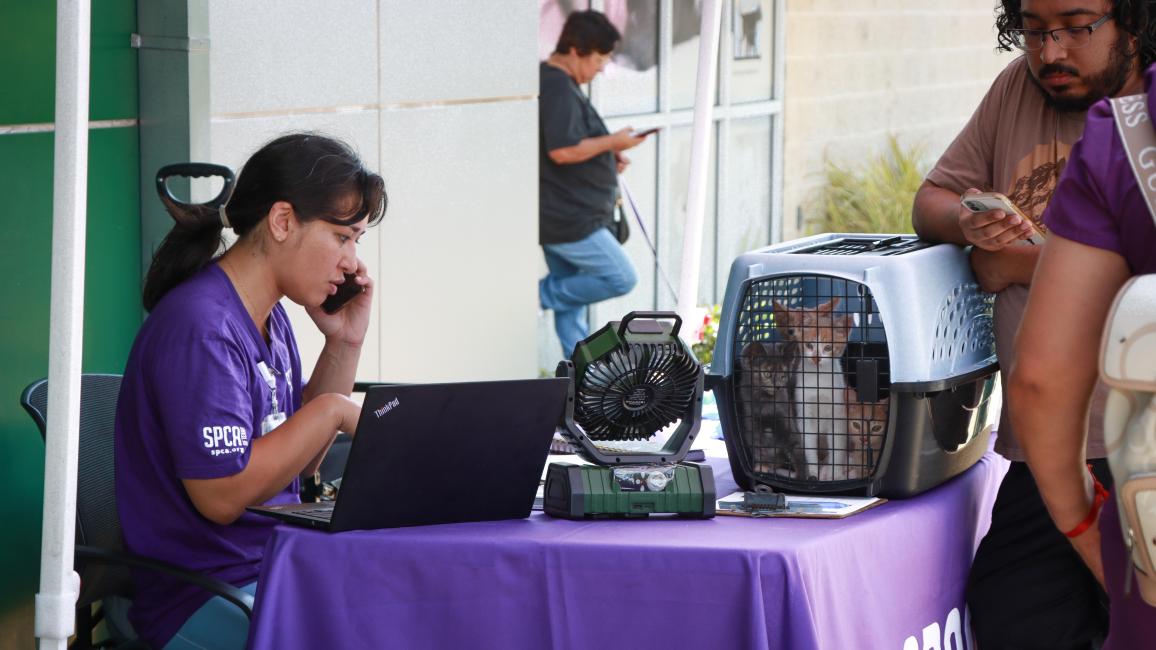
Imagine a cat help desk. You might picture floofy kitties sitting patiently behind a desk (or on top of it), ready to lend a paw. While that image might just be a dream for now, this particular help desk is very real — and it’s staffed by humans. Parked outside Dallas Animal Services (DAS), one of the largest municipal shelters in the country, the cat help desk has a full-time person dedicated to saving cats’ lives.
That person is there for people who show up to the shelter worried, overwhelmed, or just unsure what to do next about a cat or kitten. Some arrive with tiny kittens in a box or carrier, assuming the shelter is the only option for them. Others have neighborhood cats in their yard and need help caring for them — or they want help reducing nuisance behaviors. At the cat help desk, those conversations slow down long enough to talk through what’s really going on and what options are on the table.

When shelters team up, cats thrive
On average, DAS sees around 700 cats and kittens come through its doors every single month. That’s why the SPCA of Texas and Best Friends Animal Society came together to help.
“I realized the biggest impact we could make was keeping cats from entering the shelter in the first place,” says Sarah Sheek, SPCA of Texas director. “I remember telling friends at dinner that I wished we could just sit outside the DAS front door — and then I thought, why not?”
She texted Best Friends regional director Sophia Proler that night to ask whether Best Friends might fund a full-time position stationed at DAS. “She told me to submit the paperwork for a grant,” Sarah says, “and that’s how the cat help desk was born.”
[Virginia shelters take on the community cat challenge]
Sophia adds, “We recognize that the second that cats — especially kittens — enter a shelter system, they’re more susceptible to disease. When Sarah suggested that the SPCA of Texas could train someone with strong customer-service skills who could learn trap-neuter-vaccinate-return (TNVR) and kitten-fostering basics and sit outside and talk to people about cats, it was such a smart solution.”
With a grant from Best Friends, the SPCA of Texas piloted the cat help desk. Grants like these are just one of the ways Best Friends is helping shelters nationwide reach no-kill.

A partnership with purr-pose
In just two months, the cat help desk provided more than 350 vulnerable cats and kittens with much better alternatives to entering the shelter. Those included free vaccines and spay and neuter surgeries, so neighborhood cats living outdoors could stay healthy and comfortable in their outdoor homes without producing any more kittens.
“About half the people who came to the desk had unknowingly brought in community cats or potentially a neighbor’s cat,” explains Sarah. “A lot of (the cats) were pretty well socialized, so they likely either have caretakers or owners in their neighborhood. We did a ton of educating on what a community cat is and why we don't remove them. We also did a lot of counseling on deterrents that you can use to keep them out of your yard.”
The program also provided low-cost spay/neuter and veterinary support, as well as supplies for community members to become foster volunteers. And those community members are stepping up in a big way. So far, more than 40 kittens have gone home with 15 new foster families. They’re caring for kittens who might otherwise have landed in the shelter, giving them a safe space to grow until they’re ready for adoption.

When people say yes to helping cats
The numbers tell one part of the story. The people (and the cats) tell the rest.
Early in the program, a woman pulled up to the cat help desk with three older kittens she’d found in her backyard. Staff explained that leaving the kittens at the shelter carried risks and that the kittens would be much better off if they could vaccinate them, schedule spay/neuter appointments, and send her home with free supplies to foster temporarily. After a moment of hesitation, Sarah says, the woman asked what she needed to do and ended up taking the furry bundles home as short-term foster pets.
[Teaming up to revive an Illinois community cat program]
Another day, a family arrived with a mama cat and her seven kittens in a large crate. The cats were outside in their yard, and their son loved petting the kitties, but he was allergic. Yessie Pham, a cat help desk staff member, spent about half an hour talking with them. She validated how hard the situation was, explained why removing all the cats wouldn’t solve the problem (because removing cats tends to create a vacuum — other cats will likely show up if one leaves), and walked them through options. The kittens went into the SPCA of Texas foster program, and they were given information on how to get the mama cat spayed for free and returned to her outdoor home, along with tools and tips to help the family keep her out of their yard.
“Yessie worked with people, had those difficult conversations, and found a way to get there together,” notes Sarah. “I think having the right person in that role was the magic piece. We never had a day where we weren't successful in keeping cats out of the shelter.”
Stories like these are exactly why the cat help desk exists: to give people time, information, and support so they can more easily say yes to helping cats. For now, the cat help desk may not feature a real feline receptionist (yet), but it’s already showing what’s possible when creativity and collaboration come together, one conversation, one desk, and one kitten (or seven) at a time.

Let's make every shelter and every community no-kill
Our goal at Best Friends is to support all animal shelters in the U.S. in reaching no-kill. No-kill means saving every dog and cat in a shelter who can be saved, accounting for community safety and good quality of life for pets.
Shelter staff can’t do it alone. Saving animals in shelters is everyone’s responsibility, and it takes support and participation from the community. No-kill is possible when we work together thoughtfully, honestly, and collaboratively.
You can help save homeless pets
You can help end the killing in shelters and save the lives of homeless pets when you foster, adopt, and advocate for the dogs and cats who need it most.


Saving lives around the country
Together, we're creating compassionate no-kill communities nationwide for pets and the people who care for them.
Let’s be friends!
Connect with us on social media to stay in the loop about the lifesaving progress we’re making together.


