Pit bulls finally have a home in Maryland county
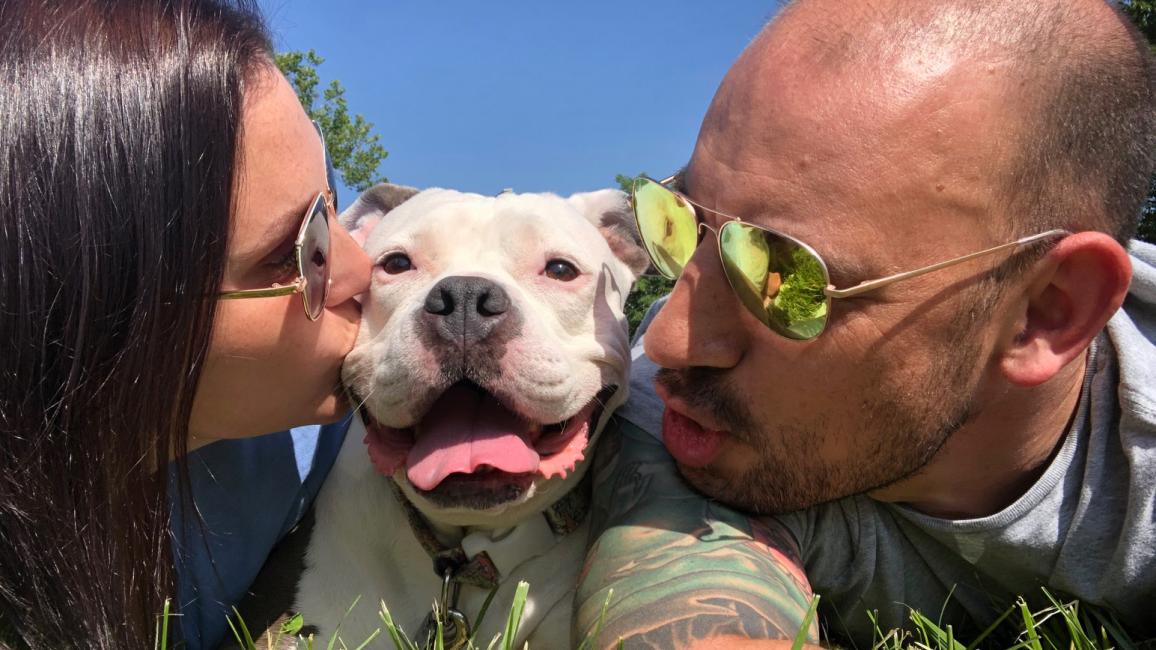
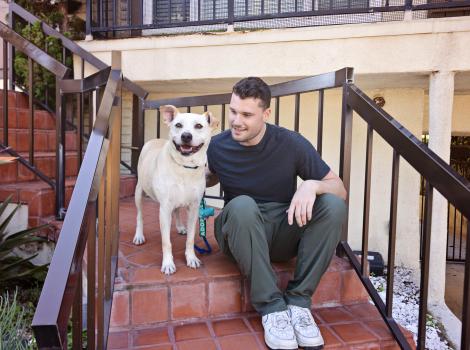
It all started with a squat little pup with a blocky head and an adorably squishy face named Poptart. She’s gray, white, and cute all over. But when Cait Conroy and her family moved to Prince George’s County in Maryland a few years ago with Poptart, they were told their beloved dog might not be allowed to stay — all because of how she looked.
At the time, Prince George’s County had breed-specific legislation (BSL) on the books. BSL bans or restricts certain types of dogs like Poptart based solely on their appearance.
“When we moved to the county and tried to license our dog, we were told no,” says Cait. She explains this denial was based only on visual evaluations of Poptart performed by county animal services officers.
“The chief officer was very clear he disagreed with this law but that Poptart met their visual criteria to be considered illegal,” says Cait. “This criterion is based on the evaluator's opinion. We had already put the down payment on our house, and the money wasn't ours anymore. I was essentially told that my choices were to get rid of our dog or lose our money on the house.”

Opening the door
“Breed-specific legislation and restrictions are outdated, costly to enforce, and are proven to do nothing to keep communities safe,” explains Eric Swafford, Best Friends legislation and campaign strategy director. “The simple truth is all animals are individuals, and we need laws that are based on behavior, not what an animal looks like. At Best Friends, we’ve worked with countless local governments to enact comprehensive dangerous-dog laws that protect residents without unjustly punishing pets and their families.”
Giving up Poptart wasn’t an option, so they poured time and money into DNA tests and letters from the shelter she came from to show she didn’t fall under the county’s ban on pit bull-type dogs. Under the law, “pit bull-type dogs” included Staffordshire bull terriers, American Staffordshire terriers, American pit bull terriers, and dogs with predominant traits of those breeds.
5 steps to using your power for pets
“The DNA test and paperwork from Poptart’s former shelter said she’s primarily a bulldog,” explains Cait.
Based on this evidence, the county’s new assessment of Poptart read: “The breed evaluation found the dog to have the appearance and physical characteristics of being predominately of the breed known as bulldog, which does not fall under the pit bull law. Therefore, it has been determined that the dog is legal to own, harbor, and have possession of in Prince George’s County.”
Cait’s fight to keep one dog at home helped spark a community movement that ultimately ended the county’s nearly 30-year pit bull ban — and opened the door for more dogs to move out of the shelter and into happy new homes.

Changing hearts and minds
Once the dust settled and Poptart was safe to stay in the county with her family, Cait couldn’t stop thinking about other people in the county who had their own “Poptarts” and might not have the time or resources to fight the same battle. In starting her effort to help them, Cait joined a whole legion of dog lovers who have pushed back against breed bans in Denver, Miami, and hundreds of other municipalities around the country.
Looking for a way to help keep people and their pets together, she started an all-volunteer advocacy group called Prince George’s Pet Unity Project (PG PUP). They began with a clear goal: end the county’s pit bull ban and help the community stay supported and safe through the transition.
“Our first PG PUP group meeting was focused on overturning the ban,” says Cait. “But after the first week of talking with the public, we realized we could make more of a difference by supporting the community first. How do we help you get your dog spayed or neutered? If you’re scared to take your dog to the vet, how do we help you through that? That really helped build community trust and support under us.”
The law is (finally) catching up to our pets
One of the biggest moments that helped build trust and shift public opinion was a pet microchipping extravaganza with the local shelter, Prince George’s County Animal Services Facility. “We went into the community, worked with our council members, and microchipped 1,100 dogs in a matter of eight weeks,” Cait says.
Council members showed up because the events made it easy for residents to access a practical service — and gave officials a chance to listen, connect, and be part of something positive.
“These events helped with the long, slow build of public and councilmember trust,” Cait says. And that’s the kind of trust that opens doors and gives people room to change their minds.

A lifesaving triumph
On a blustery day last fall, Prince George’s County Council voted in favor of ending the decades-old pit bull ban in the county.
“We are thrilled to see this long-awaited change,” said Cait. “For years, residents have called for fair, effective laws, and this outdated policy has cost our community dearly in reputation and resources, in trust, and in lives. It has strained our animal services system and blocked meaningful progress. The council’s vote shows real leadership, grounded in facts, evidence, and compassion, rather than fear and myths.”
The new legislation moves from breed-specific bans to a focus on each individual dog’s behavior. It also strengthens leash laws and includes a pilot program for adopting and fostering previously banned pit bull-type dogs.
“We are so proud of this historic win for the people of Prince George's County,” says Eric.
But changing the law was only the first step. The next challenge was making sure the shelter had the capacity — and the community had the support — to turn that change into new homes for dogs.

A new way forward
That’s where collaboration among PG PUP, Prince George’s County Animal Services Facility, and Best Friends came in: PG PUP helped move public opinion and policy while the shelter, supported by Best Friends, strengthened the programs needed to save more lives once the ban was lifted.
Best Friends’ collaboration with Prince George’s County Animal Services Facility, a Best Friends Network Partner, began in 2022. Best Friends staff worked side by side with the shelter team to refine systems and strengthen proven programs — including dog behavior and playgroup training — that help more pets go home. Providing this kind of one-on-one support is one of the ways Best Friends is helping shelters across the country reach no-kill.
The shelter’s save rate (the percentage of animals who leave a shelter alive or are still there waiting for an outcome) has steadily climbed over the past three years to 84% in 2025, even as the shelter took in 550 more animals that year than the previous year.
Best Friends continues to support the shelter through regular consultation with veterinarians from its national shelter medicine team and guidance from its regional team on communication strategies and implementing robust community cat and foster programs.

Breaking down barriers
"Fostering is probably the biggest wall that's been broken down since the ban,” says David Fisher, chief and administrator at the shelter. “It really gives us another vehicle to expand our capacity, which is just such a huge win for us.”
He explains that prior to the repeal, at least 50-70% of the animals at the shelter were pit bull-type dogs who could not be fostered or adopted into the community. Now, that’s all changing. The shelter can ask the community directly for foster help for any dog — regardless of appearance — who could use a break from the hustle and bustle of shelter life.
“Now we can explain to the community what animals are out there needing help and how we can work together to help them,” says David. “That’s going to allow us, for years to come, to create a much better environment for all of the animals in Prince George's County.”

Second chances
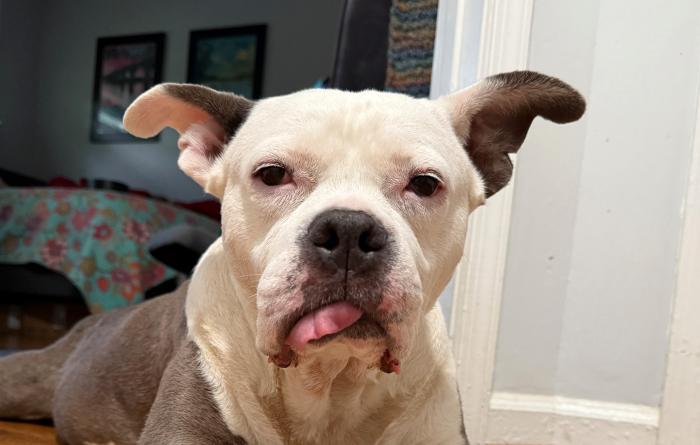
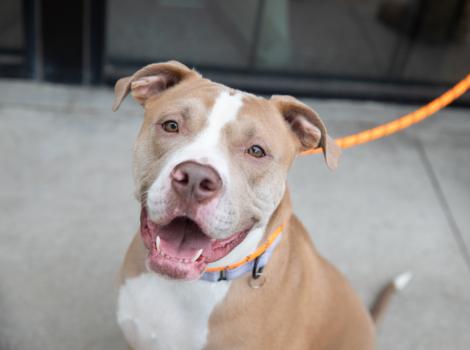
All of this means more dogs who look like Poptart — blocky-headed, squishy-faced, and endlessly lovable — are getting the second chance they deserve. Dogs like Bentley.
Bentley arrived at the shelter after he was found wandering around a shopping center, and his family couldn’t be located. He charmed everyone at the shelter with his slightly crooked nose and penchant for snuggling (and hogging blankets). Volunteers took him for a doggy day out where he explored all the sights and smells of a local park while sporting a dapper scarf around his neck. Then something amazing happened.
A couple watched a video of his doggy day out adventure on the shelter’s social media. They came to the shelter to meet him. They fell head over paws in love and adopted him that day. Now Bentley’s settling into his new home, where he’s putting his professional snuggling skills to work and living the cozy life he deserves.
Not long ago, this happy story could have ended very differently just because of what someone thought he looked like. Years ago, Cait was told she might have to give up Poptart for the very same reason. Today, dogs like Bentley get what Poptart and Cait fought for: the chance to step out of the shelter and into a home full of love.

Let's make every shelter and every community no-kill
Our goal at Best Friends is to support all animal shelters in the U.S. in reaching no-kill. No-kill means saving every dog and cat in a shelter who can be saved, accounting for community safety and good quality of life for pets.
Shelter staff can’t do it alone. Saving animals in shelters is everyone’s responsibility, and it takes support and participation from the community. No-kill is possible when we work together thoughtfully, honestly, and collaboratively.
You can help save homeless pets
You can help end the killing in shelters and save the lives of homeless pets when you foster, adopt, and advocate for the dogs and cats who need it most.


Saving lives around the country
Together, we're creating compassionate no-kill communities nationwide for pets and the people who care for them.
Get inspiring animal rescue stories delivered straight to your inbox
Never miss a feel-good animal story. When you give us your email, we’ll send you inspiring animal rescue stories each week, along with tips on different ways you can help save homeless pets in your community and beyond.