What to do with all those kittens in your yard
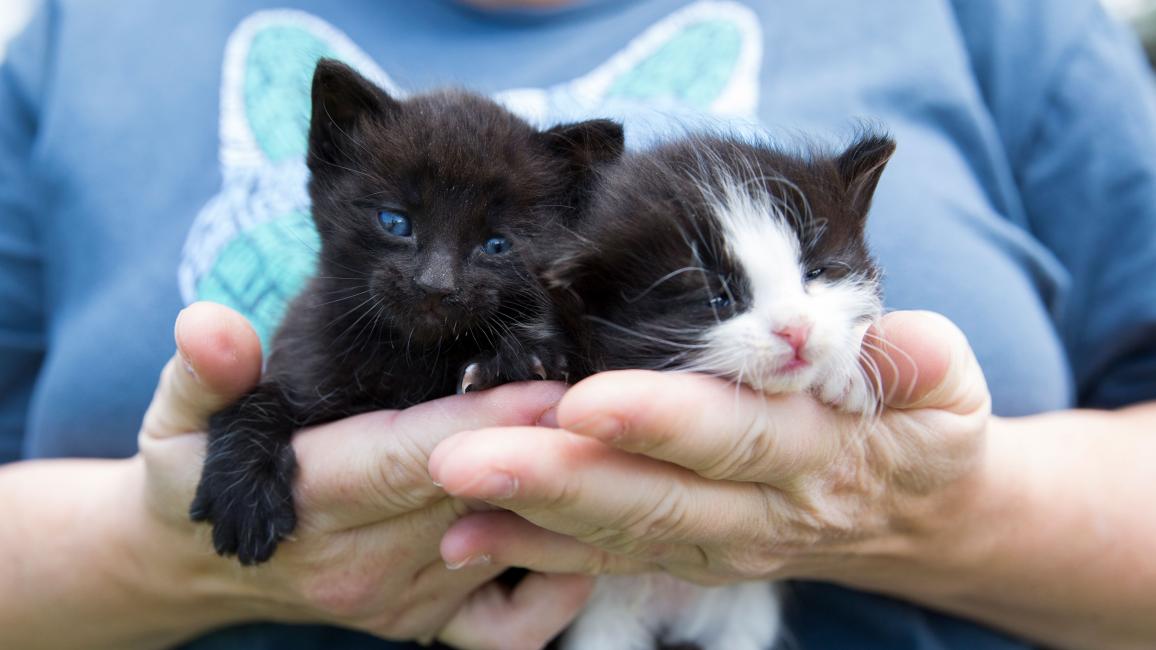
It happens every year starting right around this time. Someone steps outside to water the tomatoes or let the dog out, and there they are: a little pile of kittens tucked under a bush, behind a planter, or beneath the deck, tiny and mewing. And suddenly, your whole afternoon has changed.
So it’s no surprise that there’s an accompanying uptick in the number of conversations about bushels of kittens in yards, full of questions about how best to jump in.
Before you scoop them up and start Googling the nearest kitten formula, take a breath. The most important thing you can do in the first few minutes is also the easiest: Don’t actually do anything just yet.

I don't always write a how-to guide for animal care concerns, but there’s more nuance to this particular topic than meets the eye. So I'm taking kittens into my own hands.
Here’s why you shouldn’t immediately jump into action upon a kitten sighting: Mom is almost certainly nearby. Mother cats routinely leave their litters for hours at a time to eat and scope out the area for safety — which means a nest of kittens that looks abandoned is very often just temporarily unattended. If you move in too quickly, you risk separating a litter from a mother who was fully planning to come back.
So step away, keep an eye on the kitties from a safe distance, and give mom up to 10-12 hours to return. If the kittens seem content and aren’t in immediate danger, that’s a great sign. A hungry, cold kitten will let you know with their cries. If the kittens are exposed or in a risky spot, you can gently move them somewhere safer nearby — mama cat won’t reject the babies if you touch them. Just keep monitoring from a distance. Some mamas will not return if there’s a human nearby, so give the little family ample space.

While you’re waiting and watching, it helps to get a rough sense of how old the kittens are:
- Eyes still shut or just cracking open: 1-2 weeks old
- Wobbly but mobile: 2-4 weeks old
- Running around and chatty: 4-6 weeks old
And at 8 weeks and up, kittens are largely independent little creatures who don’t need nearly as much from you as you might think. Our full age guide and step-by-step instructions are here if you want to geek out on kitten development.

If mom comes back, wonderful — leave the family alone and let nature do its thing. If mom doesn’t return after that monitoring window, or if the kittens appear sick or injured, that’s when you call in reinforcements: a local animal welfare organization, a shelter, or a vet who can help you assess next steps. Young kittens who need care are best supported through foster programs equipped to handle the round-the-clock needs of bottle babies — not by well-meaning humans alone and not by most shelter environments, which often aren’t resourced for the intensive care neonatal kittens require.

Which brings us to the bigger picture.
Finding kittens in your yard isn’t just a one-household-on-the-block event. It’s a signal. Somewhere in your neighborhood, there’s at least one unspayed female cat — likely feral or semiferal, living outdoors, and navigating the world largely independent of people — and she’s having litters. Possibly multiple litters a year. And her kittens, when they grow up, will do the same. This is how community cat populations grow, and it’s why reactive responses like scooping up individual litters and bringing them to already-stretched shelters can’t keep pace.

The solution that actually works is TNVR: trap, neuter, vaccinate, return.
Under a TNVR program, community cats are humanely trapped, spayed or neutered, vaccinated, and returned to their outdoor home. It’s not a perfect solution in the sense that it asks us to sit with the reality that some cats live outdoors and will continue to, but it is the most effective tool we have for stabilizing and humanely reducing community cat populations over time. Cats who have been through TNVR can’t reproduce, they’re vaccinated against the most common and contagious diseases, they’re healthier, and the population gradually declines rather than exponentially expanding.
If cats are removed from an area, rather than being spayed or neutered and returned, new cats can and will move in quickly. Nature doesn’t really leave a vacancy. This vacuum effect is why rounding up community cats and dropping them at the shelter doesn’t solve the problem, all while increasing the likelihood of those cats dying in the shelter. TNVR does solve the problem, precisely because it works with the reality of the situation rather than against it.
So maybe you’ve read this whole post, and the cat distribution system hasn’t reached your yard. Maybe you’re not a cat person. Maybe your neighbors aren’t. That’s OK — and actually this is where you come in anyway.

The most powerful thing you can do for community cats this kitten season isn’t necessarily fostering or trapping. It’s talking. The people most likely to make the wrong call in a kitten situation — rushing them to a shelter, trying to raise neonates alone, or yes, wanting to quietly "remove" the cats from the neighborhood — are often people who just didn’t know there was a better way.
The genuinely beautiful thing about TNVR is that it’s the right answer whether you love cats or would really prefer them not to be napping in your hydrangeas. For the cat lovers, it keeps community cats healthy, cared for, and out of shelters. For the people who’d rather not have cats around, it addresses the source of the problem, keeps sick and injured animals from roaming, reduces the nuisance behaviors that come with unaltered cats, and — this one surprises people — the organizations doing the TNVR work are often the same ones that can provide humane deterrents and advice for keeping cats out of specific spaces. Everyone wins — the cats win most of all.

So share this post. Text it to your neighbor who’s been feeding a stray. Bring it up with your mom who found kittens last summer. Talk about it with the person on your block who grumbles every spring. The more people who know what to do — and what not to do — when they find kittens in their yard, the fewer kittens who end up in places they can’t survive.
Knowledge is genuinely lifesaving here. Learn more about TNVR and how to take action for community cats in your area. And if you do find yourself with a nest of kittens this season, well, now you know what to do.
-Julie