How a snaggletoothed pup went from hurt to happy
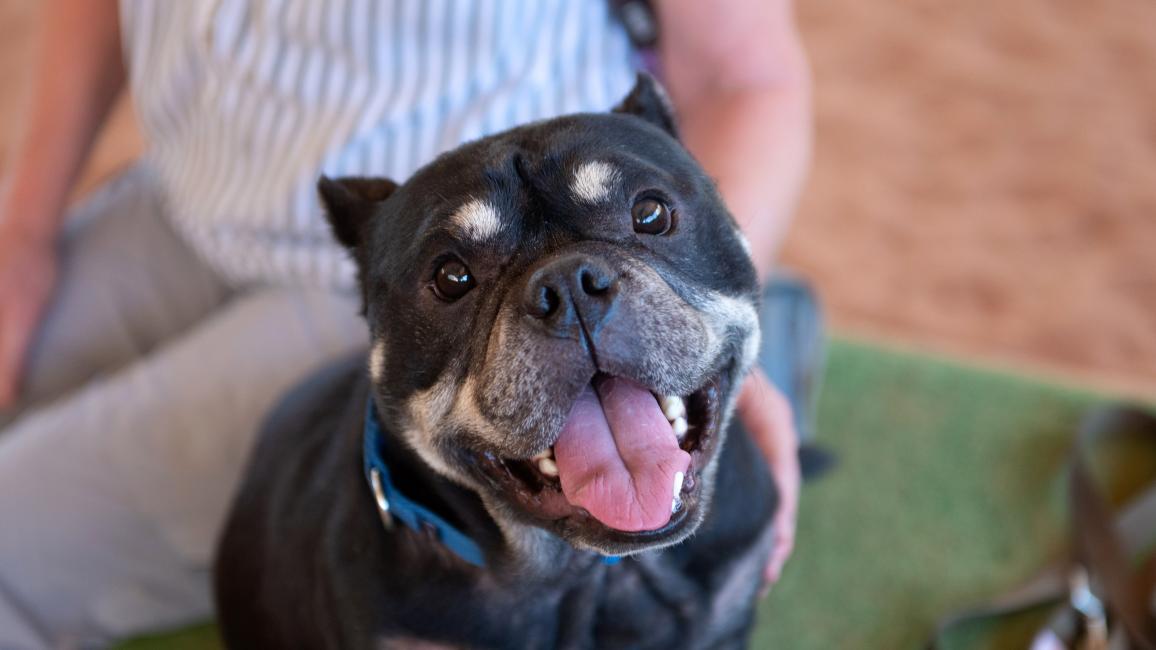
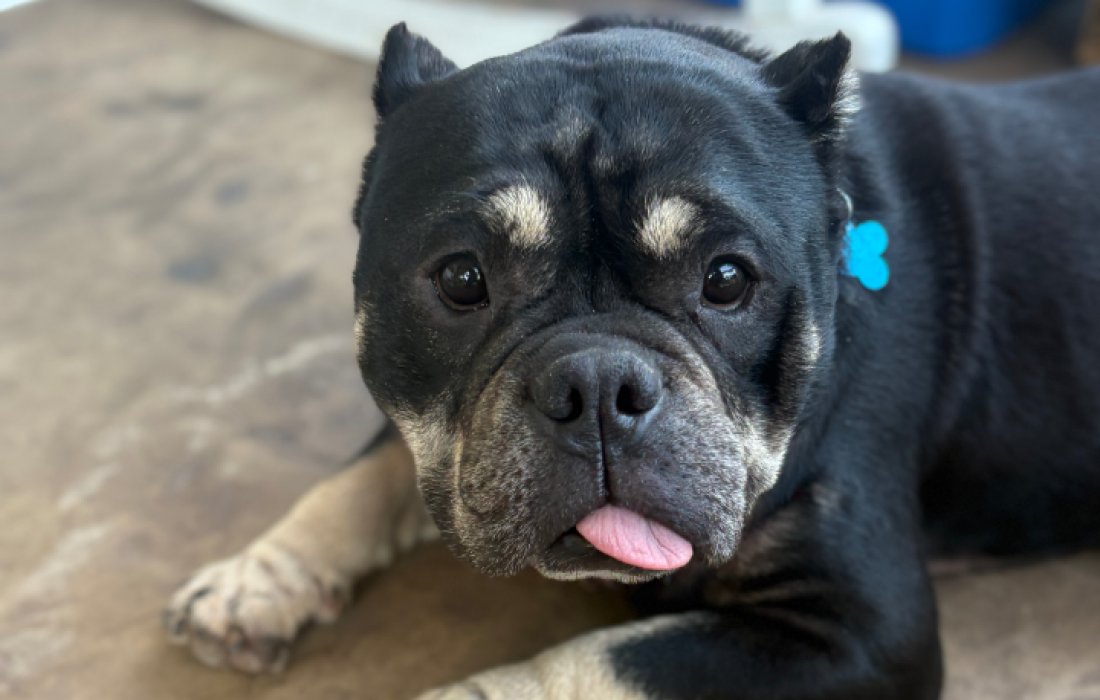
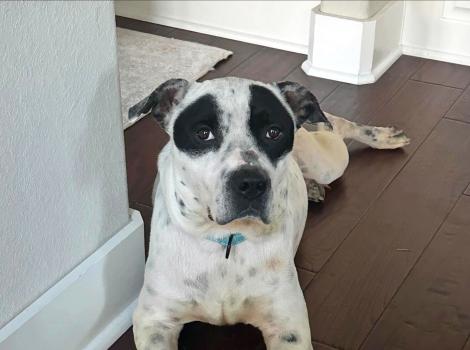
When you look at Billy now, all you see is a compact, squishy pup with adorable tan eyebrows, sleek black fur, and the best snaggletooth in the West. But when he arrived at Best Friends Animal Sanctuary’s Dogtown from a shelter in California, he looked like a different dog.
“He had very little fur and a few sores on his body when he first got here,” says Megan Miller, Dogtown manager. “You could tell he was just not feeling his best.”
Billy is a pet who could have easily been at risk of being killed in a shelter, especially if that shelter were already full and struggling to save healthy animals. Best Friends' goal is for all shelters across the country to reach no-kill — and that means working together to save pets like Billy who need extra care or time.
Best Friends veterinarians discovered he had a bacterial infection (MRSP, the canine equivalent of MRSA in people) that caused his fur to fall out. He also had a yeast infection in his ears and paws that made every step painful. But even though he didn’t know it yet, he had just taken his first step on the road to recovery and a whole new life.
Snaggletoothed snuggles
Antibiotics and medicated baths began to soothe his skin. But due to the contagious nature of his infection to other dogs, he needed to be quarantined for a few weeks. Caregivers made sure he wasn’t lonely though, turning bath time into snuggle time.
“The medicated shampoo had to sit on him for 10 minutes,” says Megan. “So we just sat with him, petted him, and just gave him lots of affection. And he loved it. He was a really good dog.”
[Behind the scenes at Dogtown: Grooming and bathing dogs]
By the time his quarantine period was up, he’d stolen the hearts of everyone, including caregivers Marc Supanich and Jamie Prewett, who took him home as a foster pet.

A playful potato
Billy quickly settled into life with Marc and Jamie. They continued his treatments, which helped his fur grow back, and gave him all the love and comfort he could ask for.
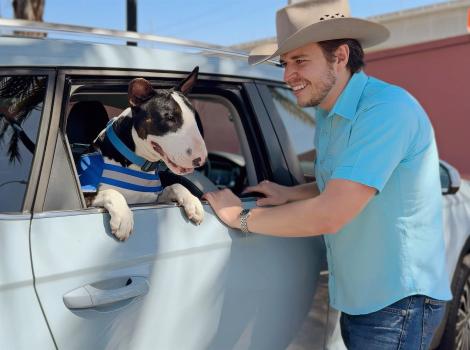
“He’s an awesome dog,” Marc says. “He doesn’t go on walks a lot because he’s still recovering and his paws hurt a little, but he’s the best travel companion. I used to have really bad driving anxiety, and it’s so comforting to have him in the truck with me. He’s perfect.”
At home, Billy surprised Marc and Jamie by getting along right away with their other dogs, who aren’t always easy to introduce to new friends. But they quickly all became the best playmates.
[How to Introduce Dogs to Each Other]
And play he did. Though much smaller than his new canine friends, Billy didn’t let that stop him. “It’s so funny because he has to jump up to play with them,” Marc says. “But our dogs will roll onto their backs to make it easier for him to play. It’s really cool to see.”
As Billy healed, his personality blossomed. He revealed himself to be a goofy, lovable couch potato who adores toys, often carrying one around like it’s his baby. His tongue usually hangs out, only adding to his charm. And when Jamie jokingly called him “Billy” one day, he responded immediately. The name stuck. “He basically chose his own name,” Marc laughs. “It’s like Billy the Kid. He’s a cool dog.”

The good life
After just a short time, it was clear to Marc and Jamie that Billy wasn’t going anywhere, and they adopted him.
[Learn more about adoptable dogs at Best Friends]
“He’s perfect for our family,” Jamie says. “He’s chill and totally go with the flow. When we take him out in public, everyone lines up to meet him because he’s so unique and irresistible.”
These days, it’s hard to imagine Billy as the sick, patchy-furred pup who first arrived at the Sanctuary. All you see now is a happy, playful little potato of a pup with his snaggletoothed grin, living the good life with the people who love him.

Let's make every shelter and every community no-kill
Our goal at Best Friends is to support all animal shelters in the U.S. in reaching no-kill. No-kill means saving every dog and cat in a shelter who can be saved, accounting for community safety and good quality of life for pets.
Shelter staff can’t do it alone. Saving animals in shelters is everyone’s responsibility, and it takes support and participation from the community. No-kill is possible when we work together thoughtfully, honestly, and collaboratively.
You can help save homeless pets
You can help end the killing in shelters and save the lives of homeless pets when you foster, adopt, and advocate for the dogs and cats who need it most.


Saving lives around the country
Together, we're creating compassionate no-kill communities nationwide for pets and the people who care for them.
Let’s be friends!
Connect with us on social media to stay in the loop about the lifesaving progress we’re making together.


