People from more than 1,000 shelters spoke. We listened.
Imagine if your local shelter had a rule that prohibited people who have a job from adopting a pet. Sounds ridiculous, right? But that may as well be the case in almost 80% of shelters that we surveyed, because they closed their doors by 5 p.m. That's the equivalent of saying, "If you have day job, if you don't get off work until 5 p.m., sorry, no pet for you!"
Look, I don't have a normal 9-5. My workday looks like getting up early to hike the canyon before my morning calls and then taking a break in Dogtown or maybe even Angels Rest if I need some alone time. But for the millions of potential adopters who cannot visit a shelter during the day, not offering evening adoption hours could be the difference between a dog or cat in a shelter getting adopted or not. In those hours when people are out of work or school, the hours where they're thinking about their family at home, they're stopped from even just walking in the door of the shelter. That's a harsh reality.
In one of the largest, most diverse surveys of shelters and rescue groups in the United States, 1,000+ organizations shared with us what they’re seeing right now, and our data team turned those responses into opportunities we maybe wouldn’t have otherwise seen. That stat of nearly 80% of shelters was the first.
Because here’s how later hours translate into lifesaving: shelters open past 5 p.m. see meaningfully higher adoption rates than the ones that close before it. Which, when you think about it, makes complete sense, right?
Leave the door open a little later, and more dogs and cats walk out of it with their new families. The best part is that the data shows this shift doesn’t require adding more staff time. By simply shifting open hours from 11 a.m. - 5 p.m. to 2 p.m. - 8 p.m., for example, shelters can save more animals’ lives in the same amount of time.
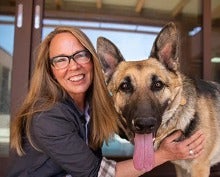
Speaking of dogs walking out those doors — another survey finding that broke my heart a little bit as someone with two larger-than-life shepherds at home. Big dogs over 40 pounds wait the longest. Okay, nothing we haven’t seen before. But when we asked shelters and rescue groups why, the #1 answer that all agreed on wasn’t temperament, or training. It was a lack of people willing to take them in and foster them.
So that’s my ask. You don’t need a house or commitment for life, you just need a couch and a few days or weeks. And if fostering isn’t in the cards right now, donate a large or extra-large crate to a shelter or rescue group near you, so someone else can say yes to a big dog. Little actions create big impact … big impact for big dogs.
That’s what this survey comes down to, really. People from more than 1,000 organizations told us what they’re seeing every day — the hours of operation, the waiting dogs, all of it. We know what moves the needle toward saving lives and reaching no-kill. So the only question left is what we do with it? The least we can do is listen, the best we can do is act.
What’s your local shelter’s story?
-Julie