Answering the call of the wild at Wild Friends: Inside wildlife rehabilitation at Best Friends Animal Sanctuary
What happens when a wild animal is injured, orphaned, or displaced and can’t survive on their own? For many animals in southern Utah, the answer is Wild Friends, the state and federally licensed wildlife rehabilitation center and education program at Best Friends Animal Sanctuary. It’s a place where owls, peregrine falcons, herons, golden eagles, and other injured or orphaned wildlife can receive the care and healing needed to safely and successfully return to the wild.
It also happens to be my favorite part of the Sanctuary.

A wild beginning
When Best Friends was first founded in southern Utah in 1984, the canyon itself was the center of our story. Towering red cliffs, twisting junipers, open skies — and woven through it all was the wildlife who had been here for millennia. From ravens nesting atop cliff ledges, to mountain lions roaming quietly through the red rock terrain, to lizards sunbathing on the canyon floor, the land was alive with our wild new neighbors.
It became clear to the Best Friends founders — and rather quickly at that — that caring for those neighbors would be as essential as caring for the cats and dogs who were already at the heart of our mission. Injuries happen. Young animals lose their parents. Without intervention, many of these incredible animals wouldn’t make it.
At the time, there was a heightened need for licensed wildlife rehabilitators in southern Utah. One of the founders, Sharon St. Joan, had already taken an interest in wildlife and received training in how to care for wild animals. So after obtaining the required permits, Best Friends decided to give wildlife rehabilitation a go — first with modest aviaries and eventually with a full program that has grown into the Wild Friends wildlife refuge area you’ll find today.
Where rehabilitation meets compassion
Wild Friends now treats hundreds of animals each year, from hummingbirds the size of your thumb to birds of prey with 6-foot wingspans. The goal is simple but profound: Give them the medical care, time, and environment they need to recover, and then send them back into the wild where they belong.
Sometimes that process is brief — just enough to stabilize a sprain, nurture an orphaned chick until they’re strong enough to fly, or remove a fishing hook swallowed by a heron. Other times it requires patience like in the case of a grounded peregrine falcon found near a restaurant a few miles from the Sanctuary. The falcon had a broken wing and chipped beak, and healing required time. Caregivers limited his movement, administered pain meds and anti-inflammatories, and let the mending begin. After some time and positive results from X-rays, the falcon moved into a modest outdoor aviary and then a large flight enclosure, where he could strengthen himself back up to full force. After a few months, he was ready to go, and the endless skies above the canyon welcomed him back home.

Teachers of coexistence
Not every animal can make that return, however. Some are too compromised to fend for themselves in the wild. So instead of being released, these animals become ambassadors in our state and federally licensed education program, helping people understand what coexistence with wildlife really means.
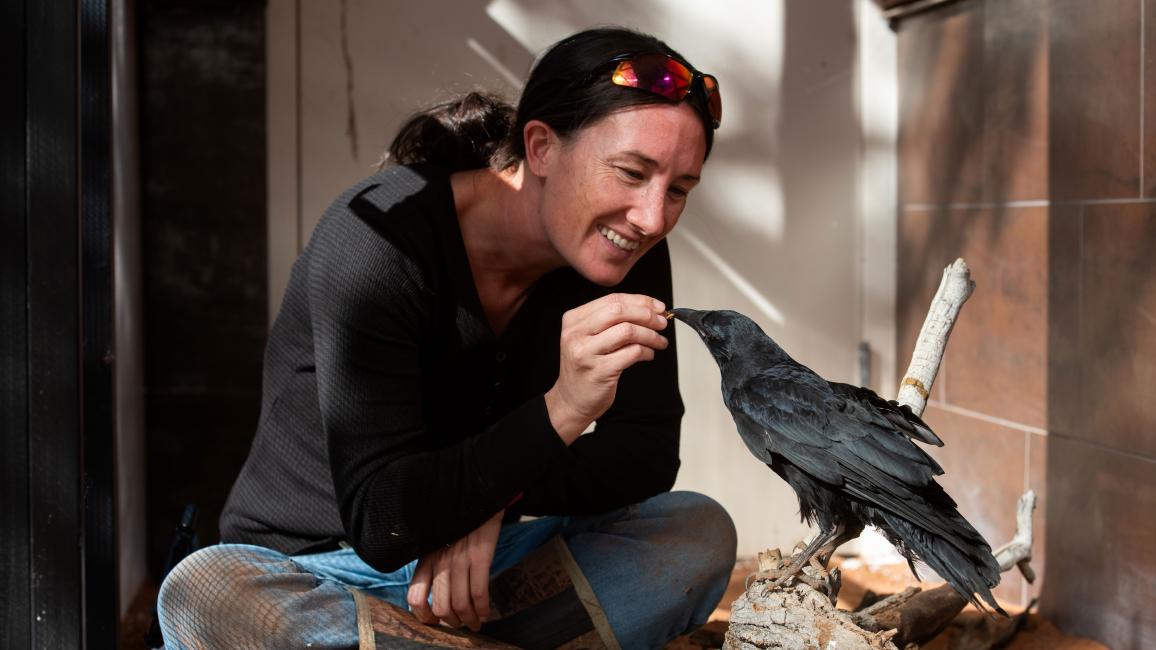
At any given time, a couple dozen animals — owls, tortoises, crows, even bats — help visitors and volunteers see wildlife not as distant “others” but as fellow inhabitants of our shared planet. One of my favorites is Archie, a great horned owl who came to the Sanctuary with a broken wing and was released, only to return herself to us a few weeks later. Upon coming back to Wild Friends, Archie flew straight to the enclosure where another great horned owl, Tali, lives. After an assessment from our caregivers, they found that she makes a slight bit of noise when flying — a big problem for owls.
Archie is now a permanent resident and part of Wild Friends’ educational animal ambassador program alongside Tali. Together, they help visitors learn about owls, wildlife conservation, and, importantly, respecting wild animals as individuals.
More than wild
In addition to the wild animals undergoing rehabilitation and the animal ambassadors greeting visitors, Wild Friends also provides a safe home for domestic and exotic animals who arrive at the Sanctuary, including doves, ducks, chinchillas, and chickens. Many are available for adoption, surprising people with their warmth, intelligence, and charm. (Trust me, you haven’t lived until you’ve seen a rooster strut proudly on a leash.)

Coexisting with compassion
For me, Wild Friends captures something essential about Best Friends: Compassion is not selective. It doesn’t stop with the animals who live in our homes. It extends to those who fly overhead, hide in the brush, or slither through the desert at night.
Wild Friends is an example of kindness knowing no boundaries. From sparrows to eagles, tortoises to roosters, every animal reminds us that the wild isn’t far, far away — it’s all around us. And when we care for wild animals, we’re really caring for the future that we all share.
-Julie
How you can help where you live
Each of us can take simple steps to protect wildlife in our own communities:
- If you come across an injured or orphaned wild animal, reach out to a licensed wildlife rehabilitator near you.
- Trim trees and shrubs before nesting season begins to avoid disturbing babies.
- Make your windows safer by adding decals or bird tape to help prevent fatal collisions.
You can also learn more about the Wild Friends wildlife rehabilitation program, volunteer, or support our mission to protect wildlife in southern Utah and beyond.