Redefining ‘home’ for cats who prefer the outdoors
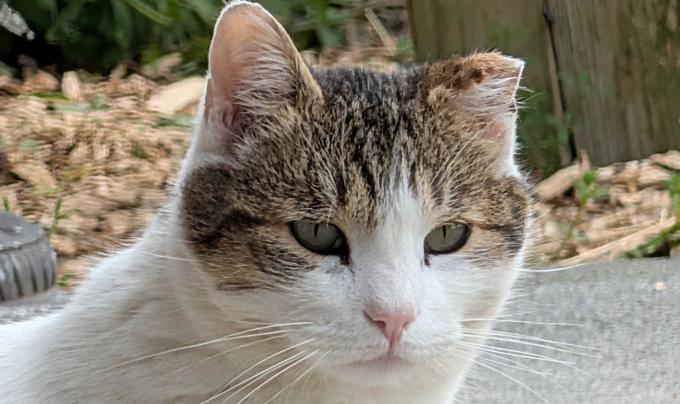
Editor’s note: Janine Ceja is the shelter director of the Humane Society of Skagit Valley in Burlington, Washington.
What do you do with cats no one wants? Not because they aren’t beautiful or worthy, but because they are afraid. Timmy was one of those cats — beautiful, feisty, feral, and at times unexpectedly comical. Despite everything that made him unique, he was the kind of cat whose fate too often is euthanasia. He was difficult to handle, unsettled, and clearly unhappy in the shelter environment. The kennel only heightened his fear, making it nearly impossible for him to show anything but resistance.
But what if the problem isn’t the cats? What if the real issue is the lack of options for them? That question became the beginning of something new for us at the Humane Society of Skagit Valley. Instead of trying to force feral cats into environments where they could never truly thrive, we began asking a different question: Where would they thrive? The answer, once we allowed ourselves to see it, was right in front of us: barns, farms, warehouses, rural properties. Places that need rodent deterrents. Places that offer space. Places where independence isn’t a problem, it’s a strength.
Something remarkable happens in those spaces. The farmer gains an eco-friendly, natural solution for pest control. The property gains a working companion. And the cat — once overlooked, once written off — gets a chance to truly live. Not just to survive but to belong.

Redefining ‘home’
Over the years, I’ve witnessed transformations that are hard to put into words. Cats who once hid in corners, ruled by fear, begin to emerge with a quiet confidence. Caregivers who initially just needed a mouser end up forming unexpected, meaningful bonds. Entire communities start to see these animals not as problems but as partners.
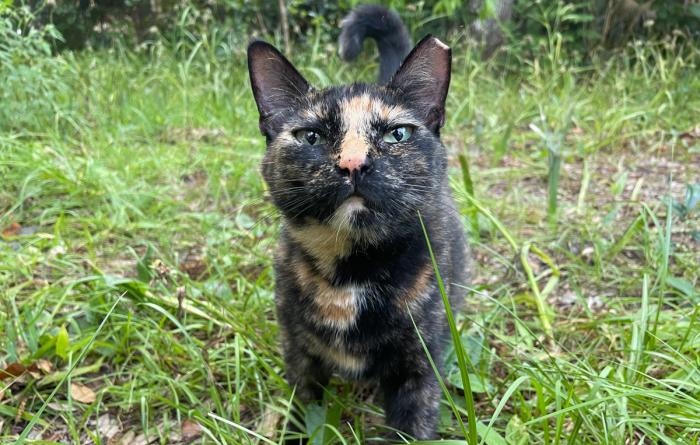
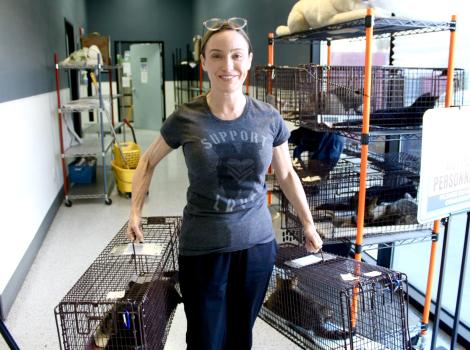
That’s why we started our Feral Cat Barn Buddy program, created for cats like Timmy. Each one is spayed or neutered, vaccinated, and ear-tipped (which indicates a spayed or neutered cat) and then carefully placed in a safe outdoor home where they can live freely while still receiving care. These cats are often born outside, living in the shadows of our communities. They haven’t been acclimated to “traditional” indoor homes, so shelters struggle — far too often unsuccessfully — to place them. Their stories often end before they ever really begin.
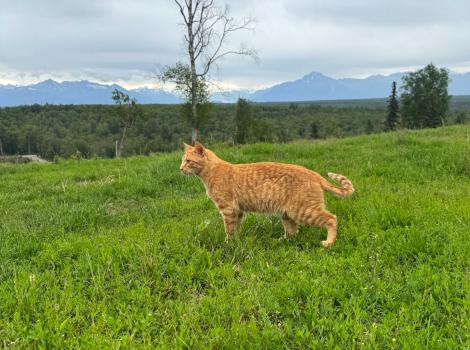
Finding nontraditional homes for Alaska cats
This program is about more than relocation; it is about redefinition. We are redefining what “home” means. We are redefining what “adoptable” looks like. And most important of all, we are redefining what it means to save a life because saving a life doesn’t always look like a couch or a cuddle. Sometimes it looks like a barn at sunrise or a pair of watchful eyes peering down from a hayloft. It can be a quiet understanding between human and animal — one built not on expectation but on respect.
Since 2012, this program has created solutions where there once were none. It provides options where there was once only a single, heartbreaking outcome. It has brought hope into spaces that used to feel silent.

Changing the outcome
Timmy did find a situation that works for him and his needs. He now spends his days living comfortably in our on-site Barn Buddy Colony. You see, we fell in love with Timmy, a little daredevil of a guy. He has made friends with our other two main shelter barn buddies and spends a lot of his time stretched out in the grass in the sun. He is taken care of by staff and volunteers and has grown to trust some of the staff enough to let them pet him.
He greets his feeders with a squeaky meow and can often be seen patrolling his territory. When we load up kittens for a clinic visit or to send to our partner stores, he will hop up in the van if unattended and check out the commotion if the kittens are making noise. While we ended up keeping Timmy, many other cats thrive because of the lifesaving pathway that the Feral Cat Barn Buddy program provides.
How America cut the number of cats killed in shelters by 75%
By 2025, our data showed that we had reached a 92% save rate. It’s something I’m proud of, but the truth is, we’re not done yet. For every feral cat we successfully place, there are more who need our help. They need someone to see beyond their fear, someone to recognize their potential.
I often find myself wondering: What if every community had a pathway like this? What if, instead of asking “What do we do with them?” we asked “How can we help them thrive?” Because when we change the question, we change the outcome — not just for the animals but for ourselves. And sometimes, the lives we think we’re saving end up saving something in us, too.
This article was originally published in the September/October 2026 issue of Best Friends magazine. Want more good news? Become a member and get stories like this six times a year.
Let's make every shelter and every community no-kill
Our goal at Best Friends is to support all animal shelters in the U.S. in reaching no-kill. No-kill means saving every dog and cat in a shelter who can be saved, accounting for community safety and good quality of life for pets.
Shelter staff can’t do it alone. Saving animals in shelters is everyone’s responsibility, and it takes support and participation from the community. No-kill is possible when we work together thoughtfully, honestly, and collaboratively.
You can help save homeless pets
You can help end the killing in shelters and save the lives of homeless pets when you foster, adopt, and advocate for the dogs and cats who need it most.


Saving lives around the country
Together, we're creating compassionate no-kill communities nationwide for pets and the people who care for them.
Get inspiring animal rescue stories delivered straight to your inbox
Never miss a feel-good animal story. When you give us your email, we’ll send you inspiring animal rescue stories each week, along with tips on different ways you can help save homeless pets in your community and beyond.