Pets, people, and the search for home
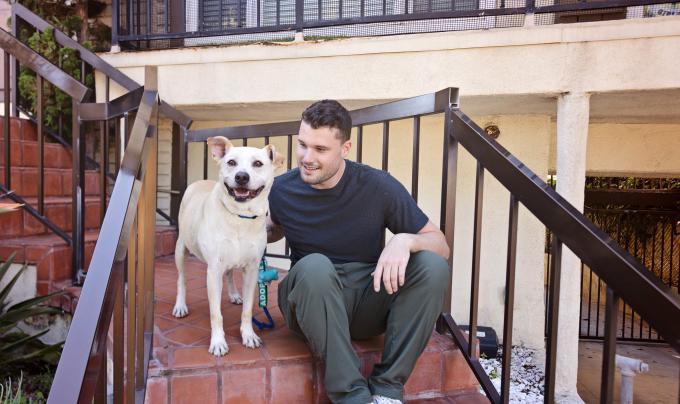
Our conversation with the woman on the phone had been going so well until she brought up the pet policy. “We have a list of 20 breeds that aren’t allowed,” she said, just like that. Like it was no big deal. The bright bounce in her voice up until that moment hinted at her eagerness to have us as her newest rental property management clients. Little did she know that she’d just tossed out a deal breaker. And little did I know that seeking help in taking care of our duplex would mean digging deep into issues facing renters and their pets first and the rest of us, too. It was about to get messy.
The mess turned out to be much bigger than one duplex and more hopeful than I expected. It turns out that renters, homeowners, and even multi-family property owners aren’t at the mercy of insurance companies the way we might think. And because the effects of these policies reach far beyond individual renters and property owners, this issue impacts all of us as taxpayers. The good news: There are things any of us can do to help change it.

A home for pets and people
The house at the center of this conversation is a little duplex in south Minneapolis, built in 1916. I bought it in the early 2000s and lived in it off and on, but for most of its life with me, it has been home to renters — almost always renters with pets. My husband and I lived in the lower apartment for five years with our dogs, cats, and dozens of short-term foster pets. The renters upstairs had big dogs.
After two decades of handling it ourselves, we were looking for help with managing the house, keeping up with renters’ needs, and home maintenance since we’d moved out of the house and 40 minutes outside of the city a few years ago. I went online to search for rental property management companies in the Twin Cities and looked at the fees and services they offer.
That’s how we came to be on the phone with the woman who had just firmly pressed on a hot-button issue. It turned out that the company not only had a long list of breeds and types of dogs not allowed in their pet policy, but they charged exorbitant, nonrefundable, up-front “pet administration fees” to renters. It would cost people $400 up front for one pet and $250 for each additional pet, plus monthly pet fees, in an apartment valued at rent of $1,300 per month. At least one of my own dogs, who lived in the duplex with us for two years, wouldn’t be allowed in our home because he’s part American Staffordshire terrier and part chow chow — two breeds on the company’s list. These were not the kind of landlords we wanted to be and, in fact, refused to be.
From my years of working at Best Friends, I’m aware that banning or restricting breeds or types of dogs isn’t effective in keeping people safe. That’s really what we’re talking about without talking about it. “It’s a false sense of security to keep particular breeds of dogs, or dogs over a certain weight, out of a rental community,” says Ross Barker, program director for Pet-Inclusive Housing Initiative (PIHI) at Michelson Found Animals. “These policies almost certainly let in some dogs that are dangerous and may have a history of aggression, and at the same time they keep out dogs that are perfectly friendly.” This isn’t an abstract issue. It can force people to give up their home or their pets.
I talked to Ross, as well as colleagues at Best Friends, to arm myself with the best and most up-to-date information I could get my hands on to push back against the restrictive policies I was finding in my search for rental management help. PIHI’s website, petsandhousing.org, is filled with targeted information for housing providers, renters with pets, legislative stakeholders, and animal welfare organizations. Ross adds that his team’s work “is all about looking at what is preventing renters with pets from being able to access housing and then what we can do to address those challenges.”

Including pets makes ‘cents’
Roughly two-thirds of households in America include pets, which means the rules set by those in power affect the majority of us. “Pet-inclusive housing is a systems-based issue. It’s not just a housing issue. It’s not just an animal issue. It’s not just an insurance issue. It’s an intersection of all these three things coming together,” Ross says. “The impact is profound because housing is such a fundamental piece of a family’s life.”
The flip side for both animals and people in a community is that if policies don’t allow certain types or sizes of dogs in a home, then those dogs end up in shelters in disproportionate numbers. That’s bad for the dogs but also for taxpayers, who pay for those choices via funding for city and county shelters. It’s a community-wide issue and everyone — whether or not we’re property owners, whether or not we have pets — has a stake in it.
Pet-friendly housing resources
When those in power write policies based on an individual dog’s behavior and common-sense guidelines for residents responsible for dogs, everyone benefits. Instead of focusing on breed or size, the conversation can turn to more impactful elements. A sample lease agreement on PIHI’s website includes provisions for behavior, as well as the residents’ responsibility to humanely contain their pets at all times in the property’s public areas, to not leave pets tied outdoors or on a balcony or patio, and to provide basic care for pets. Renters may be required to have their own liability and property damage insurance. In summary, rules and policies can be both effective and inclusive.
Research shows that residents with pets stay longer in homes than people without pets. These renters are also more likely to compromise on location and even sometimes on budget in order to have a home where their pets are welcome. Adopting pet-inclusive policies brings in more long-term renters, faster. With all these compelling reasons to do away with dog breed or size restrictions, why are they still so common?
The (insurance) elephant in the room
PIHI recently completed a study looking at insurance barriers to pet-inclusive housing. The study found that dog-related incidents and insurance claims are relatively uncommon. “Their big issues are fire, earthquake, water damage, flood damage — those kinds of things,” Ross says. But when serious claims regarding dog-related incidents do occur, they can be expensive. In the absence of standardized, behavior-based tools, some companies resort to “blunt instruments” such as breed restrictions, weight limits, or outright exclusion of pets, especially dogs.
The good news, though, is that not only are there insurance carriers who don’t have these blunt instruments written into their policies, the ones that do may be willing to negotiate. Property owners, management companies, and renters are paying customers. And if enough of us are willing to take our business elsewhere, it will be in insurance companies’ best interest to change.
The PIHI study also found that both the legal landscape and the market are moving toward a more inclusive approach to pets. If you follow Best Friends, you know that we and many other organizations have been working with lawmakers for years to overturn dog breed restrictions. If property owners have relied on local rules or insurance policies that restrict dogs based on breed or size, well, that house of cards has fallen.
“We’ve worked really hard to repeal breed-specific legislation, and it’s helping to set a new best practice,” says Kelsey Gilmore-Futeral, Best Friends senior manager and legislative attorney. “It’s creating a new norm, but it’s not the kind of thing to set and forget.”
Recently, significant progress was made on a national scale. The United States Conference of Mayors, a nonpartisan organization for cities, is the main forum for elected officials across the country, representing over 1,500 cities, to shape urban policy nationally. In June, the Conference of Mayors adopted a resolution supporting no-kill animal shelters and policies. The resolution includes this provision: “Accessible pet-friendly housing without breed or weight restrictions and without nonrefundable pet fees or deposits is critical to stabilize communities and support animal shelters because data shows the number one reason for owners surrendering pets is housing barriers.”
It’s beginning to look like the only reason we have those old and ineffective restrictions on dog breed or size is because it takes awareness, time, and effort to change.

Finding the path to including pets
In the end, the rental management company lady did inquire with higher-ups about waiving their pet rules at our request, and the company declined. “No one has ever brought up this issue before,” she told me. I wonder how many landlords and renters have quietly accepted that company’s pet policies? Hearing objections from one potential client wasn’t enough to change pet rules in this case, but I hope other people will say no to signing on with them and will tell them why.
I contacted nearly a dozen other rental management companies, this time leading with the question about their pet policies.
Several others had breed or size restrictions, but others did not. In fact, once I started looking specifically for companies with pet-inclusive policies, it wasn’t hard to find them. My husband and I signed up with a local company, and we feel great about continuing to include pets as part of the family in the duplex that has been home to so many before them.
Kelsey encourages us all to question these policies when they come up. She wants people to know they can ask to see insurance policies if a property manager says that insurance is the reason they don’t allow certain dog breeds. “A lot of times, it’s a misunderstanding,” Kelsey says. And if the company upholds the policy anyway, that business doesn’t have the privilege of earning you as a customer.
Landlords, people who serve on the boards of homeowner associations, and homeowner insurance policy holders can all have an impact by asking to see policies and pushing to switch carriers if the policy includes pet restrictions based on a dog’s appearance or size. And if you’re a renter, ask the question too. Every time someone asks is one more time the company has to answer for its policies. Even if you don’t have the type of dog the company restricts, you can still switch carriers because of the policy. In fact, it’s a powerful statement to say that you don’t want to be insured by a company that might prevent you from adopting the dog of your choice in the future.
Feeling safe and included, having a stable home — these are key parts of living a good life, whether you’re a human or a pet. When you think of housing issues this way, it’s clear that we all want the same thing. Now let’s go change what needs to be changed, together.
You can arm yourself with data about pet-inclusive housing at petsandhousing.org and bestfriends.org/pet-inclusive-housing.
This article was originally published in the September/October 2026 issue of Best Friends magazine. Want more good news? Become a member and get stories like this six times a year.
Let's make every shelter and every community no-kill
Our goal at Best Friends is to support all animal shelters in the U.S. in reaching no-kill. No-kill means saving every dog and cat in a shelter who can be saved, accounting for community safety and good quality of life for pets.
Shelter staff can’t do it alone. Saving animals in shelters is everyone’s responsibility, and it takes support and participation from the community. No-kill is possible when we work together thoughtfully, honestly, and collaboratively.


You can help save homeless pets
You can help end the killing in shelters and save the lives of homeless pets when you foster, adopt, and advocate for the dogs and cats who need it most.


Saving lives around the country
Together, we're creating compassionate no-kill communities nationwide for pets and the people who care for them.

Get inspiring animal rescue stories delivered straight to your inbox
Never miss a feel-good animal story. When you give us your email, we’ll send you inspiring animal rescue stories each week, along with tips on different ways you can help save homeless pets in your community and beyond.