A better way to reunite lost pets with their people
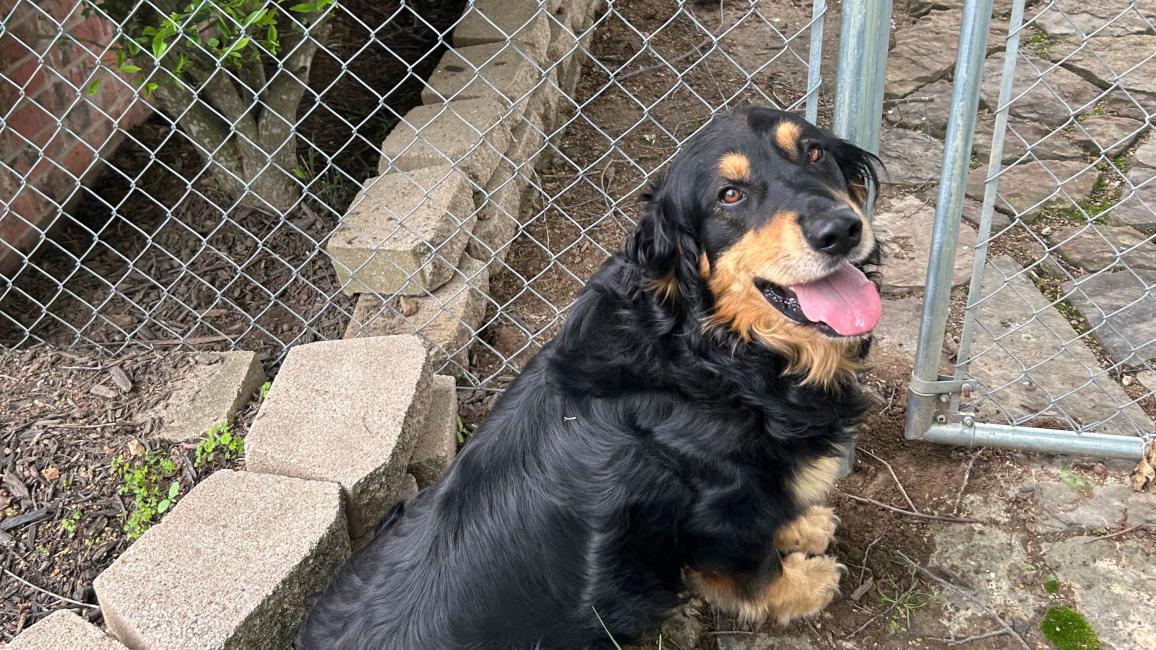
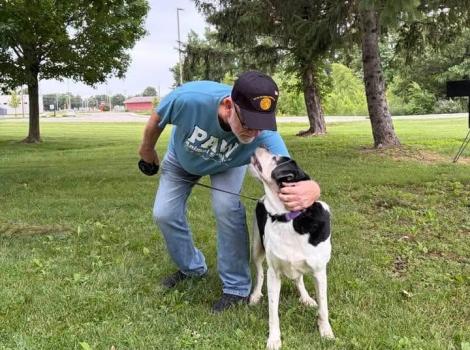
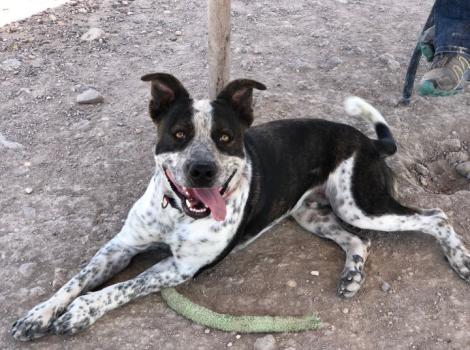
One morning earlier this year, Arkansas resident Cami Buehne saw a blur of fur flash past her backyard window. She went outside to investigate and found a young dog wagging his tail at her. “There was this happy-looking boy just staring at me. He wasn’t scared and came right up to me,” she recalls. “He was just so good. I was like, there’s no way you don’t have a home.”
The pooch wasn’t wearing a collar, but he appeared to have had a bath recently and his nails were trimmed. So Cami and her mom drove him around the neighborhood to see whether anyone was looking for a missing dog. When that was unsuccessful, they headed to an animal hospital to get the dog scanned for a microchip. Again, no luck.

Undeterred, Cami snapped a few photos of the pup, so she and her mom could post about him on Facebook, PawBoost (a website for finding and reporting lost and found pets), and Nextdoor (a community-based social media site). Because they had their own dogs and cats, they turned their garage into a makeshift hotel for the dog. He wasn’t thirsty enough to drink water — a sign that he hadn’t been gone from home long.
Within about 45 minutes, a woman in a Facebook group for lost and found pets in Northwest Arkansas commented that she thought she knew the dog’s family. Sure enough, the dog — named Rio — lived a couple of streets away, and the family’s daughter came right over to pick him up.
Cami was thrilled to reunite Rio with his family so quickly. She has volunteered at her local animal shelter since she was 4 years old and knows the shelter is always struggling to find space for pets in need. So spending a little time trying to get Rio home felt like the right thing to do. “Any way that I can help take the burden off (the shelter) is something that me and my family have always loved to do,” she says. “I just felt like he’s better here until we figure out what’s going on.”
A new approach
That’s the exact sentiment now welcomed — and encouraged — by many animal shelters across America. It’s a big change from the decades-old advice to community members to take found pets straight to a shelter.
Just like emergency rooms, shelters now use a triage system, first helping pets who need immediate assistance, such as animals who are injured, sick, in danger, or potentially a threat to others. When members of the community find pets who seem safe and healthy, the best thing to do is to attempt to directly reunite pets with their families. The shelter should be a safety net — not the first stop.
[Watch: Heartwarming reunion between dog and his person]
This approach benefits everyone involved, according to Brent Toellner, senior director of programs at Best Friends. “We have a fair amount of research now that indicates to us that the vast majority of lost pets are found very close to their home,” he says. “So if you find a pet on the street, chances are the pet’s home is nearby.”
In fact, Brent says, the odds of reunification are much better when neighbors try to get the pet home instead of taking the animal to a shelter, which may be located in an out-of-the-way place and have limited business hours. In addition, keeping a dog or cat out of a shelter helps decrease the pet’s potential stress and exposure to disease. It also relieves pressure on the shelter system.
What to do if you find a lost pet
If you find a lost pet, the first thing you should do is ask people in the neighborhood, including mail carriers and neighborhood kids, whether they know to whom the pet belongs. If those inquiries don’t yield results, snap some photos of the animal and share them on social media, as well as on Petco Love Lost, which uses facial recognition technology to match lost and found pets. Brent says technological advances are making it easier and easier to reconnect lost pets quickly with their families.
You should also call local shelters to let them know you’ve found a pet in case the pet’s family calls the shelter looking for them. You can also take the animal to a veterinarian, shelter, or most Petco stores to scan for a microchip. And some shelters provide templates for flyers that you can customize and post in the neighborhood where the pet was found. (One such template is available at petfbi.org/flyer.html.)
Temporarily fostering a found pet is such a help to shelters that many offer what are known as Finder to Foster programs (aka Friendly Finder or Good Samaritan programs) to provide pet supplies like food, beds, and leashes to people who agree to take in found pets for a few days while working to reunite them with their family.
Jakie Hernández, vice president of shelter operations and strategy at Nebraska Humane Society in Omaha, says her shelter’s Finder to Foster program benefits everyone involved. She says, “The goal is to reduce the pets’ trauma and preserve the space that we have at the shelter. Like many shelters across the nation, we are tight on space, so if we can keep one less pet in the shelter, even better. We should be the last resort.”
An additional perk of the program for people who find and foster a pet: After a three- to five-day stray hold period, finders are first in line to adopt the pet if they would like.
Recently, Nebraska Humane Society urged both community members and animal services officers to try to reunite pets by knocking on doors and posting on social media before bringing them to the shelter. That push raised reunification rates from 17% to 50% in just a year, according to Jakie. These reunification efforts “in the field” help remove barriers for people who might not have transportation to a shelter or money for the fee to reclaim their pet (which is waived in some circumstances).
Cats brought into the shelter have less than a 5% chance of being reunited with their families, Jakie says. Shelters can be particularly distressing to cats, who might stop eating or develop respiratory issues from stress. Depending on the situation at the shelter where lost cats end up, they can be at risk of being killed. “Luckily for us, we haven’t had to euthanize for space in a very long time,” Jakie says. “But for other shelters that maybe don’t have the same programs in place, that is a real risk.”
Golden rule for found pets
Lance Still lives near a large park in Los Angeles, so she frequently has the chance to reunite pets with their people. In one instance, a dog jumped out of a car window as the family was driving up to the park; it was easy to call the phone number on the dog’s ID tag to reunite them. She also reunited a dog who was running around in her neighborhood with the leash still attached and a miniature poodle who escaped the yard and was reunited via Facebook.
Lance feels it’s common sense to try to reunite pets she finds with their families instead of taking them directly to a shelter. “If your pet got loose, how would you like the neighborhood to treat that pet? It’s a golden rule with pets,” she says.
Lance and her husband volunteer to help stray cats for a local rescue group, and last year they adopted a mom and her kitten. Since they’re known as animal lovers, a neighbor recently called them for help with four orphaned kittens he discovered stuck in the walls during a renovation project. They’re fostering the tiny kitties while working to find homes for them since their neighbor was unable to do that.
“I think that’s something to consider if you can’t immediately help: Think about what your community looks like and other resources,” Lance says. “I’m on Nextdoor all the time, and there’s always people who are very cat-friendly and are handling their own foster adoptions independently.”
The power of microchips
One thing everyone in the community can do to help reunite pets as quickly as possible is microchipping their dogs and cats. In addition, their contact information should be kept current with a microchip registry, according to Antonio L. Caldwell, deputy director of the department of health, wellness and animal services for the city of Brownsville, Texas. “I can preach a whole sermon on microchips,” he quips.
When Antonio’s shelter hosted a program that microchipped 1,200 pets, the team made sure that each person entered their contact information with a microchip registry before walking away — because if a microchip number isn’t linked to the pet’s family, it’s useless. His team is working to get microchip scanners into local fire stations, so community members have one more place to take found pets to scan for microchips for free.
[Cat missing for 19 months reunited with family]
He’s grateful to social media influencers and animal services officers who are helping to spread the word that when people find pets, they should try to reunite them with their families before bringing them to a shelter — and of course, he’s grateful to the people in the community who do just that.
“Shelters across the country are all dealing with very similar issues, and it makes a world of difference when we have amazing community partners and organizational partners to help us be successful,” he says. “It really truly does take a village to make this work.”
This article was originally published in the September/October 2025 issue of Best Friends magazine. Want more good news? Become a member and get stories like this six times a year.
Let's make every shelter and every community no-kill
Our goal at Best Friends is to support all animal shelters in the U.S. in reaching no-kill. No-kill means saving every dog and cat in a shelter who can be saved, accounting for community safety and good quality of life for pets.
Shelter staff can’t do it alone. Saving animals in shelters is everyone’s responsibility, and it takes support and participation from the community. No-kill is possible when we work together thoughtfully, honestly, and collaboratively.
You can help save homeless pets
You can help end the killing in shelters and save the lives of homeless pets when you foster, adopt, and advocate for the dogs and cats who need it most.


Saving lives around the country
Together, we're creating compassionate no-kill communities nationwide for pets and the people who care for them.
Let’s be friends!
Connect with us on social media to stay in the loop about the lifesaving progress we’re making together.


