How a Tennessee animal rescue group is changing lives
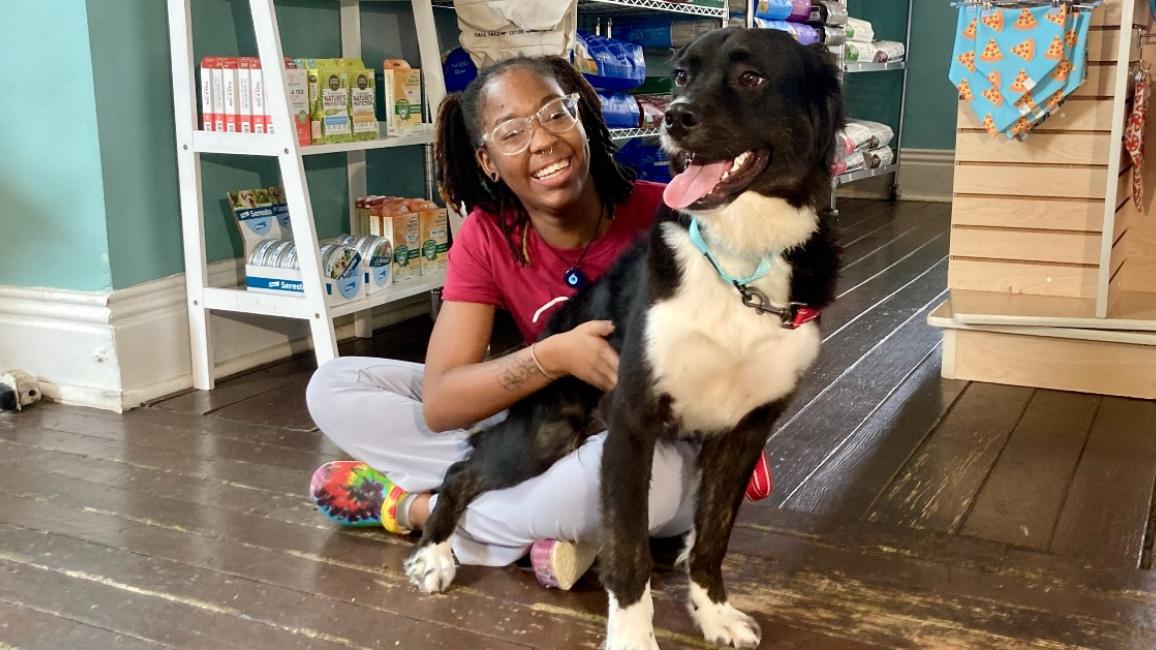
These days, Salsa moves with a spicy confidence befitting her name. This happy pup pads through life with her tail held high, dancing her happy-foot cha-cha across the living room with her human bestie, K’Terra Nunn. But the petite brindle dog’s life wasn't always so joyful.
Salsa arrived at Crossroads Campus in Nashville, Tennessee, with her tail tucked firmly between her legs. “She was so timid when I first met her,” remembers K’Terra. “She’d crouch down and freeze if you tried to walk her.”
Nestled among the tree-lined streets of Nashville, Crossroads Campus, a Best Friends Network Partner, is more than an animal rescue group — it’s a lifeline for both people and pets. This innovative nonprofit blends pet adoption, job training, and affordable housing to create a community where healing flows in both directions.
“Our model enables young adults who have been impacted by inequity, time in foster care, or other traumas to find purpose, build community, and work toward sustainable futures,” says Lisa Stetar, Crossroads Campus CEO. “The young adults are helping animals heal, and the animals are helping them heal right back. That makes the whole community stronger.”
That’s one of the most important ways that shelters across the country have reached no-kill — by bringing communities together to save lives. And for pets like Salsa, her community was there when she needed it most.

From a living room to a lifeline
Crossroads Campus didn’t begin as a campus at all. It began in a living room. The idea took shape during conversations between Emmylou Harris, a Grammy Award-winning artist and longtime advocate for animals; Lisa Stetar; and Father Charles Strobel, a beloved champion for unhoused people living on the streets of Nashville. Together, they wondered what might happen if people and pets who are homeless were brought together and whether caring for animals could help create opportunity, purpose, and healing for everyone involved.
More than a decade ago, that vision became Crossroads, opening in a historic red-brick home in Nashville that offered pet adoptions and a small retail shop where young adults facing poverty and homelessness could learn job skills.
[Gavin Rossdale turns up the volume on pet adoption]
“You just walk into that store, and you can feel it,” says Emmylou, a founding board member of Crossroads. “You feel there’s something really positive happening. It’s a beautiful concept that brings young people who need a chance together with homeless pets. The young people gain job skills, the animals heal, and you can see the impact almost immediately. Seeing how far we’ve come — from those early days of meeting in my living room to this place where so many lives are saved and transformed — has been extraordinary.”
Silva Battista, Best Friends co-founder, recently visited Crossroads and notes, “It is so inspiring because it could really be duplicated anywhere with the will to do it. It’s full of possibilities. It’s the sort of thing that really promotes hope.”

A vision takes shape
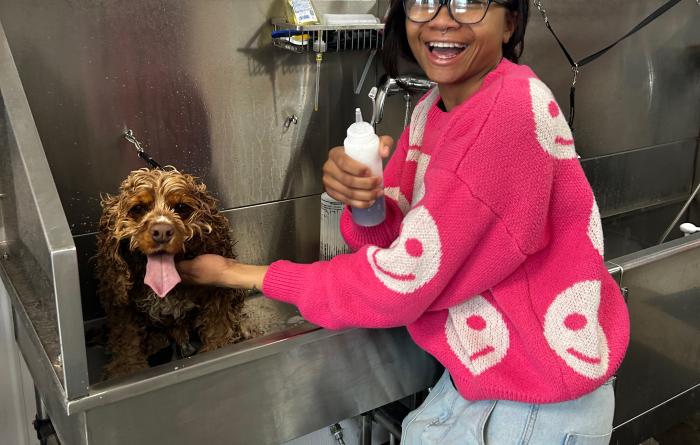
That early vision didn’t stay small for long. Soon, services expanded to include pet grooming — both as a revenue source and as a practical career pathway for young adults seeking stable work with good wages.
“It’s a sustainable option,” Lisa says. “Not everyone is finishing college, and Nashville is an expensive place to live. We love being able to offer real skills that lead to real opportunity.
As the programs grew, so did the vision. Crossroads piloted an affordable housing project, adding a small four-bedroom apartment building for young adults in the program.
“We could see these pieces were working together,” says Lisa. “Young people were gaining confidence and purpose by helping animals who needed them, and the animals were getting a level of patience and socialization that shelters often can’t provide.”
With that momentum, Crossroads opened a second campus just a mile away, dramatically expanding its impact.
“The real driver was to grow both our affordable housing and our animal rescue work,” Lisa says. “We’ve tripled the size of our adoption program and increased housing from four beds to 26.”

Extra snoozes, please
The new campus also includes a cat café, which has become a welcoming space for both cats and humans alike.
“Opening the cat café has been really unique,” says Megan Woodall, Crossroads’ animal care manager. “I’m proud of the creativity we’ve been able to harness. We’re always asking what more we can do to give these animals a better shot at a good life.”
Crossroads frequently helps animals from nearby shelters who need extra time and attention — shy dogs and cats who just need patience (and plenty of treats and warm spots to snooze) to feel safe.
“Our original partnership was with the city shelter,” explains Lisa. “In the beginning, we were taking in adoptable pets from the shelter and placing them in our adoption program as fast as we could because the shelter was full and struggling to save pets. Then, as the number of animals being killed in shelters improved in Nashville, we became the place that took in the shy, shutdown pets from city and rural shelters.”

A model rooted in hope
Young adults at Crossroads receive paid internships and rotate through the retail pet supply store, grooming salon, animal care and pet adoption center, cat café, and dog treat bakery. They also have affordable housing, stability, and the wraparound support of a welcoming community.
“I’ve been on both sides — the young adult program and now staff,” says K’Terra, who is now an assistant manager at the pet supply store. “You learn skills you can carry with you anywhere. And you get the joy of seeing animals every day. You can’t be upset when you’re around dogs.”
Megan adds, “One of the best parts of working here is seeing young people truly connect with an animal. Helping a cat come out of their shell or a dog take a brave step for the first time is huge.”
And sometimes that connection extends into cozy living rooms. Residents in the affordable housing program can foster pets who need a quiet place to relax — offering stability for the pets and confidence for the people caring for them. That’s how Salsa came to stay with K’Terra.

Where healing goes both ways
When Salsa arrived at Crossroads, she trembled through every step.
“I’d visit her every morning,” says K’Terra. “And every time I visited her, she’d pep up a little more. Finally, she was like, ‘OK, this is fine. You’re cool.’”
Her trembly walks soon turned into joyful outings with K’Terra by her side. She explored new spaces. She played. And fostering sealed the bond.
“When I first took her home (as a foster pet), she was still scared,” K’Terra recalls. “She’d freeze in one spot. But being with me and my partner helped her come out of her shell. She’s so vocal now. She loves attention. She really shines now.”
[Veterans and shelter pets healing together]
She also has a flair for dramatics. “She likes to lie upside down on the back of the couch,” K’Terra laughs. “And she does this little grumble if she wants attention. If I’m dancing around the house, I’ll turn around, and there she is, dancing around me.”
After a few more goofy, upside-down grins, K’Terra knew this sweet, spicy little pup was home and officially adopted her. (Upside-down grins are hard to resist, after all.) And as it turns out, healing really does go both ways.
“I’m proud of how far we’ve both come,” K’Terra says. “From being in the program to becoming assistant manager — and seeing Salsa grow right alongside me — Crossroads is there for you to learn and grow. And she grew with me. It’s a great thing.”
Crossroads stands as a shining example of what happens when a community invests in both animals and the people who love them. And anyone who has seen Salsa sprawled upside down on the couch or spinning in joyful circles around K’Terra knows: Hope is alive and thriving here.

Let's make every shelter and every community no-kill
Our goal at Best Friends is to support all animal shelters in the U.S. in reaching no-kill. No-kill means saving every dog and cat in a shelter who can be saved, accounting for community safety and good quality of life for pets.
Shelter staff can’t do it alone. Saving animals in shelters is everyone’s responsibility, and it takes support and participation from the community. No-kill is possible when we work together thoughtfully, honestly, and collaboratively.
You can help save homeless pets
You can help end the killing in shelters and save the lives of homeless pets when you foster, adopt, and advocate for the dogs and cats who need it most.


Saving lives around the country
Together, we're creating compassionate no-kill communities nationwide for pets and the people who care for them.
Let’s be friends!
Connect with us on social media to stay in the loop about the lifesaving progress we’re making together.


