From dread to joy: One animal shelter’s no-kill journey

If you’re at all familiar with us at Best Friends, you know that our goal is for all shelters across the country to reach no-kill. It’s a philosophy rooted in supporting both people and animals so that pets are no longer killed in shelters just because they temporarily don’t have a home. It’s a massive mindset shift and a lofty goal to change the way things have been done for decades. But that is exactly what’s happening, and millions more pets are alive and well and in homes because of it.
Today 2 out of 3 shelters are no-kill, and many more are striving to save more animals in their communities. Since 2016, 77% of U.S. shelters have reached a save rate of at least 90% — the benchmark data point for no-kill — for at least a year. We’re celebrating these significant milestones in the work and redoubling the commitment to keep going.
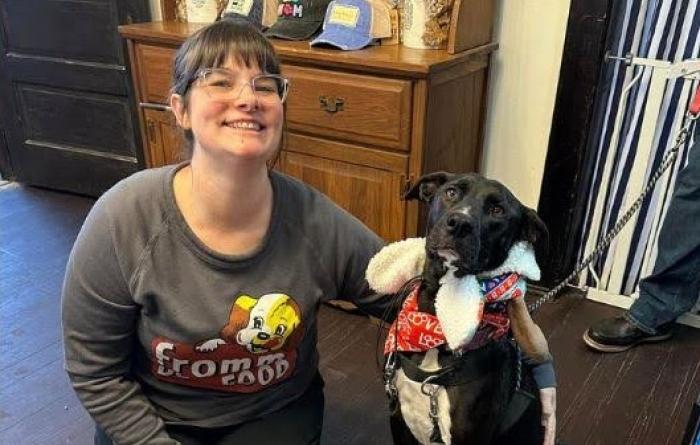
Tens of thousands of people are working hard every day in shelters. One of them is Connie Andrews, executive director at Joplin Humane Society in Missouri. The shelter is a private nonprofit organization that holds a contract with the city to provide animal sheltering services. Near the end of 2025, they reached a 90% save rate for the first time in their history. No-kill isn’t about a moment in time or a percentage alone. It’s a way of doing business that puts lifesaving first. We asked Connie to share the story of how she and her staff and the shelter’s board changed things and the impact it has had in their community.
With the right philosophy and programs in place, reaching no-kill is inevitable. Here’s how they did it.

Joplin Humane Society’s no-kill story
Shared by Connie Andrews (edited for length and clarity)
I've been here 17 years. I was pretty set in my ways for a long time when we had the mindset of “Oh my gosh, you're bringing a pet back? I'm not going to let you have another pet from us.” Whatever the vast array of reasons to tell people no to adopting from us, I was there. I think a lot of us were there over the years, you know? So I had to start way back to the basics.
I had to go back and relearn the things that I thought I knew that I didn't know. I had to be open. I had to listen to people at other organizations. I had to see what they were doing to be successful. How were they doing these things? How are they getting the community to help?
So I guess we'll start from the moment I really decided things were going to change back in February of 2024. It was time to renew our contract with the city, and we'd always felt saddled by the contract because we were forced to take all pets people wanted to surrender and all strays.
The hardest part for us was that the cats who came to us from being picked up outdoors were not allowed to be returned to where they were found. So that pushed us into a position that we were euthanizing around 65% of the cats who came to our shelter, unfortunately, because I had no place to send them.
[How a Tennessee animal rescue group is changing lives]
So we'd been doing that for quite some time, and in February of 2024, we had the opportunity to make changes to our contract with the city. But they were adamant that they were not going to allow us to change any of those policies. It was like a light bulb went off for me. I thought, "We're not doing this anymore."
I was tired of feeling like we’re required to do something that is totally against our mission. Euthanizing healthy animals is not what we do. Our shelter board had the same feeling I had — that we just could not do this anymore.
So, with that said, I'm not a contract lawyer. I don't know a lot about it, so I reached out to Best Friends. Staff looked through the contract for me and the rules and laws of Joplin and had some great ideas. They made me feel confident about going into a meeting with the city and saying, "I'm not doing this anymore; we're done."
They talked about building their own new shelter. They talked about animals running in the streets and all these things. I was to the point of saying if you need to build a shelter, then that's what I would encourage you to do. So that got them to start thinking about this contract in a different way.

A new approach
We've been on this new contract for a year now. The biggest thing was to start scheduling animals to come to the shelter, whether that be stray or surrendered by their owners. We're going to manage how they come in, and we're going to do anything possible to keep them out of the shelter, whatever that may be.
There's a long list of things people need that, if they had, they could keep their pets. Sometimes it's minor medical things or help with behavior issues that my behavior specialist is well-versed in teaching. Let's do this to keep them from pottying in the house. Let's do this if the pet is chewing up things or whatever those minor things are that can cause a pet to be returned to the shelter.
[Help desk supports cats and people who care for them]
I knew we wanted to start slow because I didn’t want to fail before we ever started. The one thing I could control was owner surrenders and when those could come in. It gave us the chance to talk to each person and ask what we could do to keep those animals at home. Could you keep the animal if I gave you food, if I gave you crates, if I gave you anything that you needed? Could you keep your animal at home even for a couple of weeks until we could make room or make a spot for your animal to come in? And amazingly, the answer was almost always yes.
That right there made it so we could start managing how many animals we had in the shelter. We could plan by looking at the schedule at how many pets were coming in to be surrendered. That's really where we started. We got our toes wet, you know?
We started making partnerships. Salvation Army is where we started, and some unhoused people were there with pets. Their pets needed food. They needed collars. They needed vaccines. So we went and started right there.

Partnerships for good
That’s where we got our start helping the community keep those pets. Because we all know that sometimes we fall on hard times. None of us can say that we have never had a time that we struggled. So, to me, that doesn't mean you're a bad pet parent. It means we need to help you a little bit so that you can keep your pet. You love your pet; you want your pet.
Now we have partnerships with Lafayette House, which is a safe place for people fleeing domestic abuse. There are people who would not have entered Lafayette House had it not been for our foster families who have stepped in to take care of their pets. It's a long commitment, three to six months sometimes, depending on what the story is. So that has been huge for us.
We've also partnered with a couple shelters for people in the area because there are a lot of people in this town who have animals and the shelters don't let them come in. If you have a pet, unfortunately you can't come in. So that's the path we're going down now: to figure out how we can help in those situations when it's cold, when the weather's bad — what we can do to help those people with their animals so that does not need to be a strain on them. They already have enough things to worry about.
We've sent out surveys to area agencies that have a Meals on Wheels plan. I sent out surveys with their meals, asking people to tell us what they need for their animals. It's exciting to know that we truly are making a difference. We're hitting on all those things that we talked about. They're actually happening.

From dread to excitement
So that was the direction we were looking at and are still working on. It's exciting. It's changed from this dark cloud, this dread of worrying about what we’re going to do. Before, our pet intake room would just be chaos. There could be 20 people back there (surrendering animals). When you see that all day long, it really changes the way you look at people. My staff was burned out, worn out, negative.
Every day it was, “How are we going to take care of this many animals? Where are we going put them? Is this going to force us to start euthanizing because we don't have space?” All these horrible thoughts go through your mind because it's just part of what you do every day.
All that dread changed to excitement, and it’s not just me. It’s excitement throughout the entire building that started as soon as my staff started feeling ownership and the ability to make some decisions about taking animals in. Now, if they need something, I told them you don't have to ask me. You do it. You do what needs to be done.
Let's make every shelter and every community no-kill
Our goal at Best Friends is to support all animal shelters in the U.S. in reaching no-kill. No-kill means saving every dog and cat in a shelter who can be saved, accounting for community safety and good quality of life for pets.
Shelter staff can’t do it alone. Saving animals in shelters is everyone’s responsibility, and it takes support and participation from the community. No-kill is possible when we work together thoughtfully, honestly, and collaboratively.
You can help save homeless pets
You can help end the killing in shelters and save the lives of homeless pets when you foster, adopt, and advocate for the dogs and cats who need it most.


Saving lives around the country
Together, we're creating compassionate no-kill communities nationwide for pets and the people who care for them.
Let’s be friends!
Connect with us on social media to stay in the loop about the lifesaving progress we’re making together.


