This is who no-kill looks like
By
Julie Castle
In her kennel at the animal shelter in Hardin County, Kentucky, a dog named Pearl barks. She spins. She rattles the gate like a one-dog percussion section. If you’d only ever met Pearl in her kennel, you’d come away with entirely the wrong idea about her.
In May, Hardin County Animal Shelter launched a dog’s day out program, inviting community members to take a dog on a morning adventure. When the doors opened at 8:30 a.m. that first day, there was already a line of people waiting. A line! Nine dogs went on outings, and Pearl — the wild woman of the kennel row — spent her entire morning at her new human friend’s house, draped across the couch in utter relaxation.

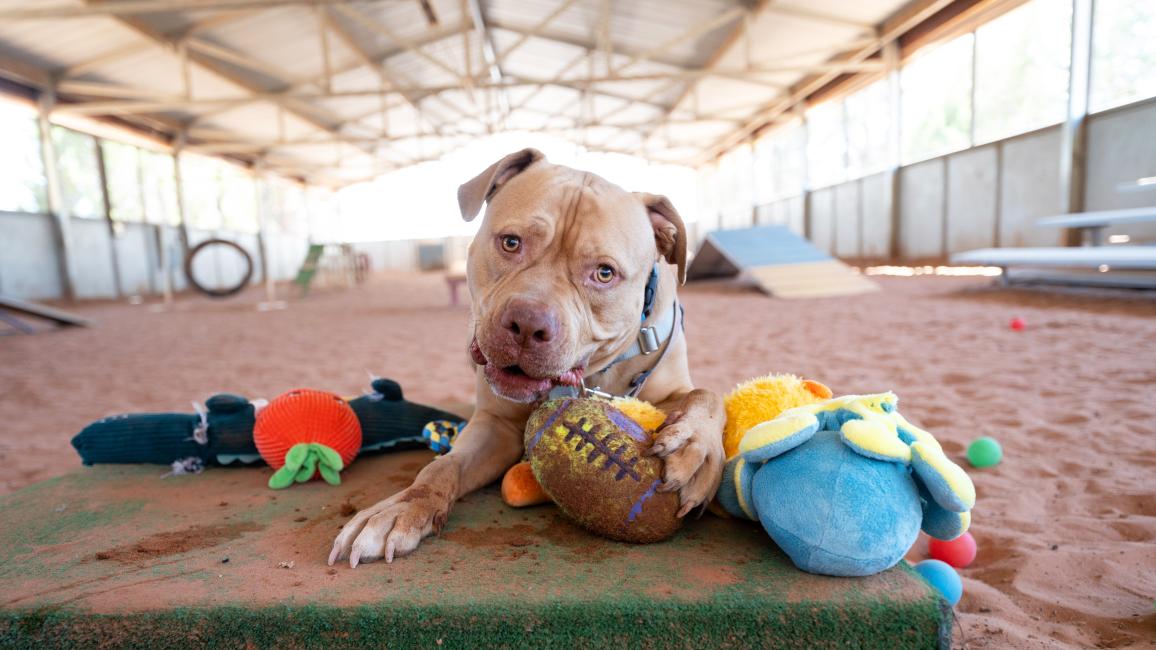
Pearl on her Dog’s Day Out, enjoying sunshine and cuddle time.
A couple of weeks ago, I shared research showing that Americans support no-kill in numbers that would make any politician jealous — 71% to 80% across communities red, blue, and purple. This week, I want to talk about who all of those people are actually supporting. Because yes, no-kill has a definition, but I’ve never once seen a definition wag its tail. No-kill lives in the animals, one at a time, each with a name.
It lives in a dog named Tasha, who arrived at Associated Humane Societies in Newark, New Jersey, as a lost dog just days after Christmas. Five months went by. She was adopted once and returned. Shelter life was wearing her down, but the shelter team wasn’t giving up. They told her story, exactly what they were up against, and asked their community for help. Hundreds of people shared her photo. And somewhere in all of that sharing, Tasha’s face landed in front of the one family in the world who had been missing her since December. When they walked through that shelter door, she knew them instantly. Jumping, wiggling, whole-body joy. Five months of waiting. How beautiful that Associated Humane Societies gave Tasha the time and the effort it took, and that she so rightly deserved, to get her home. That’s no-kill.
Now, I still hear the occasional grumble that no-kill only works with deep pockets and big staffs. Well, tell that to Snowflake-Taylor Animal Control, a small shelter in rural Arizona with no big medical budget and a staff you could count on one hand. Two years ago, only about half the animals who came through their doors made it out alive. Today, that same shelter — same building, same budget — has achieved and maintained no-kill for 12 straight months with 91% of the dogs and cats entering the shelter enjoying life after leaving. What changed? People. A community member named Teddy built pathways to adoption for Snowflake’s dogs, and soon, a woman named MK also stepped up to join in and help find even more adoption avenues. A small local rescue group and animal sanctuary, Great Spirit Animal Sanctuary, opened its doors and took animals into its program. And when the two combined forces and held their first microchip and vaccine clinic, more than 200 residents showed up. In a town that size, that’s about everybody.
MK is also the reason a sweetheart named Foxtail is alive today. He landed at Snowflake with a foxtail buried deep in his paw, needing surgery the shelter had no budget for. So she took him to her own veterinarian, partners rallied to cover the procedure, and Foxtail trotted off to a rescue group and the rest of his life.

Sweet, soulful Foxtail.
I have said it a thousand times, and I will happily say it a thousand more: The public is not the problem; the public is the solution. Every story above is proof. A line of people waiting at 8:30 in the morning to walk shelter dogs. Hundreds of strangers sharing one lost dog’s photo. A volunteer handing her own vet’s phone number to a dog with nobody else. Nobody waited for perfect conditions or permission. They just refused to accept that an animal in front of them was out of options — and that refusal, multiplied across thousands of communities, is the whole movement.
So if you want to be part of it, you already know how because you just read the instruction manual. Adopt. Foster. Show up when your local shelter asks. Share the stories of pets in your community’s shelters — Tasha is home right now because somebody hit share.
And support your shelter whether it has reached no-kill or is still on the journey, because every no-kill shelter in this country used to be a not-yet-no-kill shelter. Every single one.
Somewhere near you, a dog like Pearl is waiting for her morning on the couch. I’d love for you to be the one who gives it to her.
-Julie