Helping community cats thrive in California
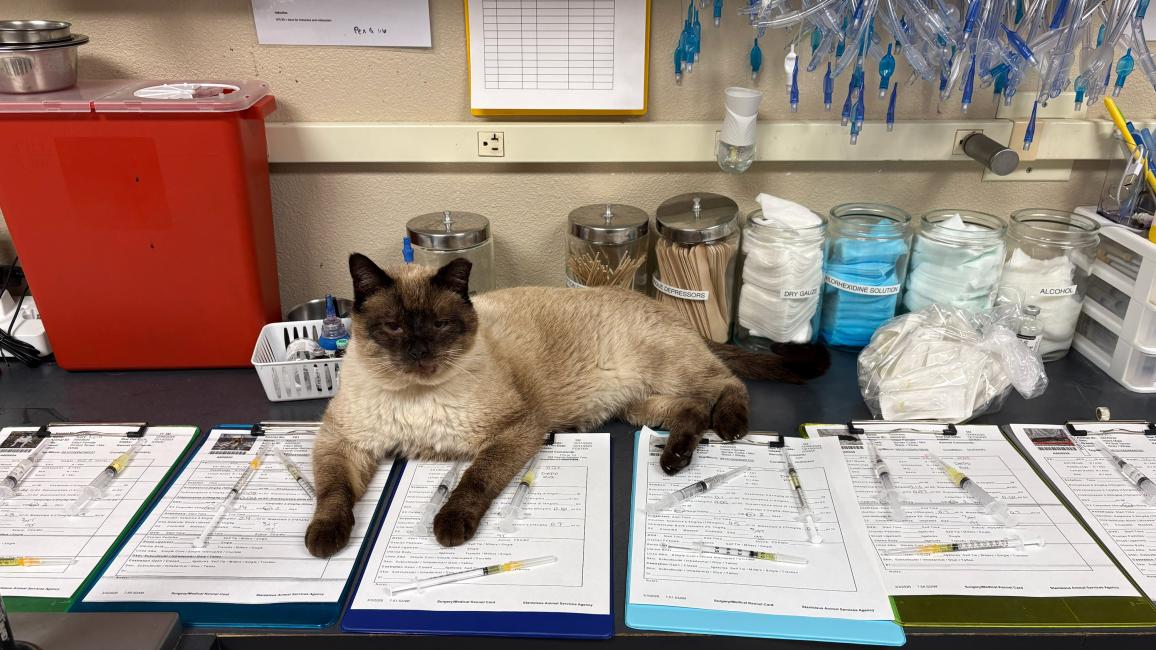
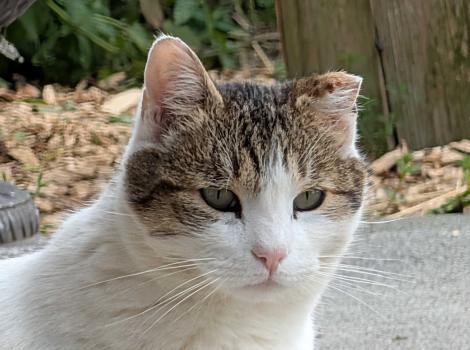
Rodger, a handsome kitty with fur the color of a milky mocha, spends his days snoozing in comfy beds scattered throughout the veterinary clinic at Stanislaus Animal Services Agency (SASA), a Best Friends Network Partner in California. He’s their “clinic cat” and helps staff throughout the day by being, well, adorable. But Rodger has definite opinions about when, where, and how he likes attention.
Rodger is what some people call a community cat — a cat from the community who may be cared for by multiple people.
“We have a few community cats who hang out around the shelter with Rodger,” says Lily Yap, director at SASA. “We’re all cat caregivers at SASA. Having that human-animal bond, even in a very nontraditional sense, is so important. That’s what I love about these cats. I like the idea that they don’t have to have a specific label. Rodger can be whatever he wants to be on any given day because he has that flexibility. I think that’s really beautiful.”
She adds, “The other day he looked so cute and handsome sitting on the table in his bed, and I automatically reached up to pet him. But then I paused and asked our vet tech if that’s something he would enjoy. And she said, ‘No, I wouldn’t do that if I were you.’ He loves hanging out in the clinic, but he also doesn’t always like to be touched.”
At SASA, caring for cats like Rodger has become an increasingly important part of the shelter’s lifesaving work.

Proactive partnerships
Stanislaus County faces a challenge familiar to many shelters across the country: more cats and kittens than there are resources to help them. And in an area with limited access, finding affordable veterinary services can be difficult.
SASA took in nearly 9,000 animals last year — including thousands of cats and kittens. Many of the most vulnerable were neonatal kittens who required around-the-clock care to survive. The shelter team knew something had to change to make it possible to save more lives.
How America cut the number of cats killed in shelters by 75%
“We really wanted to get to the source of the issue so that we’re not on this hamster wheel forever,” says Lily.
Looking for a more proactive solution to help cats and kittens, SASA teamed up with Best Friends to expand its community cat programming. This kind of collaboration to save more vulnerable animals is one of the most important ways Best Friends is helping shelters nationwide reach no-kill.
The focus was on a major gap in the community: access to affordable spay and neuter services for cats. And the effort is already helping more cats than ever before.

Working whiskers
While residents and rescue groups were already stepping up to care for neighborhood cats, humanely trapping and bringing in cats for surgery often came out of their own pockets.
“We had community members paying for cats to be spayed or neutered with their own money, and that just isn’t sustainable,” says Lily.
With support from Best Friends, SASA expanded its trap-neuter-vaccinate-return (TNVR) efforts. TNVR programs humanely trap, spay or neuter, vaccinate, and return cats to their outdoor homes where they can live healthy lives without producing more kittens.
Best Friends also helped SASA strengthen its foster and working cat programs by creating more efficient systems for tracking foster placements and connecting the shelter with rescue groups that help place working cats. These are cats who cannot safely return to their original outdoor location after TNVR and are not likely to be adopted into traditional, indoor homes.
Through SASA’s Working Whiskers program, those kitties can instead be placed at barns, warehouses, dairies, and other properties where they can live safely while helping provide natural pest control.
“What Best Friends helped us identify was this really huge gap in our cat programming,” says Lily. “We have such an amazing community that steps up for our dogs already, but this was an area where we really needed more support and strategy.”
The results are encouraging. SASA’s TNVR program has already helped two to three times more cats this year compared to the same time last year.

A brighter future
Cat Network of Stanislaus County, a local rescue group, plays a key role in expanding those efforts. Their volunteers teach residents how to safely trap, monitor, and care for neighborhood cats long term.
“They have a really amazing, dedicated group of volunteers,” says Lily. “That education piece is so important. These proactive efforts can really be what saves us — and saves lives — in the future.”
Meanwhile, Rodger continues making his rounds at the shelter napping wherever he wants and accepting attention on his own terms — reminding everyone that not every cat needs the same kind of home to belong.

Let's make every shelter and every community no-kill
Our goal at Best Friends is to support all animal shelters in the U.S. in reaching no-kill. No-kill means saving every dog and cat in a shelter who can be saved, accounting for community safety and good quality of life for pets.
Shelter staff can’t do it alone. Saving animals in shelters is everyone’s responsibility, and it takes support and participation from the community. No-kill is possible when we work together thoughtfully, honestly, and collaboratively.

You can help save homeless pets
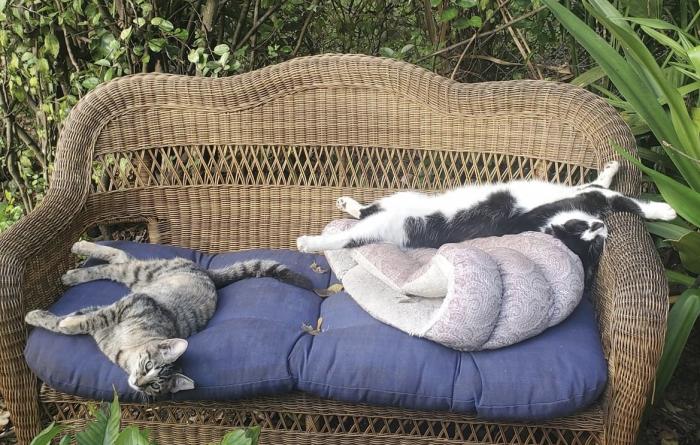
You can help end the killing in shelters and save the lives of homeless pets when you foster, adopt, and advocate for the dogs and cats who need it most.


Saving lives around the country
Together, we're creating compassionate no-kill communities nationwide for pets and the people who care for them.
Get inspiring animal rescue stories delivered straight to your inbox
Never miss a feel-good animal story. When you give us your email, we’ll send you inspiring animal rescue stories each week, along with tips on different ways you can help save homeless pets in your community and beyond.