Reuniting lost pets with their families: Room for improvement
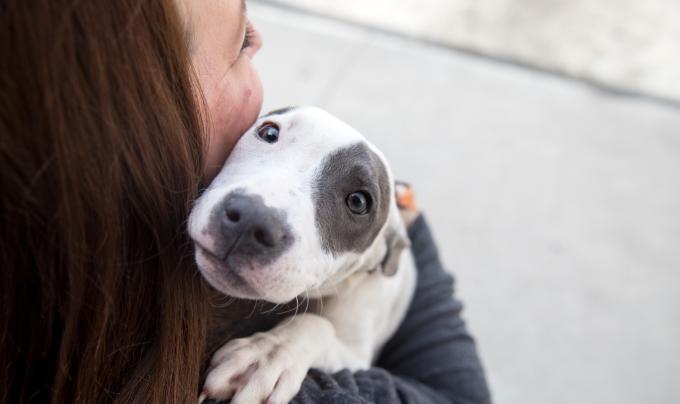
Reuniting lost pets with their families is one of the fundamental roles of any animal shelter. When an animal is brought in as a “stray,” either by a member of the community or by field services staff, the hope is that this is somebody’s pet. Often, a tearful reunion is only a phone call away. Sounds easy enough, right?
Unfortunately, these happy endings are less common than you might think. Best Friends’ analysis of data from shelters across the country found that only about 21% of animals admitted as strays are reunited with their families.
Like many shelter metrics, any useful interpretation of return-to-home (RTH) rates requires context. For example, how many of the animals admitted to a shelter are truly “returnable”? Returning home generally isn’t an option for pets relinquished by their families (though there are bound to be a few exceptions), which is why the focus is on those admitted as strays.
To better understand return-to-home (RTH) rates, it helps to separate the data for dogs and cats. Nationally, the RTH rate for dogs is 36%, six times greater than the rate for cats (6%).
Different RTH rates for different species
One obvious reason for this difference is the fact that dogs are more likely than cats to be wearing a collar and tags because many communities have made this a legal requirement. Assuming the information is up to date, tags make it easy for shelter staff to identify and contact a dog’s person. Cats, on the other hand, are much less likely to turn up at a shelter wearing tags.
Although microchips can provide the same information necessary to reunite lost pets (again, assuming it’s up to date) and are a useful backup for tags, most pets aren’t chipped. According to the American Pet Products Association, only about 37% of dogs and 26% of cats are microchipped.
Another reason RTH rates for cats are so much lower than those for dogs is that many cats entering shelters are community cats — cats who live outdoors in the community, rather than in a traditional indoor home, and may be cared for by multiple people. This is one of the strongest arguments for return-to-field (RTF) programs, whereby shelters spay or neuter and vaccinate healthy cats entering the shelter as strays lacking identification and then return them to where they were found — their outdoor homes. (No doubt many pet cats are reunited with their families via RTF programs; this can be difficult — but not impossible — to track.)

Other differences in RTH rates
Another finding that stood out from our analysis: RTH rates from shelters in under-resourced communities are much lower than those from shelters with more resources. To examine these differences, we used the Social Vulnerability Index (SVI), a measure of a community’s ability to respond to disasters or disease outbreaks. Our analysis revealed a 38% RTH rate for dogs in low-SVI communities compared to 24% in high-SVI communities. Cats in low-SVI communities were associated with a 5% RTH rate compared to 2% in high-SVI communities.
Shelter resources are undoubtedly a factor here: Well-resourced shelters are more likely to have the staff necessary to track down the families of lost pets. Staff in lesser-resourced shelters are likely to wear many hats, unable to devote the time and attention necessary to maintain high RTH rates. In addition, their residents might lack the flexible work schedules and transportation options required to reclaim a lost pet.
Why RTH rates matter
RTH rates are an important metric for shelters to track. After all, who doesn’t want to see more pets reunited with their families? In addition, these reunions are often the quickest way to get a pet out of the shelter. Doing so frees up valuable resources for the pets who require more time and attention (e.g., medical or behavioral challenges).
In many cases, the best approach is to avoid the shelter altogether. Lost dogs often don’t travel far from home. In fact, a 2021 study of data from Dallas Animal Services found that nearly half of the 10,000 “stray” dogs successfully reunited with their families were found at their home address; these dogs were in their yard! Of the dogs not found at home, 70% had traveled less than a mile and 42% traveled no more than 400 feet from their home (roughly a city block).
Rather than bringing all stray dogs to the shelter — and, in most cases, much farther from their homes — many shelters have adopted the practice of returning them “in the field.” This can be as simple as knocking on doors until their family is found. When that doesn’t work, yard signs placed where a dog was found can direct their family to the shelter — again, expediting reunions. And some shelters have distributed microchip scanners throughout the community, allowing residents to facilitate reunions without any intervention from the shelter at all.
As noted previously, healthy cats should generally be brought to the shelter only as part of an RTF program. Research suggests that these cats often have caregivers; all they need from the shelter is spay or neuter and some vaccines.
Improving RTH rates
When it comes to RTH rates, it’s clear that there’s room for improvement. It’s also clear that any significant improvement will need to be a team effort.
Shelters can do their part by returning stray dogs in the field and limiting the admissions of healthy stray cats to RTF efforts. In addition, shelters can create and share online profiles of animals admitted as strays, amplifying community outreach efforts. These steps have the added benefit of allowing them to allocate resources to the pets (and residents) most in need. People with pets, meanwhile, can ensure that their cats and dogs are microchipped and registered with up-to-date contact information.
All together, these efforts can bring more pets home and free up resources for more animals in need.