How Hurricane Katrina changed animal rescue forever

Twenty years ago, when Hurricane Katrina devastated the Gulf Coast, it became one of those rare before-and-after moments — for me, for Best Friends Animal Society, and for animal welfare in this country.
Katrina thrust Best Friends into the national spotlight in a way we had never experienced before. It wasn’t just that we were there — it was how we showed up. For the first time on such a large scale, we put our no-kill philosophy into action in the context of a disaster.
That didn’t mean simply getting animals out of flood zones. It meant refusing to dump them in overwhelmed shelters in neighboring states with no plan for their future, a practice that was tragically common at the time. Instead, we insisted that animals weren’t truly rescued until they were reunited with their family or, after an extended holding period, adopted into a new loving home. That approach, which once seemed radical, is now the standard.
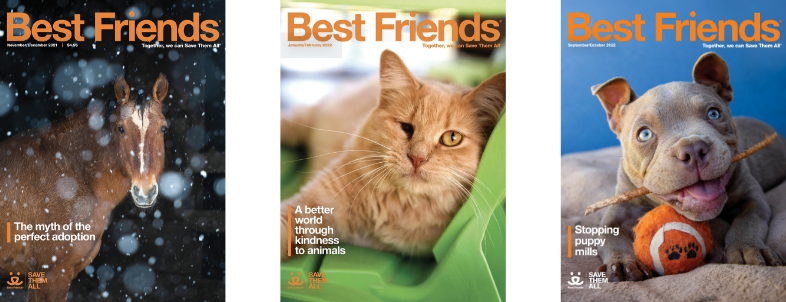
Accelerating transformation
But Katrina didn’t just change how the world saw Best Friends — it changed us internally, too. Just nine months earlier, our founders had begun a thoughtful, long-term process to restructure the organization and prepare for the next generation of leadership. Katrina fast-tracked that vision in the most urgent and real way possible. Suddenly, we had to mobilize every aspect of our operation, from the Sanctuary to satellite offices, and create entirely new departments on the fly.
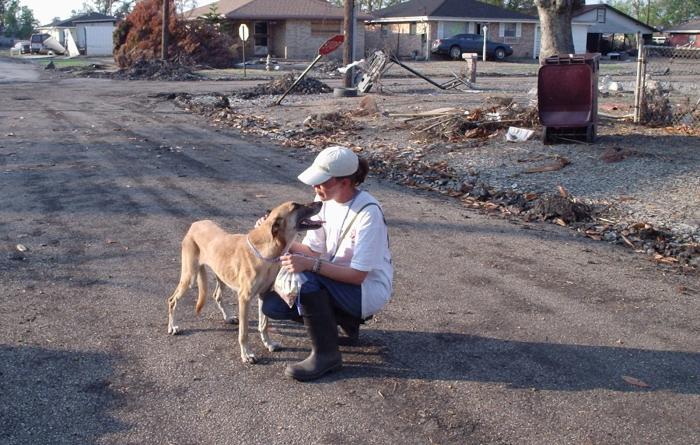
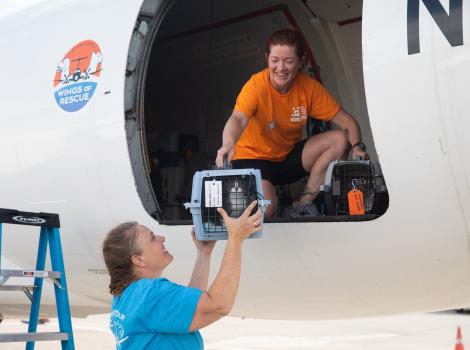
We created a full-blown search-and-rescue operation, deploying trained animal handlers and vet techs. We built an animal transport network that ultimately moved 6,000 animals to safety. At St. Francis Animal Sanctuary — a partner organization mentored by our own Faith Maloney — we established an emergency shelter overnight. And perhaps most important, we forged a network of organizations across the United States and Canada, all committed to foster care and reunification of pets with their families.

New leaders stepped up
Empowering new leadership wasn’t optional — it was essential. That’s when people like Julie Castle, who today serves as our CEO, stepped up in extraordinary ways. Back then, she was director of operations for our No More Homeless Pets in Utah coalition. One of the first to respond, Julie rented a van and drove from Salt Lake City to New Orleans to evacuate a cat sanctuary devastated by the storm. She then organized an adoption event back in Utah that galvanized public support.
[Remembering Hurricane Katrina]
Our boots hit the ground on August 30, 2005, thanks to a partnership with Jefferson Parish Animal Control. We were the first national animal welfare group there — and we were the last to leave. Our final team member didn’t return home until May 2006.

Volunteers were the backbone
Had you visited the Sanctuary in those first few months after the storm, you would have seen it transformed. Every hallway, office, and meeting room was packed with workstations. Extension cords snaked across the floors. Volunteers and staff worked side by side to take emergency calls, track down lost pets, and coordinate logistics for a massive operation unfolding over 1,600 miles away.
And the volunteers — oh, the volunteers. They came from every corner of the country. Tireless. Kind. Essential. They became the backbone of so much of what we were able to do then and in the years that followed.

A storm that changed everything
At first, it felt like we were building the plane as it rolled down the runway. But before long, it was clear: We had changed the standard for how animals are treated in disasters. What we built didn’t just meet the moment. It more than doubled the scope of Best Friends’ operations and laid the groundwork for everything we’ve done since.
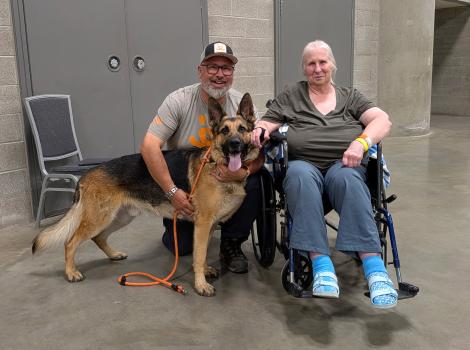
[Senior Hurricane Katrina survivor cat goes home]
Katrina was a storm that changed everything. But for us, it was also a test — and a turning point. It showed us what was possible when we refused to accept business as usual. And it gave us the chance to lead, not just in that moment but for the future.
Main photo by Carol Guzy

This article was originally published in the September/October 2025 issue of Best Friends magazine. Want more good news? Become a member and get stories like this six times a year.
Let's make every shelter and every community no-kill
Our goal at Best Friends is to support all animal shelters in the U.S. in reaching no-kill. No-kill means saving every dog and cat in a shelter who can be saved, accounting for community safety and good quality of life for pets.
Shelter staff can’t do it alone. Saving animals in shelters is everyone’s responsibility, and it takes support and participation from the community. No-kill is possible when we work together thoughtfully, honestly, and collaboratively.
You can help save homeless pets
You can help end the killing in shelters and save the lives of homeless pets when you foster, adopt, and advocate for the dogs and cats who need it most.


Saving lives around the country
Together, we're creating compassionate no-kill communities nationwide for pets and the people who care for them.
Let’s be friends!
Connect with us on social media to stay in the loop about the lifesaving progress we’re making together.


