Celebrating 6,000 Best Friends Network Partners
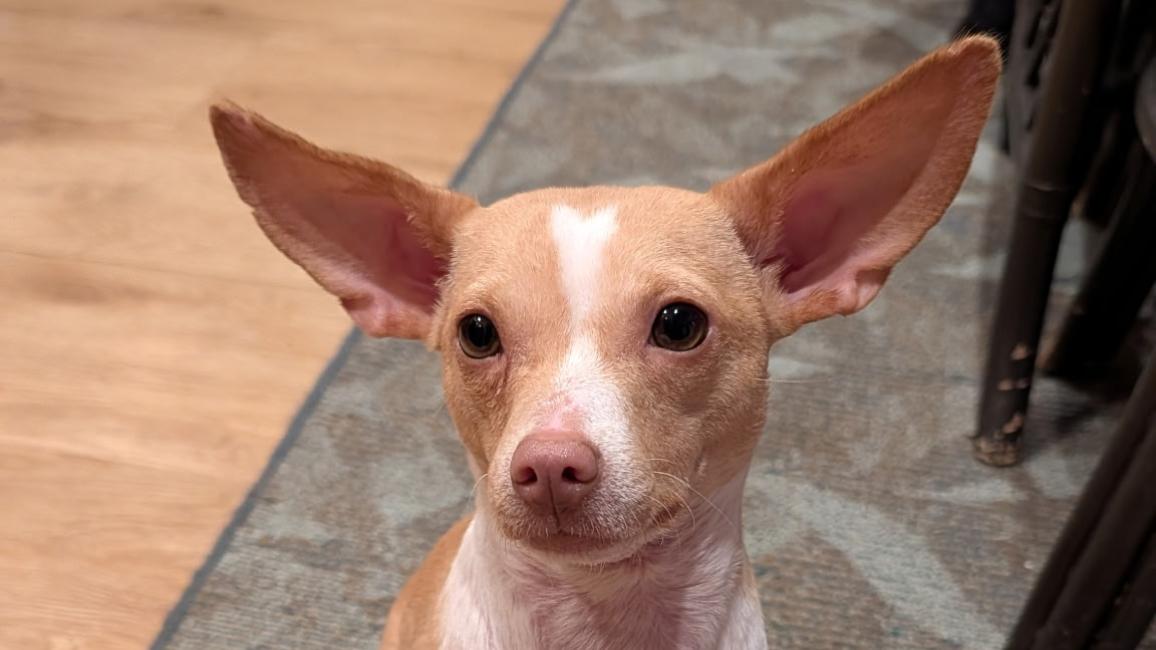
It was a team effort to help Regan, a petite pup with remarkable ears, feel comfortable in her own skin. A local shelter took in Regan, along with more than 30 other dogs, from an overcrowded home. Regan’s skin was inflamed, her fur was patchy, and she was severely underweight. So rescue group Hamilton’s Healing Hearts, a Best Friends Network Partner in North Carolina, offered to take her into their program and get her the care she needed.
“She had demodex mange (an inflammatory skin condition caused by mites) over 90% of her body,” says Maddie Bushey, Hamilton’s Healing Hearts president. It’s not contagious to other dogs or people, but it can take months of treatment before a dog is cured. And that requires more staff time and resources than many shelters can provide.
But thanks in part to a growing support system through the Best Friends Network — which recently passed 6,000 partners nationwide — Hamilton’s Healing Hearts was in a better position to help dogs like Regan.
A network of lifesaving
The Best Friends Network, led by Best Friends Animal Society, is a community of animal shelters, rescue groups, spay/neuter organizations, and other animal welfare groups in all 50 states. Together, those network partners share ideas, resources, and encouragement.
“The network partner program is really a coalition of animal welfare organizations that are interested in resources and connection and collaboration to save more lives across the country,” says Whitney Bollinger, Best Friends director of network operations.
That milestone of reaching over 6,000 network partners comes at a hopeful moment. 2025 shelter data from Best Friends shows the sharpest drop in pets killed in U.S. shelters since 2020. Nearly 4 million pets were saved in 2025, and 68% of shelters are now no-kill — an all-time high.
That kind of progress is exactly why the network matters. Shelters that engage with Best Friends save lives at nearly twice the rate of shelters that don’t. The network helps make that possible by giving partners access to practical, ongoing support, including grants, expert guidance, proven best practices, and a whole community of peers facing similar challenges.
“The network is designed to make sure that shelters and rescue groups don’t feel like they’re alone,” Whitney says.

Connection counts
For Hamilton’s Healing Hearts, that support has made a real difference for the tiny rescue group. “It’s just my girlfriend and I who run the rescue,” says Maddie.
They have almost no volunteers, one foster home, and a large, converted garage that serves as a tiny shelter. They specialize in small dogs, especially seniors and pets with special needs.
Since becoming a Best Friends Network Partner last year, Maddie says Hamilton’s has had one of its best years yet for adoptions. “It’s been really amazing,” Maddie adds. “I think that had a lot to do with this partnership.”
Dog with mange goes from stray to snuggle buddy
She notes that being part of the Best Friends Network helps build credibility with potential adopters. As a very small rescue group without a huge following, Hamilton’s sometimes had to work harder to earn trust. But being able to say they are part of this wider animal welfare community helps people feel more confident reaching out to adopt or foster.
As a network partner, the rescue group applied for and received a grant from Best Friends to help cover specialized veterinary care, spay/neuter costs, and improvements to its small shelter space so it could take in more pets from nearby shelters — pets like Regan.
A chance to heal
Hamilton’s got Regan the veterinary care she needed for her skin and gave her the time and space she needed to relax.
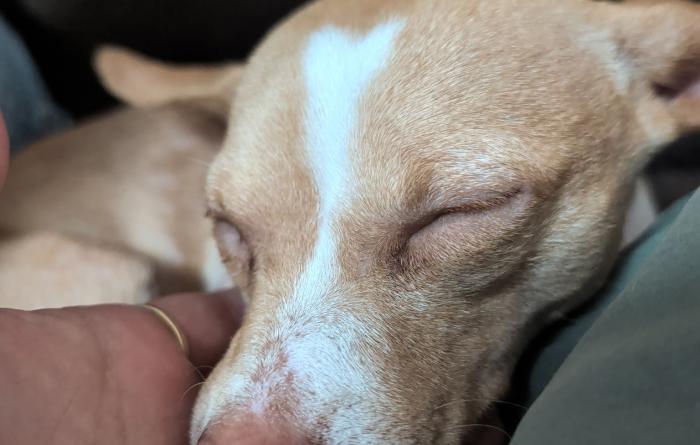
“She was very scared and not very trusting of humans,” says Maddie. “We had her in our back guest room, and I put a baby gate up so she could still interact with the other dogs. But every time I’d open it, she’d run and hide. Then one afternoon, I opened the gate and just walked away. I sat in the kitchen, and when I turned around, she was just sitting next to me on the floor.”
With time, her fur started growing back, and she started to feel more confident. Then came Veronica, who was looking for a furry companion. “She came out to meet Regan, and they were just perfect together,” says Maddie. “She melted into Veronica’s arms.”
Skinny, sick dog finds new hope, new life
Veronica made the adoption official just a few days later. Now Regan is thriving with her new best friend. The formerly frightened, nearly hairless dog has turned into what Maddie lovingly calls “a little nutball.”
Regan’s story is one small piece of a much bigger picture. Behind every lifesaving milestone are shelters, rescue groups, and support organizations learning from one another, lifting one another up, and helping more pets land in new homes. And for pets like Regan, that growing village of support changes everything.

Let's make every shelter and every community no-kill
Our goal at Best Friends is to support all animal shelters in the U.S. in reaching no-kill. No-kill means saving every dog and cat in a shelter who can be saved, accounting for community safety and good quality of life for pets.
Shelter staff can’t do it alone. Saving animals in shelters is everyone’s responsibility, and it takes support and participation from the community. No-kill is possible when we work together thoughtfully, honestly, and collaboratively.
You can help save homeless pets
You can help end the killing in shelters and save the lives of homeless pets when you foster, adopt, and advocate for the dogs and cats who need it most.


Saving lives around the country
Together, we're creating compassionate no-kill communities nationwide for pets and the people who care for them.
Get inspiring animal rescue stories delivered straight to your inbox
Never miss a feel-good animal story. When you give us your email, we’ll send you inspiring animal rescue stories each week, along with tips on different ways you can help save homeless pets in your community and beyond.