Volunteering at the Sanctuary: Know before you go
Not sure what to expect? No worries. We’ve got the scoop on everything from safety guidelines for volunteers to what to wear and bring.

Keeping you and the animals safe
We're focused on keeping you and our animal friends safe while you're volunteering, so you’ll need to read through the safety guidelines overview before your shift.

What to bring and wear
Your packing list will vary, depending on the season and your planned activities.

Lunch with a view
Join staff members, other volunteers, and visitors at the Angel Village café for a delicious plant-based buffet lunch.
Lunch is served from 11:30 a.m. to 1 p.m. daily. The cost is $5 per person, and cash, checks, debit, and credit cards are accepted.
The menu changes daily but consists of a main dish, two sides, fruit, a salad bar, and dessert. Water and a coffee bar with hot tea are available all day, and there’s a soda machine outside for those in search of caffeine and carbonation. When the weather is nice, you can enjoy a spectacular view of Angel Canyon from the spacious deck.
Seasons at the Sanctuary
When to expect sun, rain, or snow
January to March: The weather is often cold and sunny with occasional snow or rain. Be prepared for all types of weather, though, because temperatures sometimes are as high as the mid-60s.
April to June: April can be stormy and windy. Otherwise, it’s usually sunny with temperatures in the 50s to 70s through May. June is warmer, usually into the 80s.
July and August: These are the hottest months, with temperatures often between 90 and 100 degrees, but it’s a dry heat. We typically experience summer thunderstorms and rain during this season, though the storms are usually brief. Flash floods can occur, and they can be unpredictable, happening even when skies are sunny. Whenever there’s heavy rain, there is a danger of flash floods in the canyons and washes, so hikers should always use great caution.
September and October: Once the summer rains are over, it is typically dry, mild, and sunny. It’s the best season to be outdoors and take in the beautiful fall colors.
November and December: There is snow occasionally before Thanksgiving, but November can also be mild and beautiful. December is cold, often with rain or snow.
A few other things to consider
Cellphones and internet access
Smoking and Best Friends facilities
Smoking is permitted only in designated outdoor smoking areas. Smoking is prohibited in all Best Friends buildings and work vehicles (including golf carts) and within 25 feet of building entrances, exits, air intakes, and windows. To reduce both litter and the risk of brush fires, all cigarette butts must be disposed of properly in a designated receptacle.
Firearms
For safety reasons and in keeping with our principles, firearms are not allowed.
Volunteer FAQs
How far in advance should I sign up for volunteer shifts?
Volunteer shifts can be scheduled up to a year in advance. Each animal area has a maximum number of volunteers that can be accommodated during each shift. To get started, please visit volunteers.bestfriends.org or contact the Sanctuary volunteer department at volunteers@bestfriends.org or 435-319-0622.
Who can volunteer?
Minors under 18 years of age must be accompanied by an adult at all times while volunteering. One adult can supervise two minors. For safety considerations, each animal area has its own minimum age requirements. The minimum age to volunteer in each area is:
Cat World = 8+
Bunny House = 8+
Parrot Garden = 8+
Dogtown and outings = 16+
Piggy Paradise = 16+
Horse Haven = 16+
Wild Friends = 18+
Sanctuary Store = 18+
Angel's Rest = 18+
Landscaping = 18+
If you or a member of your party has mobility or health-related concerns that could limit or restrict participation in certain types of activities, please contact the Sanctuary volunteer department at volunteers@bestfriends.org or 435-319-0622, so appropriate activities can be arranged.
What volunteer opportunities are available?
We invite you to participate in regular animal care routines, such as feeding, cleaning, grooming, walking, etc. Spending time socializing with the animals, which helps make them more adoptable and eases their transition to a forever home, is also an important part of volunteer work. To volunteer on special projects in areas such as maintenance, please contact the volunteer department in advance to discuss options.
What are the daily volunteer shift times?
There are two volunteer shifts every day of the year — from 8:15 to 11:30 a.m. and from 1:15 to 3:30 p.m. The Sanctuary is on Mountain Time.
How do I schedule volunteer time?
You have the ease and flexibility of creating your entire volunteer schedule online. To get started go to volunteers.bestfriends.org. Follow these steps to create your volunteer trip.
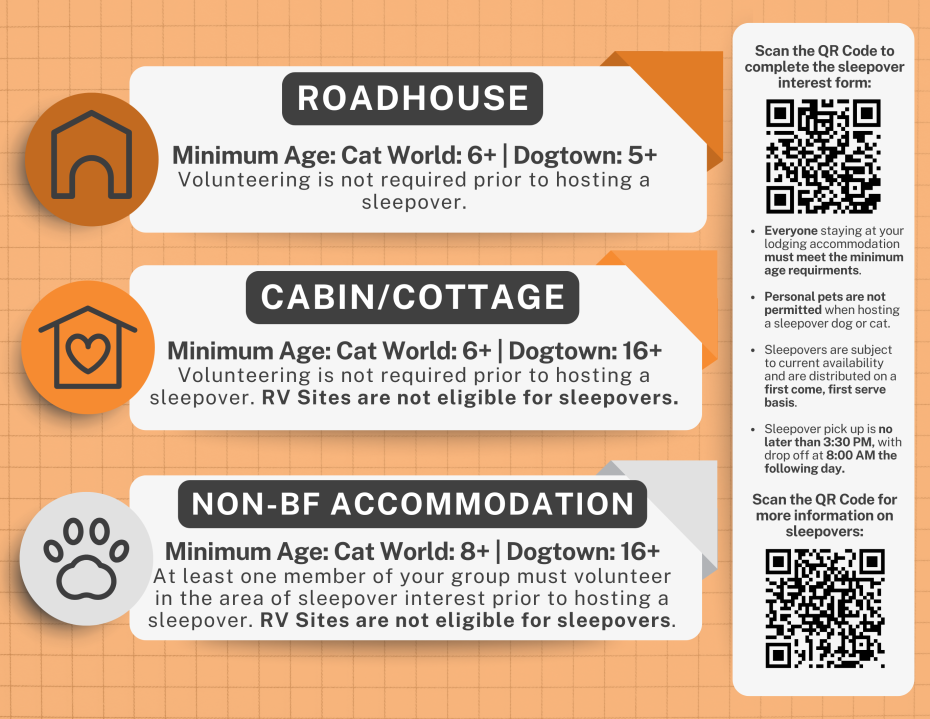
Can I take an animal on an outing or sleepover?
Some of our dogs and cats are approved to go with volunteers on sleepovers, and some of our dogs are approved to go on outings. To learn about restrictions and requirements, click here.
What should I wear?
Closed-toe shoes are required for volunteering in all animal areas. Sneakers or hiking shoes are the preferred footwear in most animal areas, while boots are suggested for horses and pigs. Clog-type shoes are not permitted. Long pants are strongly recommended for volunteering in any animal care area, and especially when volunteering with the horses or pigs. Volunteers are advised to dress in layers during the spring, fall and winter months because the mornings can be chilly and the afternoons warm. Wearing a hat and sunscreen is also recommended because the sun's rays at altitude are strong all year long. If you work with equines, goats or sheep at home or in your community, please bring clothes and shoes with you that have not been worn around those animals.
What about transportation?
Transportation is not provided for volunteers, so you will need your own vehicle to get around the Sanctuary, which is spread across more than 3,700 acres. You'll be driving to and from the welcome center, animal areas and other locations. Because many animal areas are several miles apart, walking is not a viable option and bicycles are not allowed on most Sanctuary roads. Volunteers traveling with RVs longer than 21 feet will have difficulty maneuvering on some of our Sanctuary roads and some parking areas. So if your RV is longer than 21 feet, we strongly suggest that you plan to have a car to get around.
Is there a place to eat at the Sanctuary?
Our $5 vegan lunches are served daily at Angel Village café from 11:30 a.m. to 1:00 p.m. You can see the menu here. The café accepts cash, checks, and debit or credit cards. Meal tickets can be purchased from the Sanctuary Store with your credit or debit card.
Can my own pets accompany me in the animal areas?
For everyone's safety, personal pets are not allowed in any of the animal areas, nor are they allowed to remain unattended in vehicles. This includes Tesla's with "Dog Mode.”
Can groups volunteer at the Sanctuary?
Yes. For information on group volunteering click here.
How can I schedule a Sanctuary tour?
There are a variety of complimentary tours available to our visitors and volunteers. To learn more about tours, or to schedule one, click here or call the Welcome Center at 435-677-6486. Private tours are also available for a nominal fee. Email groups@bestfriends.org to learn more.
Where is Best Friends located and where can I stay?
We are located five miles north of Kanab, Utah. Detailed information on traveling to the Sanctuary is available on our website. A reminder: Utah is on Mountain time so if you're flying into Las Vegas and driving to Kanab, remember that Las Vegas is on Pacific time, so the Sanctuary is one hour ahead. If you'd like information about lodging at the Sanctuary (cottages, cabins, RV sites), Best Friends Roadhouse and Mercantile or accommodations in Kanab, click here.
How do I encourage others to get involved with Best Friends once I'm back home?
Check out the volunteer toolkit and network partner list for additional ideas on how you can make a difference for the animals in your community.
How do I access my volunteer profile?
Visit volunteers.bestfriends.org.
How do I obtain proof of hours for community service?
f you need documentation of hours for court ordered or non-court ordered community service, email volunteers@bestfriends.org. Court-ordered community service volunteering must be pre-approved before signing up for shifts. Dogtown car outings, dog/cat sleepovers, fostering, animal transport trips, and classes/orientations do not count toward community service hours.
Have more questions?
Please email us at volunteers@bestfriends.org or call us at 435-319-0622. We are open every day from 8 a.m. to 6 p.m. Mountain Time.